 Back
Introduction to General Biology: Scope, Diversity, and Evolution
Study Guide - Smart Notes
 Tailored notes based on your materials, expanded with key definitions, examples, and context.
Introduction to Biology
The Scientific Study of Life
Biology is defined as the scientific study of life, encompassing a vast array of living organisms and their interactions with each other and their environments. The discipline seeks to answer fundamental questions about what life is, how it functions, and how it evolves over time.
Scope of Biology: Biology covers everything from molecular processes within cells to the dynamics of entire ecosystems.
Importance: Understanding biology is essential for appreciating the complexity and diversity of life, as well as for addressing challenges in health, environment, and technology.
Relation to Other Sciences: Biology integrates principles from chemistry, physics, and earth sciences to explain living systems.

Biology's Scope and Diversity
Levels of Biological Organization
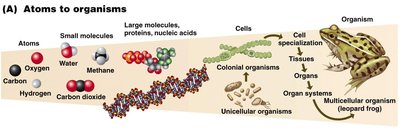
Biology examines life at multiple levels of organization, from atoms and molecules to entire ecosystems and the biosphere.
Atoms and Molecules: The basic building blocks of life, including elements like carbon, hydrogen, oxygen, and molecules such as water and proteins.
Cells: The fundamental unit of life, capable of performing all necessary functions for survival.
Organisms: Individual living entities, ranging from unicellular bacteria to multicellular plants and animals.
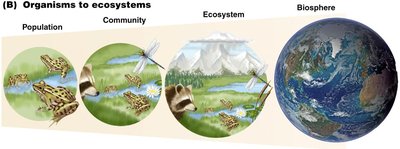
Populations and Communities: Groups of organisms of the same species (populations) and interacting species (communities).
Ecosystems: Complex networks of living and nonliving components interacting in a specific environment.
Biosphere: The global sum of all ecosystems, representing all life on Earth.
Diversity of Life
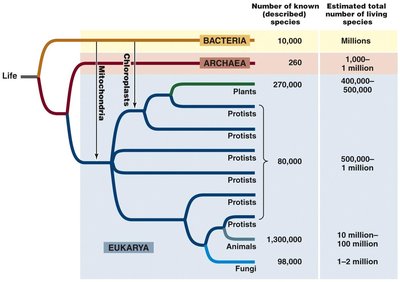
Life on Earth is incredibly diverse, with millions of species adapted to a wide range of environments. This diversity is organized into three domains: Bacteria, Archaea, and Eukarya.
Bacteria: Single-celled prokaryotes found in many environments.
Archaea: Single-celled prokaryotes often found in extreme environments.
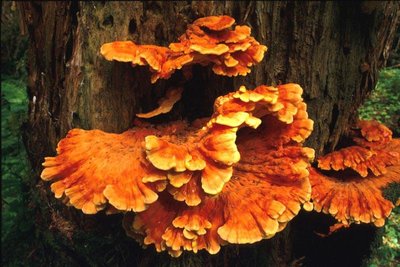
Eukarya: Organisms with complex cells, including plants, animals, fungi, and protists.
Ecosystem Variations
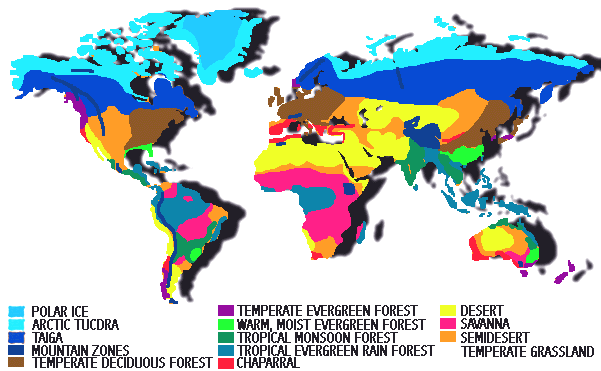
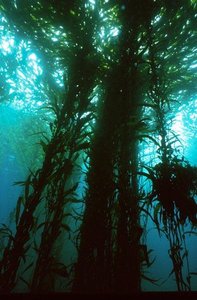
Ecosystems vary greatly across the globe, from deserts to rainforests, each supporting unique communities of organisms.
Biomes: Large ecological areas with distinct climate, flora, and fauna.
Adaptations: Organisms evolve traits to survive in their specific environments.
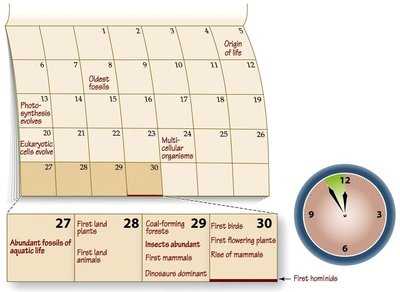
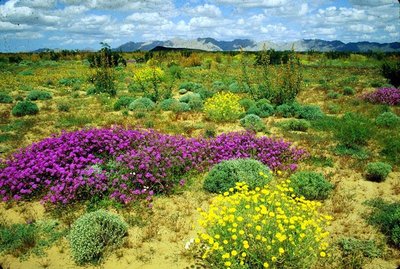
Evolution: The Framework of Biology
Understanding Change Over Time
Evolution is the central theme in biology, explaining how organisms change and diversify over generations. Charles Darwin's theory of evolution by natural selection provides a scientific framework for understanding the diversity of life.
Natural Selection: The process by which organisms better adapted to their environment tend to survive and reproduce.
Adaptation: Traits that enhance survival and reproduction become more common in populations over time.
Speciation: The formation of new and distinct species through evolutionary processes.
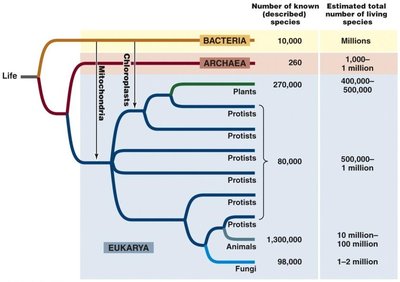
Goals of Biological Discovery I & II
Disciplines Within Biology
The course aims to introduce students to various disciplines within biology, including biochemistry, molecular biology, and genetics. These fields address fundamental questions about the structure, function, and evolution of cells and organisms.
Biochemistry: Study of the chemical processes within living organisms.
Molecular Biology: Focuses on the molecular mechanisms of biological activity.
Genetics: Examines heredity and variation in organisms.
Scientific Inquiry
Science is a systematic effort to explain the world through testable explanations and predictions. The scientific method involves observation, hypothesis formation, experimentation, and analysis.
Observation: Gathering data about the natural world.
Hypothesis: A testable statement about a phenomenon.
Experimentation: Testing hypotheses through controlled experiments.
Analysis: Interpreting results to draw conclusions.
What is Life?
Properties of Life
Living organisms share several common properties that distinguish them from nonliving matter.
Order: Organized structure and function.
Regulation: Ability to maintain internal stability (homeostasis).
Growth and Development: Increase in size and complexity.
Energy Processing: Acquisition and use of energy for metabolic processes.
Response to Environment: Reacting to stimuli.
Reproduction: Producing offspring.
Evolutionary Adaptation: Change over generations to enhance survival.
Summary Table: Domains of Life
Domain | Number of Known Species | Estimated Total Species | Examples |
|---|---|---|---|
Bacteria | 10,000 | Millions | Prokaryotes, cyanobacteria |
Archaea | 260 | 1,000,000 | Extremophiles |
Eukarya | 1,300,000 (animals), 270,000 (plants), 98,000 (fungi) | 10 million–100 million | Animals, plants, fungi, protists |
Additional info: Table entries inferred from phylogenetic tree diagram and standard biology sources.
Conclusion
Biology is a dynamic and diverse science that seeks to understand life at all levels, from molecules to ecosystems. The study of biology provides essential knowledge for addressing global challenges and appreciating the complexity of living systems.
