 Back
BackIntroduction to Human Biology: Characteristics, Classification, and Organization
Study Guide - Smart Notes
 Tailored notes based on your materials, expanded with key definitions, examples, and context.
What is Life?
Criteria for Life
Biologists use several key characteristics to distinguish living organisms from non-living matter. All seven criteria must be met for an entity to be classified as living.
Unique Molecular Composition: Living things have a different molecular makeup compared to non-living things, often including complex organic molecules such as proteins, lipids, carbohydrates, and nucleic acids.
Energy and Raw Materials: All living organisms require energy (e.g., from food or sunlight) and raw materials to maintain their structure and function.
Cellular Organization: Living things are composed of one or more cells, which are the basic units of life.
Homeostasis: The ability to maintain a stable internal environment despite changes in the external environment.
Response to Environment: Living organisms can sense and respond to stimuli in their surroundings.
Growth and Reproduction: All living things grow and are capable of reproducing, passing genetic information to the next generation.
Evolution: Populations of living organisms evolve over generations through changes in genetic composition.
Classification of Living Things
Taxonomic Hierarchy
Living organisms are classified into hierarchical categories based on shared characteristics. This system helps scientists organize and understand the diversity of life.
Domain
Kingdom
Phylum
Class
Order
Family
Genus
Species
Mnemonic: "Does King Phillip Come Over For Good Spaghetti?" helps remember the order of taxonomic ranks.
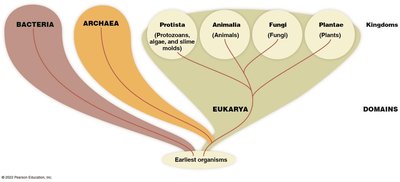
Domains and Kingdoms
There are three domains of life:
Bacteria
Archaea
Eukarya (includes Protista, Animalia, Fungi, Plantae)
Each domain contains one or more kingdoms, grouping organisms with fundamental similarities.
Human Classification
Humans are classified as follows:
Domain: Eukarya
Kingdom: Animalia
Phylum: Chordata (organisms with a neural cord)
Class: Mammalia (mammals with mammary glands)
Order: Primates (includes lemurs, monkeys, apes, and humans)
Family: Hominidae (great apes and humans)
Genus: Homo
Species: sapiens
Note: The genus name (Homo) is capitalized and italicized; the species name (sapiens) is lowercase and italicized.
Defining Features of Humans
Unique Human Traits
Humans possess several characteristics that distinguish them from other living organisms:
Bipedalism: The ability to walk upright on two legs.
Opposable Thumbs: Thumbs that can touch the tips of other fingers, allowing for precise grasping and manipulation of objects.
Larger Brain: Relative to body size, humans have a larger and more complex brain, supporting advanced cognitive functions.
Complex Language: The capacity for sophisticated verbal and written communication.
These features have contributed to human survival and adaptation but do not imply superiority over other species.
Biological Organization of Humans
Levels of Organization
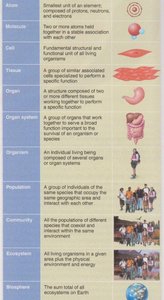
Biologists study humans at multiple levels of organization, from the smallest chemical components to the entire biosphere. Understanding these levels is essential for grasping how complex organisms function.
Level | Description |
|---|---|
Atom | Smallest unit of an element, composed of protons, neutrons, and electrons. |
Molecule | Two or more atoms bonded together; the chemical basis of life. |
Cell | Basic structural and functional unit of all living organisms. |
Tissue | Group of similar cells working together to perform a specific function. |
Organ | Structure composed of two or more tissue types performing a specific function. |
Organ System | Group of organs that work together to perform major functions or meet physiological needs. |
Organism | An individual living being. |
Population | Group of individuals of the same species living in a specific area. |
Community | All populations of different species living and interacting in the same area. |
Ecosystem | All living organisms in a given area plus the physical environment with which they interact. |
Biosphere | The sum total of all ecosystems on Earth. |
Summary
Seven characteristics define life and must all be present for an organism to be considered living.
The taxonomic system classifies life from domain to species, with humans classified as Homo sapiens.
Humans are set apart by bipedalism, opposable thumbs, larger brains, and complex language.
Biological organization ranges from atoms to the biosphere, providing a framework for studying life at different scales.
