 Back
BackIntroduction to Human Physiology: Cellular Organization and Regulation
Study Guide - Smart Notes
 Tailored notes based on your materials, expanded with key definitions, examples, and context.
Introduction to Physiology
Definition and Scope
Physiology is the scientific study of the functions and mechanisms occurring in living organisms. It explores how cells, tissues, organs, and organ systems interact to sustain life, and how these functions are regulated to maintain homeostasis. The discipline is foundational to medicine and biological sciences, providing insight into normal function and the basis for understanding disease.
Definition: Physiology investigates the physical and chemical processes that support life.
Objects of Study: Cells, tissues, organs, organ systems, and their regulatory mechanisms.
Relationship: Closely linked to anatomy, biochemistry, pathology, and clinical medicine.
Historical Development
The history of physiology traces back to ancient scholars and has evolved through key discoveries that shaped modern medicine.
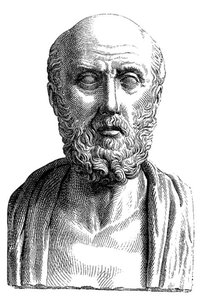
Hippocrates: Proposed the theory of humorism, emphasizing bodily fluids in health and disease.
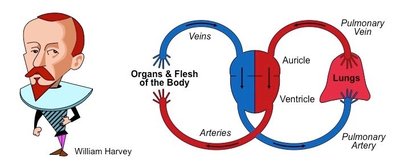
William Harvey: Discovered the circulatory system, revolutionizing understanding of blood flow.
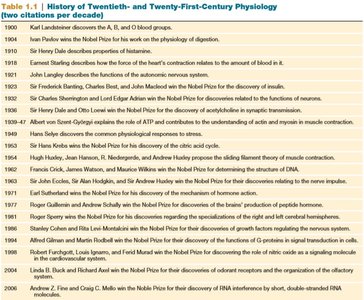
Modern Physiology: Advanced through Nobel Prize-winning research in cellular, molecular, and systemic functions.

Year | Discovery |
|---|---|
1900 | Blood groups discovered |
1921 | Insulin discovered |
1953 | DNA structure determined |
2006 | RNA interference discovered |
Additional info: See image_7 for more detailed timeline of physiological discoveries. | |
Levels of Organization in the Human Body
Cellular and Structural Hierarchy
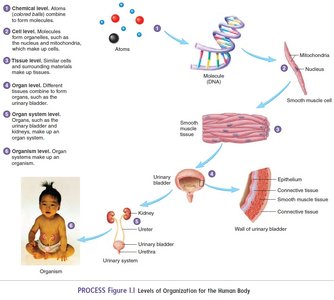
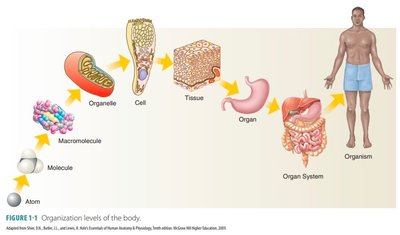
The human body is organized in a hierarchical manner, from atoms to the complete organism. Each level builds upon the previous, allowing complex functions to emerge.
Chemical Level: Atoms and molecules form the basis of cellular structure.
Cellular Level: Cells are the basic living units, containing organelles such as mitochondria and nuclei.
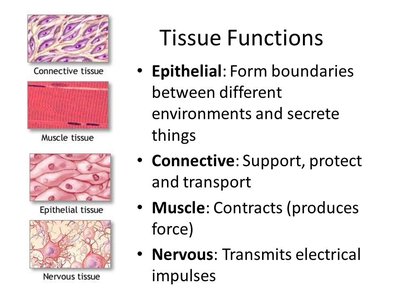
Tissue Level: Groups of similar cells form tissues (epithelial, connective, muscle, nervous).
Organ Level: Tissues combine to form organs with specific functions.
Organ System Level: Organs work together in systems (e.g., urinary, circulatory).
Organism Level: All systems integrate to form the complete human body.
Tissue Functions
Tissues are specialized for distinct functions essential to organismal survival.
Epithelial Tissue: Forms boundaries, secretes substances.
Connective Tissue: Supports, protects, and transports materials.
Muscle Tissue: Contracts to produce force and movement.
Nervous Tissue: Transmits electrical impulses for communication.
Regulation of Body Function
Homeostasis and Feedback Mechanisms
Homeostasis is the maintenance of a stable internal environment. The body uses feedback loops to regulate physiological processes and respond to changes.
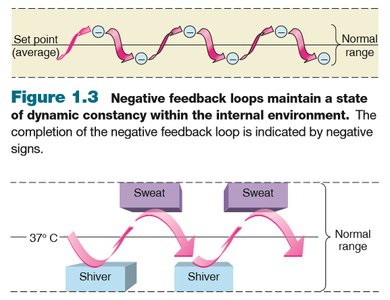
Negative Feedback: Counteracts deviations from a set point, restoring balance. Example: Regulation of body temperature.
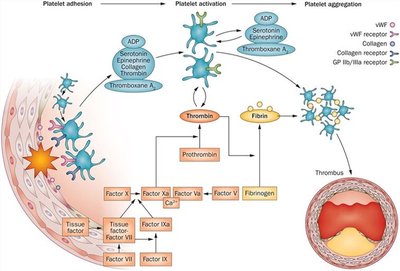
Positive Feedback: Amplifies changes, often leading to a specific outcome. Example: Blood clotting cascade.
Negative Feedback Loops
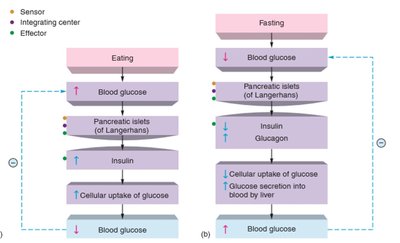
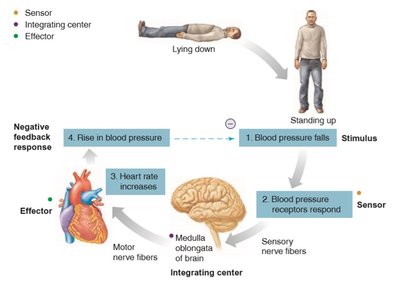
Negative feedback loops are essential for maintaining dynamic constancy within the internal environment. They involve sensors, integrating centers, and effectors.
Example: Thermoregulation—when body temperature rises, sweating occurs; when it falls, shivering occurs.
Example: Blood glucose regulation—insulin and glucagon adjust glucose levels after eating or fasting.
Example: Blood pressure regulation—baroreceptors, brain, and heart work together to stabilize blood pressure.
Positive Feedback Loops
Positive feedback loops drive processes to completion, often in situations requiring rapid change.
Example: Blood clotting—activation of platelets and clotting factors leads to rapid formation of a thrombus.
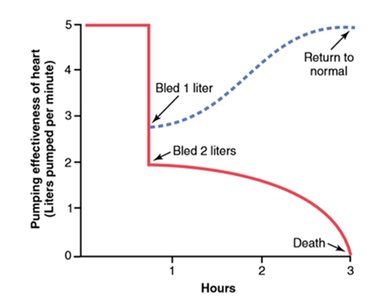
Example: Heart function—severe blood loss can trigger a positive feedback loop leading to decreased cardiac output and potentially death.
Summary Table: Feedback Mechanisms
Type | Purpose | Example |
|---|---|---|
Negative Feedback | Restores balance | Thermoregulation, blood glucose |
Positive Feedback | Amplifies change | Blood clotting, childbirth |
Additional info:
Physiology integrates knowledge from chemistry, biology, and medicine to explain how the human body functions.
Understanding feedback mechanisms is crucial for interpreting clinical symptoms and diagnostic tests.
