 Back
Introduction to Life on Earth: Organization, Classification, and Scientific Inquiry
Study Guide - Smart Notes
 Tailored notes based on your materials, expanded with key definitions, examples, and context.
Introduction to Life on Earth
Complexity and Organization of Living Things
Living organisms are distinguished by their high degree of complexity and organization. Biological systems are structured in hierarchical levels, from the simplest to the most complex.
Complexity refers to the presence of many interacting parts and processes within living things.
Organization means that these parts are arranged in a specific, non-random order, allowing for the maintenance of life functions.
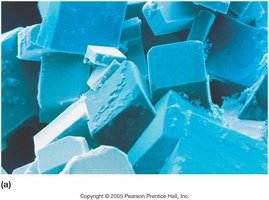
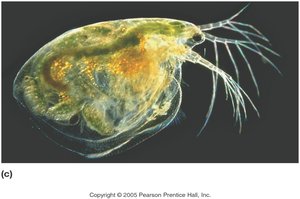
Example: The difference between a living organism and non-living matter can be illustrated by comparing a mineral crystal (highly organized but not alive), ocean waves (complex but not organized into living structures), and a living organism such as a water flea (both complex and organized).

Levels of Biological Organization
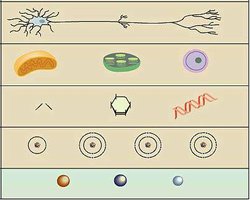
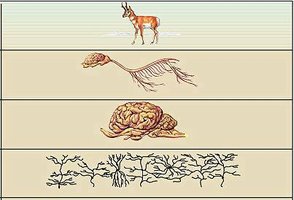
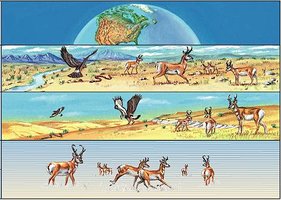
Biological organization is structured in a hierarchy, from the smallest chemical units to the entire biosphere. Understanding these levels is fundamental to biology.
Subatomic particles (protons, neutrons, electrons)
Atoms (e.g., carbon, hydrogen, oxygen)
Molecules (e.g., water, DNA, glucose)
Organelles (e.g., mitochondria, chloroplasts)
Cells (the basic unit of life)
Tissues (groups of similar cells performing a function)
Organs (structures composed of multiple tissues)
Organ systems (groups of organs working together)
Organisms (individual living beings)
Populations (groups of the same species in an area)
Communities (all living organisms in an area)
Ecosystems (communities plus their physical environment)
Biosphere (all ecosystems on Earth)
The Cell: The Smallest Unit of Life
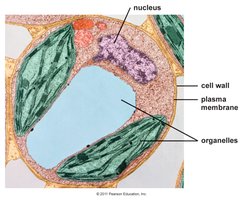
Cells are the fundamental units of life. All living things are composed of one or more cells, which carry out the essential processes of life.
Prokaryotic cells lack a nucleus and membrane-bound organelles (e.g., bacteria, archaea).
Eukaryotic cells have a nucleus and various organelles (e.g., plants, animals, fungi, protists).
Classification of Life
The Three Domains of Life
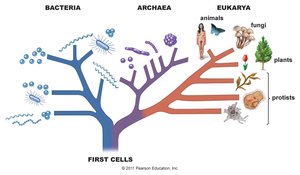
All living organisms are classified into three domains based on genetic and cellular differences:
Bacteria: Single-celled prokaryotes with unique cell wall structures.
Archaea: Single-celled prokaryotes, often found in extreme environments, with distinct molecular characteristics.
Eukarya: Organisms with eukaryotic cells, including animals, plants, fungi, and protists.
Scientific Inquiry and the Scientific Method
The Scientific Method
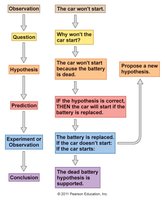
The scientific method is a systematic approach used by scientists to investigate natural phenomena. It involves several key steps:
Observation: Gathering information about a phenomenon.
Question: Asking why or how something occurs.
Hypothesis: Proposing a testable explanation.
Prediction: Making a logical statement about what will happen if the hypothesis is correct.
Experiment/Observation: Testing the prediction through controlled experiments or further observations.
Conclusion: Analyzing results to support or refute the hypothesis.
Application of the Scientific Method: Redi's Experiment
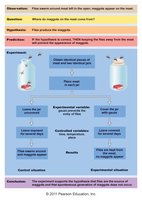
Francesco Redi's experiment on the origin of maggots in meat is a classic example of the scientific method in action. He tested the hypothesis that maggots come from flies, not spontaneously from meat.
Discovery of Penicillin
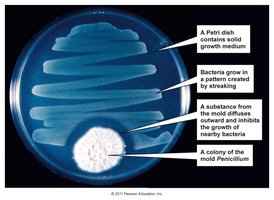
Alexander Fleming's discovery of penicillin is a landmark in scientific history, demonstrating the importance of observation and experimentation in science. Fleming noticed that a mold (Penicillium) inhibited bacterial growth, leading to the development of antibiotics.
Types of Reasoning in Science
Scientific reasoning can be classified into two main types:
Inductive reasoning: Drawing general conclusions from specific observations.
Deductive reasoning: Making specific predictions based on general principles or theories.
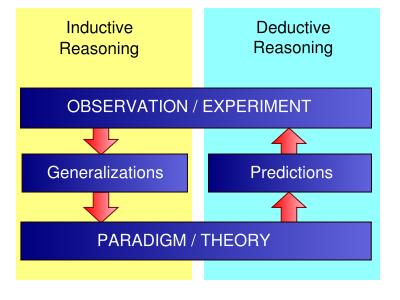
Example: Inductive reasoning might involve observing that all swans seen are white and concluding that all swans are white. Deductive reasoning might involve predicting that a specific swan is white based on the generalization that all swans are white.
