Back
BackIntroduction to Macromolecules and Biochemistry
Study Guide - Smart Notes
 Tailored notes based on your materials, expanded with key definitions, examples, and context.
Introduction to Macromolecules and Biochemistry
Carbon: The Basis of Life
All known life is carbon-based, with carbon atoms forming the backbone of most biological molecules. Carbon's unique properties allow it to form four covalent bonds, enabling the construction of complex molecules essential for life.
Atomic Structure: Carbon atoms have 6 protons, 6-8 neutrons, and 6 electrons.
Bonding: Carbon can form single, double, or triple covalent bonds, creating chains and rings that serve as molecular frameworks.
Organic Molecules: Compounds containing carbon (except for a few simple molecules like CO2) are classified as organic.
Macromolecules
Definition and Importance
Macromolecules are large, complex molecules essential for biosynthesis and energy transfer in cells. Most are polymers, constructed from repeating subunits called monomers.
Polymer: A large molecule made of many similar or identical building blocks (monomers).
Monomer: A small molecule that serves as a building block for polymers.
Biosynthesis: The process of building cell parts from macromolecules.
Synthesis and Breakdown of Polymers
Polymers are assembled and disassembled through specific chemical reactions:
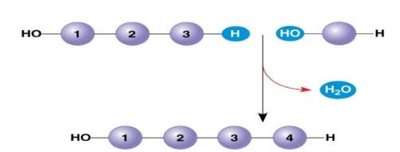
Dehydration Synthesis (Condensation Reaction): Monomers are joined by covalent bonds, releasing a molecule of water for each bond formed.
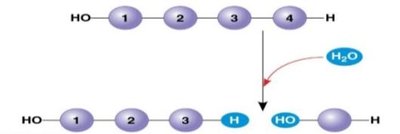
Hydrolysis: Polymers are broken down into monomers by the addition of water, cleaving the covalent bonds.
Diversity of Polymers
Despite a limited set of monomers, the arrangement and sequence of these building blocks create a vast diversity of polymers, contributing to the uniqueness of each organism.
Each class of polymer is formed from a specific set of monomers.
Organisms share the same types of monomers, but their unique arrangements result in biological diversity.
Carbohydrates
Composition and Function
Carbohydrates are organic molecules composed of carbon, hydrogen, and oxygen, typically with a 1:2:1 ratio. They serve as energy sources and structural components in cells.
Monosaccharides: Simple sugars (e.g., glucose) that act as monomers for larger carbohydrates.
Oligosaccharides: Short chains of 2-12 monosaccharides.
Polysaccharides: Long chains of monosaccharides; examples include starch, cellulose, glycogen, and chitin.
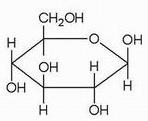
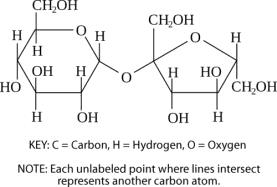
Starch: Storage form of glucose in plants.
Cellulose: Structural component of plant cell walls.
Glycogen: Storage form of glucose in animals.
Chitin: Structural component in fungal cell walls and arthropod exoskeletons.
Lipids
Composition and Functions
Lipids are a diverse group of hydrophobic molecules that are not true polymers. They play key roles in energy storage, membrane structure, and signaling.
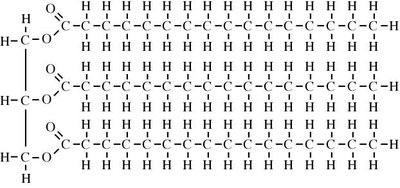
Fat molecules (Triglycerides): Composed of one glycerol and three fatty acids.
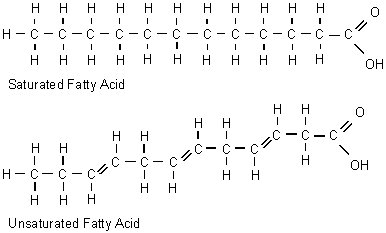
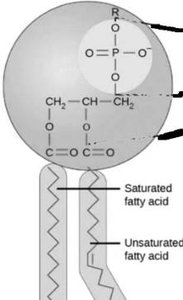
Saturated Fats: Have only single bonds between carbon atoms; solid at room temperature.
Unsaturated Fats: Have one or more double bonds; liquid at room temperature.
Steroids: Lipids with a characteristic four-ring structure (e.g., cholesterol).
Phospholipids: Major components of cell membranes, containing two fatty acids, a glycerol, and a phosphate group.
Proteins
Composition and Functions
Proteins are polymers of amino acids, performing a vast array of functions including catalysis, structure, transport, and signaling.
Amino Acids: The monomers of proteins; 20 main types exist.
Polypeptides: Chains of amino acids linked by peptide bonds.
Native Conformation: The functional three-dimensional shape of a protein.
Levels of Protein Structure
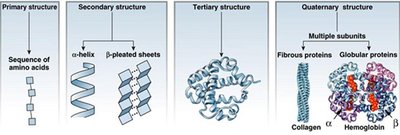
Primary Structure: Unique sequence of amino acids held by peptide bonds.
Secondary Structure: Local folding into α-helices and β-pleated sheets, stabilized by hydrogen bonds.
Tertiary Structure: Overall 3D shape formed by interactions among R groups (disulfide bridges, hydrophobic interactions, ionic bonds).
Quaternary Structure: Association of multiple polypeptide subunits.
Denaturation: Loss of native conformation, resulting in loss of function.
Nucleic Acids
Composition and Function
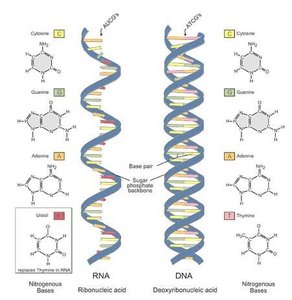
Nucleic acids store and transmit genetic information. They are polymers of nucleotides, each consisting of a pentose sugar, a nitrogenous base, and a phosphate group.
Nucleotides: Monomers of nucleic acids.
Sugars: Ribose (in RNA) and deoxyribose (in DNA).
Nitrogen Bases: Pyrimidines (cytosine, thymine, uracil) and purines (adenine, guanine).
DNA: Stores genetic information; double helix structure.
RNA: Transfers genetic instructions for protein synthesis.