 Back
Introduction to Metabolism: Energy, Thermodynamics, and Enzymatic Catalysis
Study Guide - Smart Notes
 Tailored notes based on your materials, expanded with key definitions, examples, and context.
Metabolism: The Chemical Reactions of Life
Definition and Overview
Metabolism encompasses all the chemical reactions occurring within an organism, managing both material and energy resources. It involves the making and breaking of macromolecules and is central to bioenergetics, which is the study of how organisms manage their energy resources.
Metabolism: The sum total of an organism’s chemical reactions.
Bioenergetics: How an organism manages energy resources.
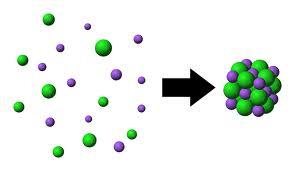
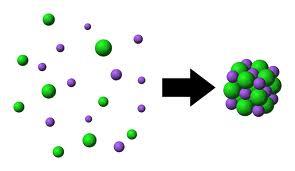
Anabolic Pathways: Consume energy to build large molecules from smaller ones (e.g., dehydration reactions, photosynthesis).
Catabolic Pathways: Release energy by breaking down large molecules into smaller ones (e.g., hydrolysis reactions, cellular respiration).
Example: Photosynthesis is anabolic: ; Respiration is catabolic:
Energy Coupling in Metabolism
Cells constantly perform both anabolic and catabolic reactions. Energy coupling is the process by which energy released from catabolic pathways is used to drive anabolic pathways.
Energy Coupling: The linking of exergonic (energy-releasing) and endergonic (energy-consuming) reactions.
Example: ATP is synthesized during catabolic reactions and hydrolyzed to power anabolic reactions.

Forms of Energy and Their Transfer
Kinetic and Potential Energy
Energy is the ability to do work, and it exists in two main forms: kinetic and potential energy. Chemical energy is a form of potential energy stored in chemical bonds.
Kinetic Energy (KE): Energy due to motion (e.g., heat, movement, transport).
Potential Energy (PE): Energy stored due to position or structure (e.g., chemical bonds, concentration gradients).
Chemical Energy: Potential energy available for release in a chemical reaction.
Key Definitions Related to Energy
Heat (H): Total energy (KE + PE).
Calorie (cal): Unit of energy; 1 cal heats 1 g of water by 1°C.
Temperature (T): Average kinetic energy.
Entropy (S): Measure of disorder or randomness; increased entropy means decreased order.
Thermodynamics in Biological Reactions
The Laws of Thermodynamics
Biological systems obey the laws of thermodynamics, which govern energy transformations and the direction of chemical reactions.
First Law: Energy cannot be created or destroyed, only transformed.
Second Law: Entropy (disorder) of the universe is always increasing; spontaneous reactions increase entropy.
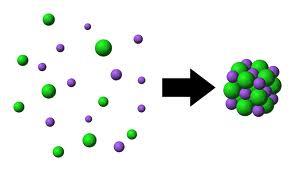
Gibbs Free Energy (G)
Gibbs Free Energy is the energy available to do work in a system. It depends on total energy (H), entropy (S), and temperature (T).
Equation:
Interpretation:
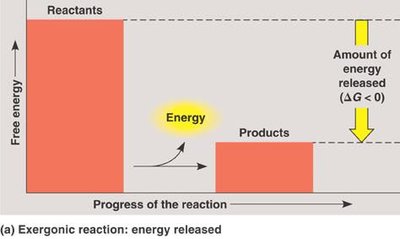
If is negative, the reaction is exergonic (spontaneous, energy released).
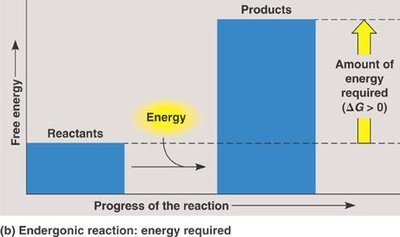
If is positive, the reaction is endergonic (non-spontaneous, energy required).
At equilibrium, (no work can be performed).
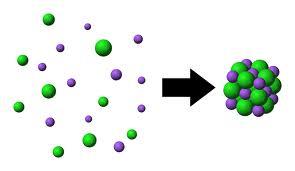
Exergonic vs. Endergonic Reactions
Exergonic Reaction: ; energy is released; reaction moves toward equilibrium.
Endergonic Reaction: ; energy is required; reaction moves away from equilibrium.
Cellular Metabolism: Coupling and ATP
ATP: The Energy Currency of the Cell
Adenosine Triphosphate (ATP) mediates most energy coupling in cells. Its hydrolysis is exergonic and releases energy that can be used to drive endergonic reactions.
ATP Structure: Contains three phosphate groups; crowding of negative charges makes it unstable.
ATP Hydrolysis: ; kcal/mol.
ATP Cycle: Energy from catabolism generates ATP, which is then used in anabolism.
Energy Coupling via ATP
ATP hydrolysis is coupled to endergonic reactions by phosphorylation of reactants, making them unstable and more likely to react.
Cells couple exergonic reactions (e.g., cellular respiration) to endergonic processes (e.g., active transport, biosynthesis).
Enzymatic Catalysis of Biological Reactions
Role of Enzymes
Enzymes are biological catalysts that increase the rate of chemical reactions without being consumed. They lower the activation energy (Ea) required for reactions to proceed.
Activation Energy (Ea): The energy barrier that must be overcome for a reaction to occur.
Transition State (TS*): The point of highest free energy during a reaction.
Enzyme Function: Stabilizes the transition state, lowers Ea, but does not affect .
Enzyme Inhibitors and Activators
Competitive Inhibitors: Bind to the active site, competing with the substrate.
Noncompetitive Inhibitors (Allosteric Regulators): Bind elsewhere, changing the shape of the active site.
Activators: Enhance enzyme activity, often via allosteric regulation.
Metabolic Control by Enzymes
Enzyme pathways are regulated by inhibitors, activators, and feedback inhibition.
Feedback Inhibition: The final product of a pathway inhibits an enzyme earlier in the pathway, preventing overproduction.
ATP and ADP are involved in feedback regulation of metabolism.
Enzyme Activity: Cofactors and Conditions
Some enzymes require non-protein cofactors (e.g., Zn2+, Mg2+).
Organic cofactors are called coenzymes (many vitamins).
Enzymes have optimal temperature and pH for activity.
Summary Table: Metabolic Reactions and Their Properties
The following table summarizes key properties of metabolic reactions:
Reaction Type | Energy Required or Released | (positive or negative) | (increase or decrease) | (increase or decrease) | Spontaneous or Nonspontaneous |
|---|---|---|---|---|---|
Anabolic reaction | Required | Positive | Decrease | Increase | Nonspontaneous |
Catabolic reaction | Released | Negative | Increase | Decrease | Spontaneous |
Photosynthesis | Required | Positive | Decrease | Increase | Nonspontaneous |
Respiration | Released | Negative | Increase | Decrease | Spontaneous |
Dehydration | Required | Positive | Decrease | Increase | Nonspontaneous |
Hydrolysis | Released | Negative | Increase | Decrease | Spontaneous |
Practice Questions
Is combining six CO2 molecules into one glucose molecule anabolic or catabolic? Is energy required or released?
What happens to entropy and free energy during hydrolysis of a protein?
How does ATP couple exergonic and endergonic reactions?
What is the role of enzyme inhibitors in metabolic regulation?
Additional info:
Metabolic equilibrium is lethal for cells; constant nutrient intake prevents equilibrium.
Enzymes are highly specific and can catalyze thousands of reactions per second.
