 Back
BackIntroduction to Plants: Structure, Classification, and Life Cycles
Study Guide - Smart Notes
 Tailored notes based on your materials, expanded with key definitions, examples, and context.
Kingdom Plantae: Overview
Defining Characteristics of Plants
Plants are multicellular, eukaryotic organisms classified under Kingdom Plantae. They are primarily distinguished by their cell structure, mode of nutrition, and life cycles.
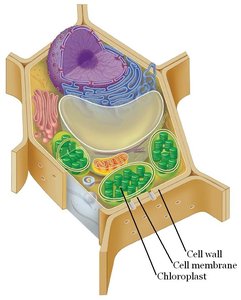
Cell Walls of Cellulose: Plant cells possess rigid cell walls composed of cellulose, a complex carbohydrate that provides structural support.
Photosynthesis: Plants are autotrophic, acquiring energy through photosynthesis. This process occurs in chloroplasts containing chlorophyll a and b, pigments that reflect green light.
Plant Anatomy
Organization of the Plant Body
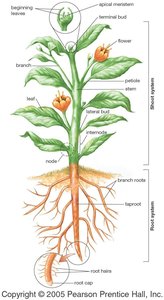
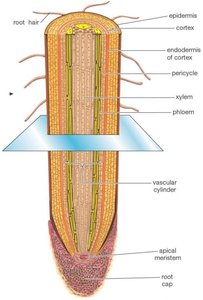
The plant body is organized into two main systems: the shoot system and the root system. Each system has specialized structures and functions.
Shoot System: Includes stems (with nodes and internodes), branches, leaves, and reproductive structures (flowers, cones, etc.). Usually located above ground.
Root System: Composed of primary and branch roots, typically found below ground and responsible for anchorage and absorption of water and minerals.
Vascular Tissues
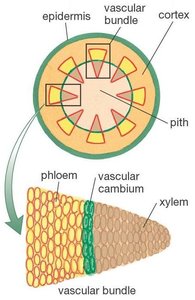
Vascular tissues are essential for the transport of water, minerals, and nutrients throughout the plant body.
Xylem: Conducts water and dissolved minerals upward from the roots to the rest of the plant.
Phloem: Transports organic nutrients (sap) downward from the leaves.
Cambium: A layer of actively dividing cells that contributes to the production of xylem and phloem, enabling secondary growth (increase in girth).
Growth at Meristems
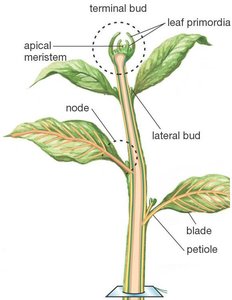
Plant growth occurs at specialized regions called meristems.
Apical Meristem: Located at the tips of roots and shoots; responsible for primary growth (lengthening).
Lateral Meristem (Vascular Cambium): Responsible for secondary growth (increase in girth).
Plant Life Cycles: Alternation of Generations
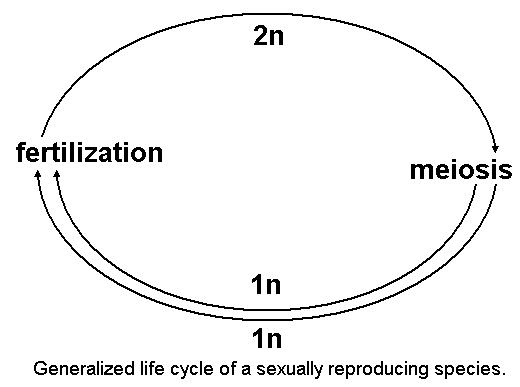
Generalized Sexual Life Cycle
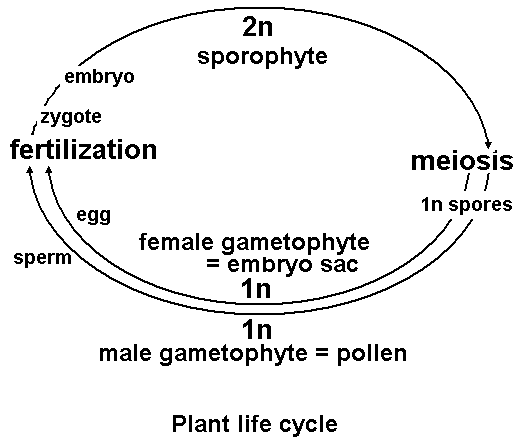
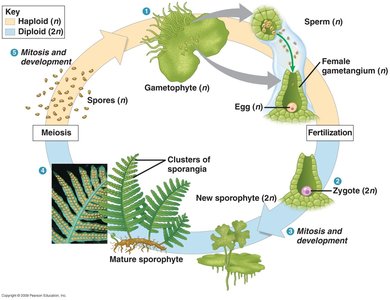
Plants exhibit a unique life cycle known as alternation of generations, involving both diploid (sporophyte) and haploid (gametophyte) multicellular stages.
Sporophyte Generation (2n): Diploid phase that produces haploid spores via meiosis.
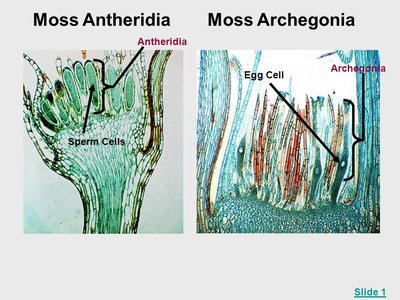
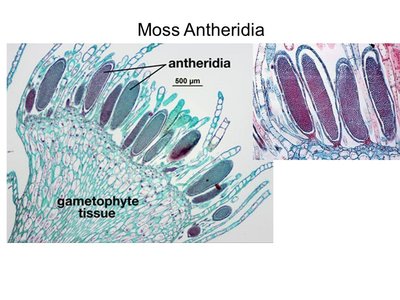
Gametophyte Generation (1n): Haploid phase that produces gametes (sperm and egg) via mitosis.
Fertilization: Fusion of gametes restores the diploid state, forming a new sporophyte.
Comparison: Animal vs. Plant Life Cycles
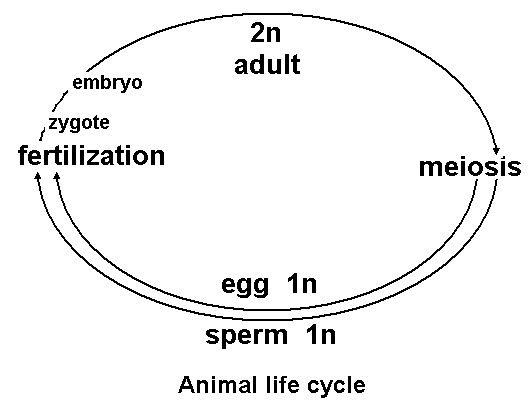
Animal Life Cycle: The multicellular stage is diploid; gametes are the only haploid cells.
Plant Life Cycle: Both multicellular diploid (sporophyte) and haploid (gametophyte) stages exist.
Classification of Plants
Major Groups of Plants
Plants are classified based on the presence of flowers, seeds, and vascular tissues.
Non-flowering Plants: Do not produce flowers; include mosses and ferns.
Flowering Plants (Angiosperms): Produce flowers and seeds enclosed in fruits; divided into monocots and dicots.
Gymnosperms: Produce seeds not enclosed in fruits ("naked seeds"); include conifers.
Non-flowering Plants: Mosses (Phylum Bryophyta)
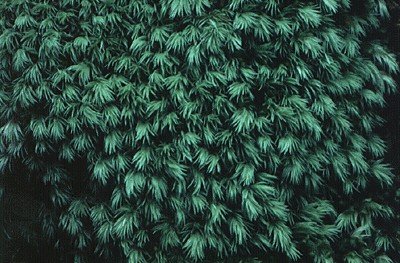
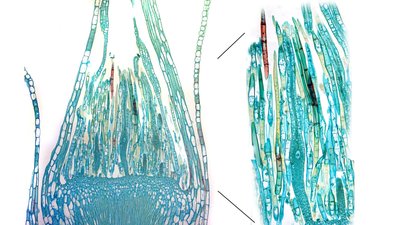
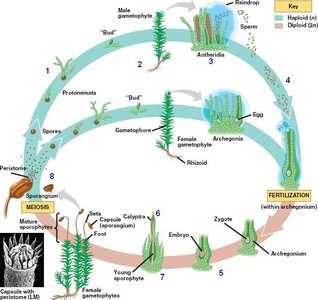
Mosses are among the simplest plants, lacking true roots and vascular tissues. They reproduce via spores and have a dominant gametophyte generation.
Structure: Simple stems and leaves; rhizoids for anchorage.
Reproduction: Spores produced in capsules; wind-dispersed.
Dominant Phase: Gametophyte is the main, photosynthetic stage.
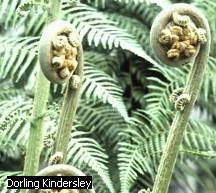
Non-flowering Plants: Ferns (Phylum Pteridophyta)
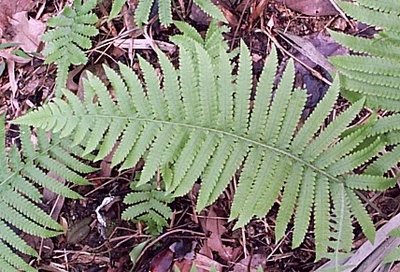
Ferns are vascular plants that reproduce via spores and have a dominant sporophyte generation.
Structure: Roots, feathery leaves (fronds), and underground stems (rhizomes).
Habitat: Prefer damp, shady environments.
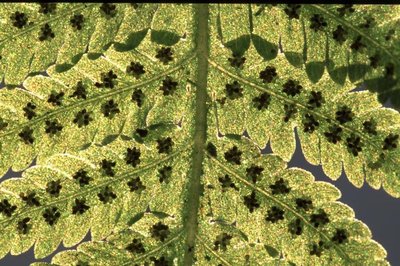
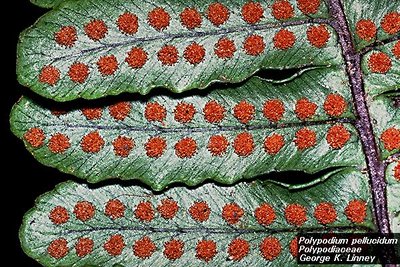
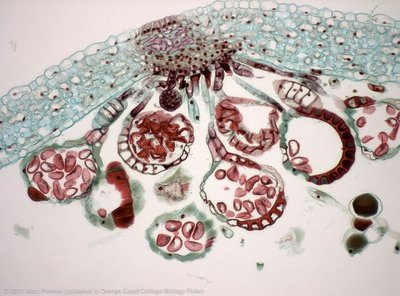
Reproduction: Spores produced in sporangia on the underside of leaves.
Dominant Phase: Sporophyte is the main, photosynthetic stage.
Gymnosperms
Gymnosperms are seed-producing plants with "naked seeds" not enclosed in fruits. They are typically evergreen trees with needle-shaped leaves and cones as reproductive structures.
Key Features: Needle-shaped leaves, cones, vascular tissues, adaptation to dry environments.
Major Phyla: Coniferophyta, Cycadophyta, Ginkgophyta, Gnetophyta.
Reproduction: Male cones produce pollen; female cones produce ovules (seeds).
Flowering Plants (Angiosperms): Monocots vs. Dicots
Angiosperms are divided into two major groups based on seed structure and other morphological features.
Feature | Monocotyledons (Monocots) | Dicotyledons (Dicots) |
|---|---|---|
Seed Leaves (Cotyledons) | One | Two |
Leaf Venation | Parallel veins | Network of veins |
Examples | Grass, maize | Sunflower, rose, trees |
Monocots: Herbaceous plants with parallel-veined leaves. Dicots: Plants with leaves showing a network of veins.
Summary Table: Major Plant Groups
Group | Vascular Tissue | Seeds | Flowers | Dominant Generation |
|---|---|---|---|---|
Mosses (Bryophyta) | No | No | No | Gametophyte |
Ferns (Pteridophyta) | Yes | No | No | Sporophyte |
Gymnosperms | Yes | Yes (naked) | No | Sporophyte |
Angiosperms | Yes | Yes (enclosed in fruit) | Yes | Sporophyte |
Additional info: This guide provides a foundational overview of plant structure, classification, and life cycles, suitable for introductory college biology courses. For more detail, refer to chapters on plant anatomy, physiology, and evolution.
