 Back
Backlec 31
Study Guide - Smart Notes
 Tailored notes based on your materials, expanded with key definitions, examples, and context.
Mysteries of Evolutionary Biology
Introduction to Evolutionary Mysteries
Evolutionary biology seeks to explain not only the diversity of life but also puzzling behaviors that seem to contradict the principle of individual fitness. Some behaviors, such as alarm calling, homosexual behavior, and menopause, appear to reduce an individual's direct reproductive success. Understanding these phenomena requires integrating concepts such as kin selection, inclusive fitness, and adaptive versus non-adaptive explanations.
Altruism and Alarm Calling
Alarm Calling in Animals
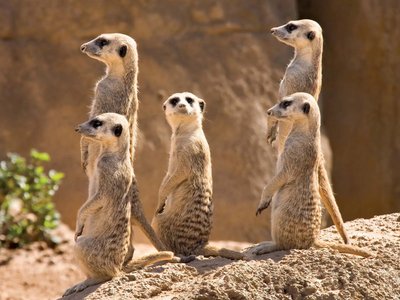
Alarm calling is a behavior in which an individual emits a warning signal to alert conspecifics (members of the same species) to the presence of a predator. This behavior is widespread in social animals, including birds, mammals, and insects. Although alarm calling can increase the caller's risk of predation, it benefits the group by increasing the survival chances of relatives and other group members.
Definition: Altruism is a behavior that benefits another individual at a cost to the actor.
Example: Prairie dogs and ground squirrels are well-known for their alarm calls when predators are near.
Functional Explanations for Alarm Calling
Several hypotheses have been proposed to explain the evolution of alarm calling and similar altruistic behaviors:
Kin Selection Hypothesis: Individuals increase their inclusive fitness by helping relatives survive and reproduce.
Reciprocal Altruism: Individuals help others with the expectation that the favor will be returned in the future.
Selfish Herd Effect: Alarm calling may reduce the caller's risk by causing confusion or by positioning the caller in the center of the group.
Alarm Calling in Prairie Dogs
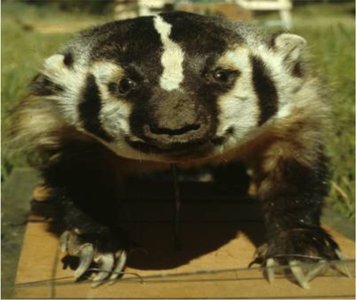
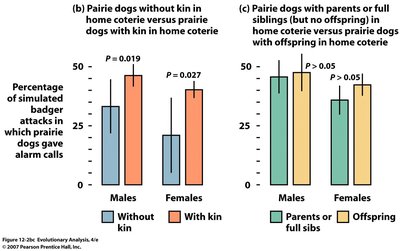
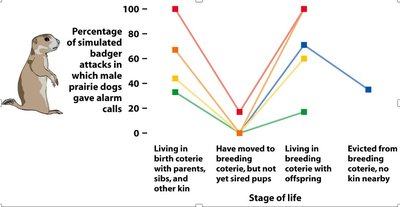
Prairie dogs provide a classic example of kin-selected alarm calling. Studies show that prairie dogs are more likely to give alarm calls when close relatives are present, supporting the kin selection hypothesis.
Empirical Evidence: Alarm Calling and Kin Presence
Experimental data demonstrate that the presence of kin increases the likelihood of alarm calling in prairie dogs, especially among females. This supports the idea that alarm calling is an altruistic behavior favored by kin selection.
Kin Selection and Inclusive Fitness
Hamilton's Rule
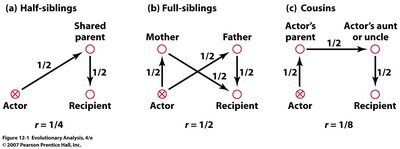
W.D. Hamilton formalized the concept of kin selection with the following rule:
B: Benefit to the recipient
r: Coefficient of relatedness between actor and recipient
C: Cost to the actor
Altruism will evolve if the benefit to the recipient, weighted by relatedness, exceeds the cost to the actor.
Inclusive Fitness
Inclusive fitness is the sum of an individual's direct fitness (from personal reproduction) and indirect fitness (from aiding the reproduction of relatives). Natural selection acting on inclusive fitness is termed kin selection.
Direct fitness: Results from an individual's own reproduction.
Indirect fitness: Results from the reproduction of relatives, weighted by relatedness.
Classification of Social Interactions
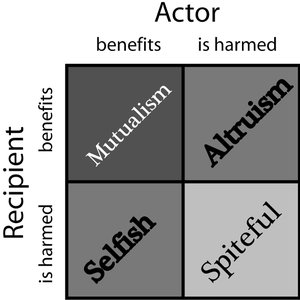
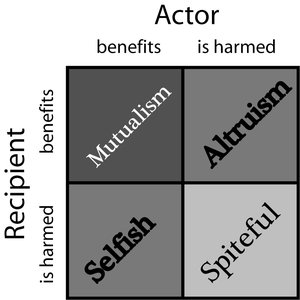
Social interactions can be classified based on their effects on the actor and the recipient:
Recipient benefits | Recipient is harmed | |
|---|---|---|
Actor benefits | Mutualism | Selfishness |
Actor is harmed | Altruism | Spite |
Flagging Behavior in White-Tailed Deer
Tail Flagging as an Alarm Signal
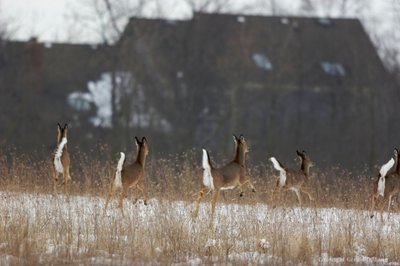
White-tailed deer exhibit a conspicuous tail-flagging behavior when alarmed. Several hypotheses have been proposed to explain this behavior, including signaling to conspecifics and confusing predators.
Functional Hypotheses for Tail Flagging
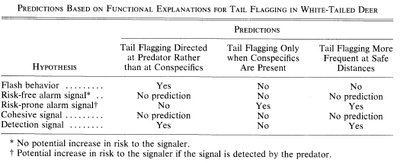
The following table summarizes predictions from different hypotheses explaining tail-flagging in white-tailed deer:
Hypothesis | Tail Flagging Directed at Predator Rather than Conspecifics | Tail Flagging Only when Conspecifics Are Present | Tail Flagging More Frequent at Safe Distances |
|---|---|---|---|
Flash behavior | Yes | No | No prediction |
Risk-free alarm signal | No prediction | Yes | No prediction |
Risk-prone alarm signal | No | Yes | No |
Cohesive signal | No prediction | Yes | No prediction |
Detection signal | Yes | No | No |
Kin Selection and Altruism in Bats
Reciprocal Altruism in Vampire Bats
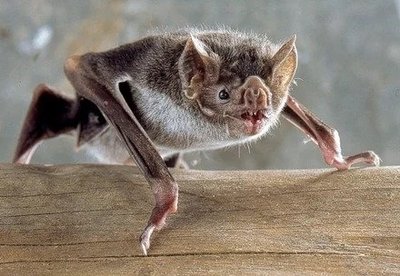
Vampire bats exhibit reciprocal food sharing, where individuals regurgitate blood meals to feed unrelated conspecifics who have failed to feed. This behavior is explained by reciprocal altruism, where the cost to the donor is outweighed by the expectation of future reciprocation.
Evolution of Homosexual Behavior
Homosexual Behavior in Animals
Homosexual behavior is observed in many animal species and is not unique to humans. Its evolutionary basis is debated, with both adaptive and non-adaptive explanations proposed.
Heritability: Sexual orientation shows heritability in humans (Pillard & Bailey 1998).
Hormonal influences: Prenatal hormone exposure may play a role (Balthazart 2011).
Neuroanatomical differences: Differences in the hypothalamus and brain structure have been observed (LeVay 1991; Swabb & Hofman 1990).
Fraternal Birth Order Effect: Increased likelihood of homosexuality in men with more older brothers, possibly due to maternal immune response (Puts et al. 2006).
Theories Explaining Evolution of Homosexual Behavior
Non-adaptive explanations:
Mistaken identity
Prison effect (deprivation-induced)
Evolutionary byproduct
Pleasure hypothesis
Adaptive explanations:
Social glue (bonding and alliance formation)
Practice for courtship and mating
Overdominance (heterozygote advantage)
Kin selection (increasing inclusive fitness by aiding relatives)
Evolution of Menopause: The Grandmother Hypothesis
Post-Reproductive Lifespan in Social Species
Most female animals reproduce throughout their lives, but a few species, including humans and some whales, have a prolonged post-reproductive lifespan. The grandmother hypothesis suggests that menopause evolved because post-reproductive females increase their inclusive fitness by helping care for grandchildren.
Many hands theory: Grandmothers assist with childcare, increasing survival of grandchildren.
Inclusive fitness theory: Grandmothers who provide care increase their genetic contribution to future generations.
Longevity genes: Postmenopausal lifespan may be a byproduct of genes for longevity.
Summary: Kin Selection and Evolutionary Theory
Evolution is defined as changes in allele frequencies in a population over generations. Kin selection and inclusive fitness provide powerful frameworks for understanding seemingly paradoxical behaviors such as alarm calling, altruism, postmenopausal longevity, and possibly homosexual behavior. These effects are most pronounced in social animals living in groups with many related individuals.
