Back
BackL8 Biodiversity
Study Guide - Smart Notes
 Tailored notes based on your materials, expanded with key definitions, examples, and context.
Kingdom Fungi
Importance of Fungi
Fungi are a diverse group of eukaryotic organisms that play essential roles in ecosystems and human society. They are important as decomposers, food sources, producers of medicines, and in symbiotic relationships with plants and animals.
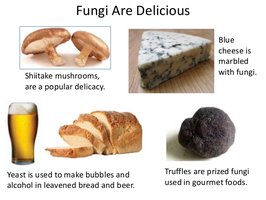
Edible mushrooms: Many mushrooms are consumed as food and are used to make products such as soy sauce, bread, blue cheese, and truffles.
Alcoholic beverages: Yeasts are used in the fermentation process to produce beer, wine, and other alcoholic drinks.
Drug production: Fungi are the source of important antibiotics like penicillin and other pharmaceuticals.
Decomposition: Fungi, along with bacteria, are major decomposers, recycling nutrients in ecosystems.
Symbiosis: Fungi form crucial symbiotic relationships with plants (e.g., mycorrhizae) and some animals.
Connection to Human Diseases
Some fungi are pathogenic to humans, causing diseases or infections, while others can be toxic if ingested.
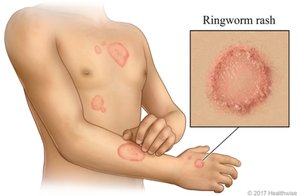
Ringworm: A common fungal skin infection characterized by circular rashes and severe itching. It spreads through skin-to-skin contact or shared objects and is treated with antifungal medication.
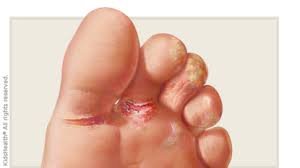
Athlete's Foot and Nail Infection: Caused by the same fungus as ringworm, these infections are common in people who walk barefoot in public areas or share footwear. Symptoms include itching, redness, and nail discoloration.

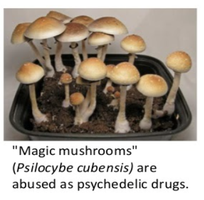
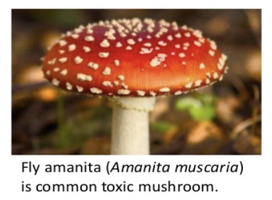
Poisoning: Consuming wild mushrooms can lead to poisoning, with symptoms such as abdominal pain, vomiting, and even death due to toxins affecting the nervous system.
Classification of Fungi
Major Phyla of Fungi
Fungi are classified into five major phyla based on their reproductive structures and genetic relationships. Each phylum has unique features and ecological roles.
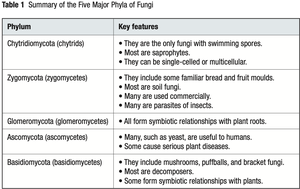
Phylum | Key Features |
|---|---|
Chytridiomycota (chytrids) | Only fungi with swimming spores; mostly saprophytes; can be single-celled or multicellular. |
Zygomycota (zygomycetes) | Includes bread and fruit molds; many are soil fungi; some are insect parasites. |
Glomeromycota (glomeromycetes) | All form symbiotic relationships with plant roots. |
Ascomycota (ascomycetes) | Includes yeasts and truffles; some are useful, others cause plant diseases. |
Basidiomycota (basidiomycetes) | Includes mushrooms and puffballs; most are decomposers; some form plant symbioses. |
Fungal Structure and Characteristics
Visible and Hidden Parts
The visible part of a fungus, such as a mushroom, is only the reproductive structure. The main body, called the mycelium, is a network of filaments (hyphae) usually hidden underground or within the substrate.
Mushroom: Specialized reproductive structure above ground.
Mycelium: Branching network of hyphae that forms the main body of the fungus.
Hyphae: Thin filaments making up the mycelium; consist of long tubes of cytoplasm with many nuclei.
Septum: Porous walls dividing hyphae into cell-like compartments, allowing cytoplasm to flow freely.
Chitin: The material forming the fungal cell wall, providing rigidity and protection.
External Digestion
Fungi digest food externally by secreting enzymes into their environment. The enzymes break down complex molecules, which are then absorbed through the hyphae cell membranes.
Fungi grow next to or within their food source.
Digestive enzymes are released to break down food outside the organism.
Nutrients are absorbed through the hyphae.
The "fuzz" on moldy food is the visible hyphae of the fungus.
Life Cycles of Fungi
Asexual Reproduction
Fungi can reproduce asexually through fragmentation or budding.
Fragmentation: Hypha breaks into fragments, each developing into a new individual.
Budding: The nucleus divides, and a small daughter cell forms on the side of the original cell, common in yeasts.
Sexual Reproduction
Sexual reproduction in fungi involves the fusion of haploid hyphae, formation of a dikaryotic cell, and eventually the production of spores through meiosis.
Haploid spores germinate to produce haploid hyphae.
Hyphae fuse to form a dikaryotic cell (two separate haploid nuclei).
Mycelium grows and forms a mushroom cap.
Under the cap, two haploid nuclei fuse to form a zygote, which undergoes meiosis to produce four haploid spores.
Fungi Compared to Plants
Similarities
Both are multicellular eukaryotes.
Both have cell walls.
Both are sessile (stationary).
Both can reproduce sexually and asexually.
Many grow in the ground.
Differences
Some fungi are single-celled (e.g., yeast).
Fungi are not photosynthetic; they are heterotrophic.
Fungal cell walls contain chitin, not cellulose.
Fungi lack roots and have many nuclei per cell.
Fungi do not reproduce by seeds.
Symbiotic Relationships
With Plants: Mycorrhiza
Mycorrhizal fungi form mutualistic associations with plant roots, enhancing nutrient uptake (especially phosphorus and copper) and providing protection against soil pathogens. In return, the plant supplies the fungus with sugars and other nutrients.
With Animals
Some fungi form symbiotic relationships with animals, such as leaf-cutter ants that cultivate fungi as a food source.
Parasitic Fungi: Cordyceps
Cordyceps fungi infect insects, alter their behavior, and eventually kill the host. The fungus then produces reproductive structures that release spores from the host's body, often from elevated positions for wider dispersal.
Examples and Applications
Food: Mushrooms, truffles, and yeast are used in various cuisines and food production.
Medicine: Penicillin and other antibiotics are derived from fungi.
Toxins: Some mushrooms, such as Amanita muscaria, are highly toxic.
Psychoactive compounds: "Magic mushrooms" (Psilocybe cubensis) contain hallucinogenic substances.