 Back
BackLab 1: Measurements & Chemistry – Foundations for Biology
Study Guide - Smart Notes
 Tailored notes based on your materials, expanded with key definitions, examples, and context.
Measurements & Conversions
Metric and Imperial Systems
The metric system is the standard for scientific measurement due to its simplicity and universal use. It is based on powers of ten, making conversions straightforward. The imperial (English) system, commonly used in the United States, relies on less consistent conversion factors.
Metric base units: meter (length), gram (mass), liter (volume), degree Celsius (temperature).
Prefixes: Indicate powers of ten (e.g., kilo- = 103, centi- = 10-2).
Scientific notation: Compact way to express large or small numbers, e.g., .
Example: 1 kilometer = 1,000 meters; 1 liter = 1,000 milliliters.
Prefix | Symbol | Exponential Notation | Value |
|---|---|---|---|
kilo | k | 1,000 | |
centi | c | 0.01 | |
milli | m | 0.001 | |
micro | μ | 0.000001 |
Conversions between metric and imperial units are essential for laboratory work.
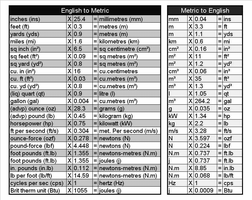
Measurement Practice
Accurate measurement of length, mass, and volume is foundational in biology labs. Common tools include rulers, measuring tapes, and balances.
Length: Measured in meters (m), centimeters (cm), millimeters (mm).
Mass: Measured in grams (g), milligrams (mg), ounces (oz).
Volume: Measured in liters (L), milliliters (mL), gallons (gal), fluid ounces (fl oz).
Example: Diameter of a penny: 2 cm = 20 mm = 20,000 μm. Circumference of biceps: 30 in = 76.2 cm. Mass of penny: 3.1 g = 3,100 mg = 0.109 oz. Bladder volume: 500 mL = 0.5 L = 0.132 gal = 16.907 fl oz.
Chemistry Fundamentals
Atomic Structure
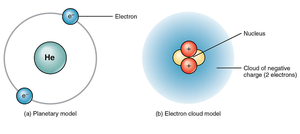
Atoms are the basic units of matter, composed of subatomic particles: protons, neutrons, and electrons. The nucleus contains protons and neutrons, while electrons occupy shells around the nucleus.
Atomic number: Number of protons; determines the element.
Atomic mass: Sum of protons and neutrons.
Electrons: Equal to protons in a neutral atom.
Example: Carbon (C): Atomic number 6, Atomic mass ≈ 12, Protons 6, Neutrons ≈ 6, Electrons 6.
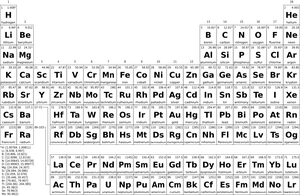
Bohr Models & Electron Shells
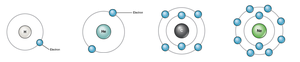
Bohr models illustrate the arrangement of electrons in shells around the nucleus. The first shell holds up to 2 electrons; subsequent shells hold up to 8 electrons. The outermost shell is the valence shell, which determines chemical reactivity.
Octet rule: Atoms are most stable with 8 electrons in their valence shell (except H and He).
Valence electrons: Electrons in the outermost shell; involved in bonding.
Example: Magnesium (Mg) has 12 electrons: 2 in the first shell, 8 in the second, 2 in the third.
Chemical Bonding
Chemical bonds form when atoms interact to achieve full valence shells. The main types are ionic and covalent bonds.
Ionic bonds: Formed by transfer of electrons between atoms with large electronegativity differences, resulting in charged ions (e.g., NaCl).
Covalent bonds: Formed by sharing electrons between atoms. If electrons are shared unequally, the bond is polar covalent; if shared equally, it is nonpolar covalent.
Bond Type | Electron Movement | Resulting Particles |
|---|---|---|
Ionic | Transfer | Positive and negative ions |
Covalent (polar) | Unequal sharing | Partial charges |
Covalent (nonpolar) | Equal sharing | No charge separation |
Example: Water (H2O) forms polar covalent bonds; sodium chloride (NaCl) forms ionic bonds.
Hydrophilic vs. Hydrophobic Compounds
Hydrophilic substances are "water-loving" and dissolve in water due to polar bonds. Hydrophobic substances are "water-fearing" and do not dissolve in water, typically containing nonpolar bonds.
Polar molecules: Dissolve in water (hydrophilic).
Nonpolar molecules: Do not dissolve in water (hydrophobic).
Example: Oil is hydrophobic (nonpolar), water is hydrophilic (polar), so they do not mix.
Acids, Bases, and Buffers
Acids release hydrogen ions (H+), while bases accept hydrogen ions or release hydroxide ions (OH-). The pH scale (0–14) measures acidity or basicity; lower pH is acidic, higher pH is basic.
Acidic: pH < 7
Neutral: pH = 7
Basic: pH > 7
Fluid | Normal pH Range | Classification |
|---|---|---|
Saliva | 6.7–7.6 | Acidic |
Blood | 7.35–7.45 | Neutral |
Urine | 5–8 | Acidic |
Gastric juice | 1.5–3.5 | Acidic |
Buffers stabilize pH by neutralizing added acids or bases. In biological systems, buffers are vital for maintaining homeostasis, such as the bicarbonate buffer system in blood.
Example: When acid is added to water, pH drops sharply. When acid is added to a buffer, pH changes minimally.
Summary Table: Key Concepts
Concept | Definition | Example/Application |
|---|---|---|
Metric System | Measurement system based on powers of ten | 1 km = 1,000 m |
Atomic Number | Number of protons in an atom | Carbon: 6 |
Ionic Bond | Electron transfer between atoms | NaCl |
Covalent Bond | Electron sharing between atoms | H2O |
Buffer | Substance that stabilizes pH | Bicarbonate in blood |
