 Back
Large Biological Molecules: Carbohydrates, Lipids, Proteins, and Nucleic Acids
Study Guide - Smart Notes
 Tailored notes based on your materials, expanded with key definitions, examples, and context.
Large Biological Molecules
Introduction
Large biological molecules, also known as macromolecules, are essential for life and include carbohydrates, lipids, proteins, and nucleic acids. These molecules are built from smaller subunits and perform a wide range of functions in living organisms, from energy storage to genetic information transfer.
Carbohydrates
Structure and Function
Carbohydrates are organic molecules composed of carbon, hydrogen, and oxygen, typically with a 1:2:1 ratio. They serve as energy sources, energy storage, structural components, and play roles in cell communication.
Monosaccharides: Simple sugars (e.g., glucose, fructose).
Disaccharides: Two monosaccharides joined by a glycosidic bond (e.g., sucrose).
Polysaccharides: Long chains of monosaccharides (e.g., starch, glycogen, cellulose).
Functions of Carbohydrates:
Energy sources (e.g., glucose in cellular respiration)
Energy storage (e.g., starch in plants, glycogen in animals)
Structural support (e.g., cellulose in plant cell walls)
Cell communication (e.g., glycoproteins on cell surfaces)
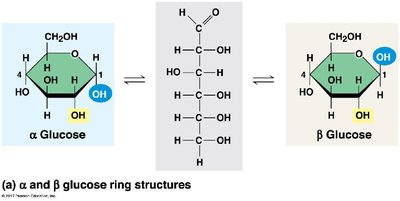
Alpha and beta glucose are isomers that differ in the orientation of the hydroxyl group on carbon 1, which affects their biological roles.
Polysaccharide Structure and Linkages
Polysaccharides are formed by dehydration reactions, creating glycosidic linkages between monosaccharides. The type of linkage determines the structure and function of the polysaccharide.
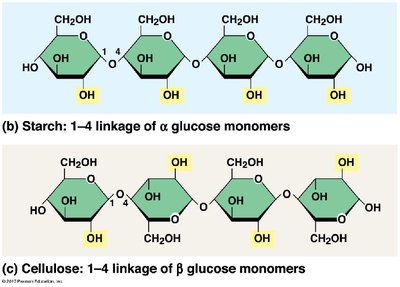
Starch is composed of alpha-1,4 linkages, while cellulose is composed of beta-1,4 linkages, resulting in different three-dimensional structures and biological properties.
Storage and Structural Polysaccharides
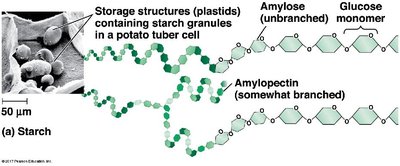
Starch: Main storage polysaccharide in plants; consists of amylose (unbranched) and amylopectin (branched).
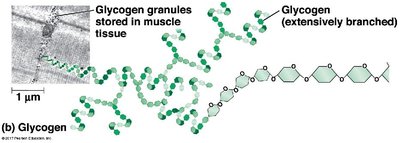
Glycogen: Main storage polysaccharide in animals; highly branched structure.
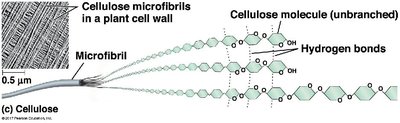
Cellulose: Major structural component of plant cell walls; unbranched chains form microfibrils via hydrogen bonding.
Lipids
Structure and Function
Lipids are hydrophobic macromolecules, including fats, phospholipids, and steroids. Unlike other macromolecules, most lipids are not polymers. They serve as energy storage, structural components, and signaling molecules.
Energy storage (e.g., triglycerides)
Cushioning and insulation (e.g., fat layer under the skin)
Protection (e.g., waxes)
Structural (e.g., biological membranes)
Cell communication (e.g., steroid hormones)
Fats (Triglycerides)
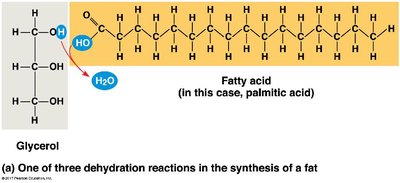
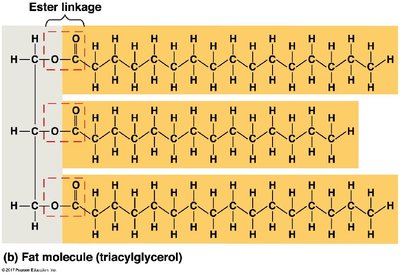
Fats are composed of glycerol and three fatty acids, joined by ester linkages through dehydration reactions.
Saturated vs. Unsaturated Fats
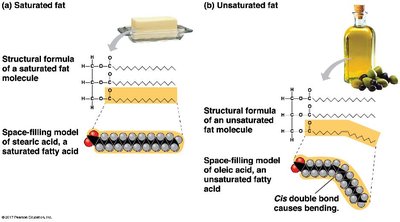
Saturated fats: No double bonds in fatty acid chains; solid at room temperature (e.g., butter).
Unsaturated fats: One or more cis double bonds; liquid at room temperature (e.g., olive oil).
Phospholipids
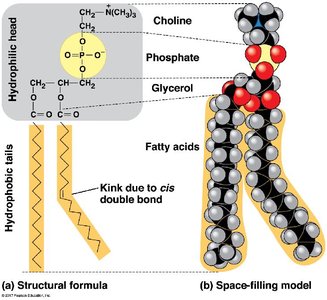
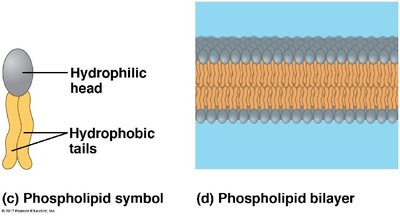
Phospholipids consist of a glycerol backbone, two fatty acids, and a phosphate group. They are amphipathic, with hydrophilic heads and hydrophobic tails, forming the basis of biological membranes.
Steroids
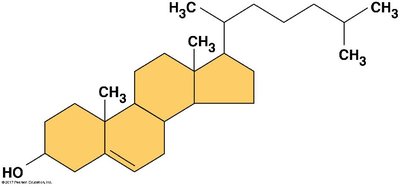
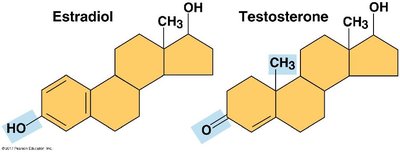
Steroids are lipids with a characteristic four-ring structure. Cholesterol is a key steroid in animal cell membranes and a precursor for steroid hormones.
Proteins
Structure and Function
Proteins are polymers of amino acids linked by peptide bonds. They perform a vast array of functions, including catalysis, transport, structure, movement, and defense.
Movement (e.g., actin, myosin)
Storage (e.g., myoglobin)
Transport (e.g., hemoglobin)
Hormones (e.g., insulin, glucagon)
Enzymes (e.g., lactase, trypsin)
Structural (e.g., collagen, keratin)
Defense (e.g., antibodies)
Amino Acids and Peptide Bonds
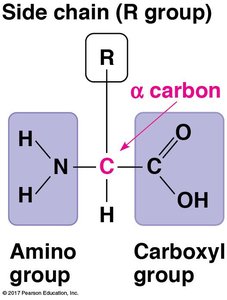
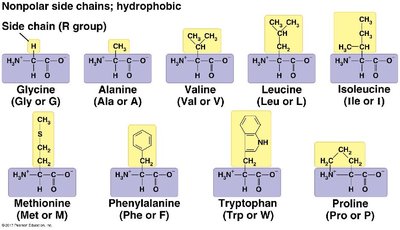
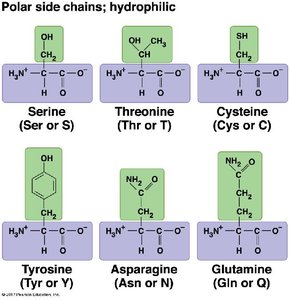
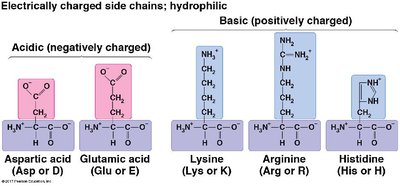
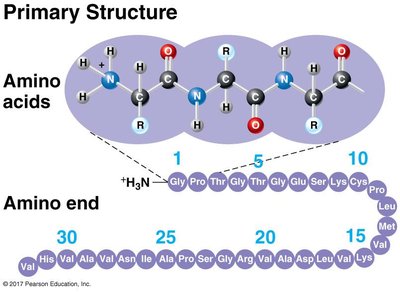
Amino acids have a central (alpha) carbon bonded to an amino group, a carboxyl group, a hydrogen atom, and a variable side chain (R group). Peptide bonds form between the carboxyl group of one amino acid and the amino group of another.
Levels of Protein Structure
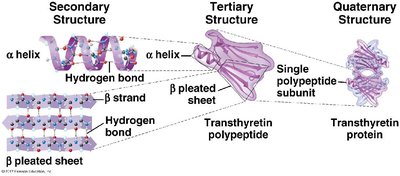
Primary structure: Sequence of amino acids in a polypeptide chain.
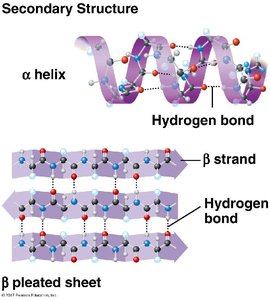
Secondary structure: Local folding into alpha helices and beta pleated sheets, stabilized by hydrogen bonds.
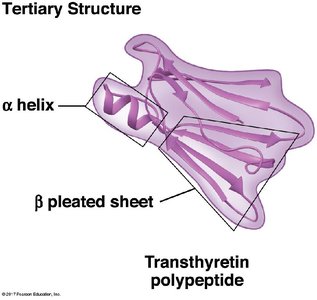
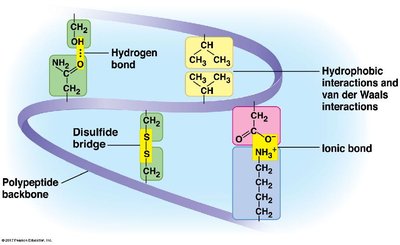
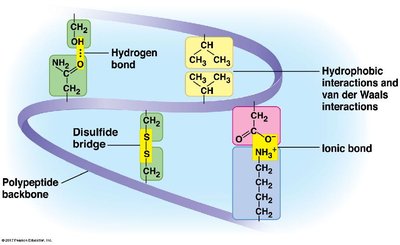
Tertiary structure: Overall three-dimensional shape, stabilized by interactions among side chains (hydrogen bonds, ionic bonds, hydrophobic interactions, disulfide bridges).
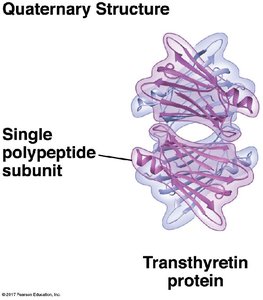
Quaternary structure: Association of multiple polypeptide subunits.
Protein Denaturation
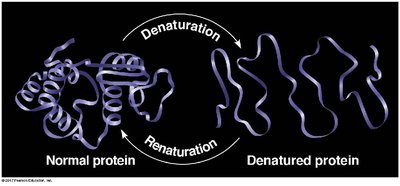
Proteins can lose their structure and function when exposed to extreme conditions (e.g., heat, pH changes), a process called denaturation. Some proteins can refold (renature) if conditions return to normal.
Protein Structure and Disease
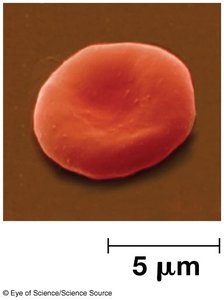
Alterations in protein structure can lead to diseases, such as sickle cell anemia, where a single amino acid change in hemoglobin causes red blood cells to deform.
Nucleic Acids
Structure and Function
Nucleic acids are polymers of nucleotides and include DNA and RNA. They store, transmit, and express genetic information.
Genetic material (DNA in cells; DNA or RNA in viruses)
Information transport (mRNA)
Information translation (tRNA)
Protein assembly (mRNA, tRNA, rRNA/ribosome)
Enzymatic activity (ribozymes)
Gene regulation (snRNA)
Nucleotide Structure: Each nucleotide consists of a phosphate group, a five-carbon sugar (ribose or deoxyribose), and a nitrogenous base (adenine, thymine, cytosine, guanine, or uracil).
Additional info: Nucleic acids are essential for the continuity of life, as they encode the instructions for protein synthesis and regulate cellular activities.
