 Back
Large Biological Molecules: Proteins, Carbohydrates, Lipids, and Nucleic Acids
Study Guide - Smart Notes
 Tailored notes based on your materials, expanded with key definitions, examples, and context.
Large Biological Molecules – Proteins
Protein Structure and Formation
Proteins are essential macromolecules composed of amino acid monomers linked by peptide bonds. Their structure determines their function, and they exhibit four levels of organization: primary, secondary, tertiary, and quaternary.
Amino Acid: The monomer unit of proteins, consisting of a central (α) carbon, an amino group, a carboxyl group, a hydrogen atom, and a variable R group (side chain).
Peptide Bond: A covalent bond formed between the carboxyl group of one amino acid and the amino group of another via dehydration synthesis.
Polypeptide: A polymer of amino acids linked by peptide bonds.
Dehydration Synthesis: The process by which two molecules are joined with the removal of a water molecule.
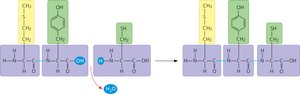
Levels of Protein Structure
Primary Structure: The unique sequence of amino acids in a polypeptide chain, held together by peptide bonds.
Secondary Structure: Local folding of the polypeptide chain into α-helices and β-pleated sheets, stabilized by hydrogen bonds between backbone atoms.
Tertiary Structure: The overall three-dimensional shape of a polypeptide, stabilized by interactions among side chains (R groups), including hydrophobic interactions, van der Waals forces, hydrogen bonds, ionic bonds, and disulfide bridges.
Quaternary Structure: The association of two or more polypeptide subunits to form a functional protein.
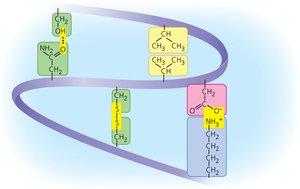
Denaturation: The loss of a protein's native structure due to external stress (e.g., heat, pH changes, chemicals), resulting in loss of function.
Chaperone Proteins: Assist in the proper folding of other proteins and prevent misfolding, which can lead to diseases.
Large Biological Molecules – Carbohydrates
Structure and Classification
Carbohydrates are organic molecules that serve as energy sources and structural components. They exist as monosaccharides, disaccharides, and polysaccharides.
Monosaccharide: The simplest carbohydrate (e.g., glucose), with the general formula (CH2O)n.
Disaccharide: Two monosaccharides joined by a glycosidic bond (e.g., sucrose).
Polysaccharide: Long chains of monosaccharide units (e.g., starch, glycogen, cellulose).
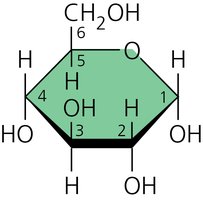
Glycosidic Bond: A covalent bond formed between two monosaccharides by a dehydration reaction.
Examples: Starch (plant energy storage), glycogen (animal energy storage), cellulose (plant structural component).
Large Biological Molecules – Lipids
Structure and Types
Lipids are hydrophobic molecules that include fats, phospholipids, and steroids. They are not true polymers but are assembled from smaller components.
Fat (Triacylglycerol): Composed of glycerol and three fatty acids, joined by ester linkages.
Saturated Fatty Acid: No double bonds between carbon atoms; typically solid at room temperature.
Unsaturated Fatty Acid: One or more double bonds; typically liquid at room temperature.
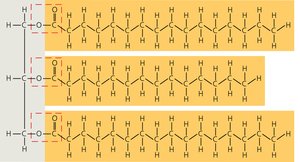
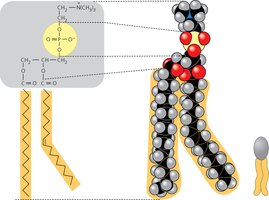
Phospholipid: Consists of a glycerol backbone, two fatty acid tails (hydrophobic), and a phosphate group (hydrophilic head). Forms the bilayer structure of cell membranes.
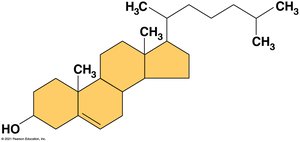
Steroid: Lipids with a structure of four fused rings; cholesterol is a common example.
Large Biological Molecules – Nucleic Acids
Structure and Function
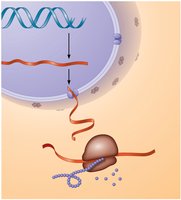
Nucleic acids (DNA and RNA) store and transmit genetic information. They are polymers of nucleotides, each consisting of a sugar, a phosphate group, and a nitrogenous base.
DNA (Deoxyribonucleic Acid): Stores genetic information; double-stranded helix.
RNA (Ribonucleic Acid): Involved in protein synthesis; usually single-stranded.
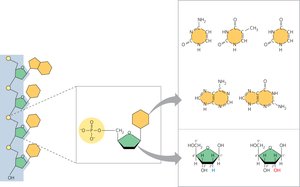
Nucleotide: Monomer of nucleic acids, composed of a pentose sugar, a phosphate group, and a nitrogenous base (purine or pyrimidine).
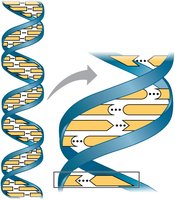
DNA Structure: Double helix with a sugar-phosphate backbone and nitrogenous base pairs (A-T, G-C) held together by hydrogen bonds.
Pyrimidines: Cytosine (C), Thymine (T, in DNA), Uracil (U, in RNA)
Purines: Adenine (A), Guanine (G)
Key Differences: DNA contains deoxyribose sugar and thymine; RNA contains ribose sugar and uracil.
Base Pairing: Adenine pairs with thymine (or uracil in RNA) via two hydrogen bonds; guanine pairs with cytosine via three hydrogen bonds.
