 Back
Lipids, Membranes, and the First Cells: Structure, Function, and Permeability
Study Guide - Smart Notes
 Tailored notes based on your materials, expanded with key definitions, examples, and context.
Chapter 6: Lipids, Membranes, and the First Cells
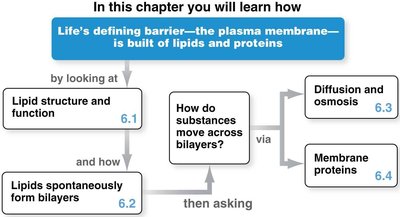
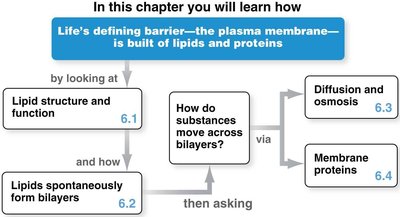
Overview of Plasma Membrane Function
The plasma membrane is a fundamental barrier that separates the interior of the cell from its external environment. It is primarily composed of lipids and proteins, and its structure is essential for maintaining cellular integrity and facilitating vital biochemical reactions.
Key Functions:
Excludes damaging materials from the cell
Permits entry of necessary substances
Facilitates chemical reactions by bringing reactants into proximity
Section 6.1: Lipid Structure
Lipids are a diverse group of carbon-containing compounds that are largely nonpolar and hydrophobic. Their structure and functional groups determine their properties and biological roles.
Functional Groups:
Amino (-NH2): proteins
Carboxyl (-COOH): proteins & lipids
Carbonyl (C=O): carbohydrates
Hydroxyl (-OH): carbohydrates & lipids
Phosphate (OPO32-): nucleic acids
Sulfhydryl (-SH): proteins
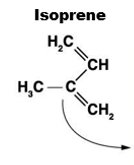
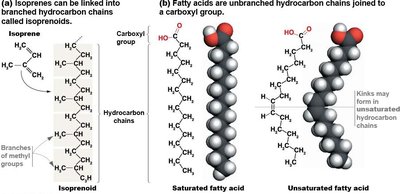
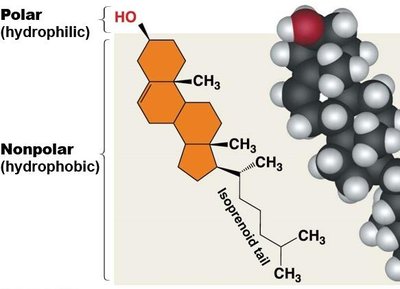
Hydrocarbons: Molecules containing only carbon and hydrogen, forming hydrophobic chains (tails) such as isoprenoids.
Saturated vs. Unsaturated Fatty Acids
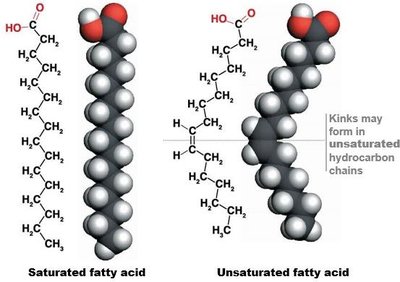
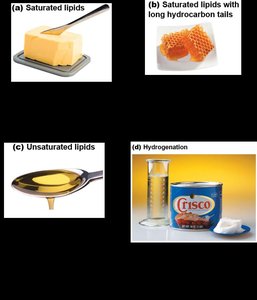
Fatty acids are hydrocarbon chains bonded to a carboxyl group. They can be saturated (only single C-C bonds) or unsaturated (one or more C=C double bonds).
Saturated fatty acids: Maximum hydrogen bonds, straight chains, solid at room temperature.
Unsaturated fatty acids: One or more double bonds, kinked chains, liquid at room temperature.
Polyunsaturated: Multiple double bonds.
Bond Saturation and Hydrocarbon Structure
The degree of saturation and chain length affect lipid fluidity and membrane properties.
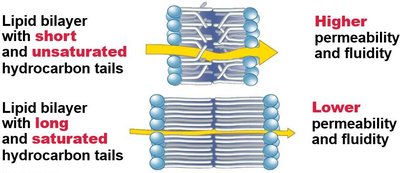
Saturated chains: Less fluid, more tightly packed.
Unsaturated chains: More fluid, less tightly packed due to kinks.
Hydrogenation of Lipids
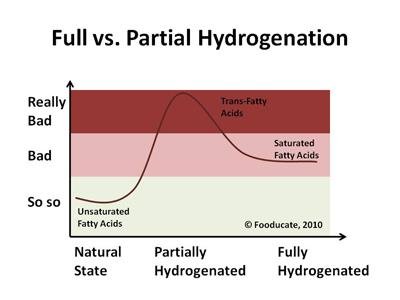
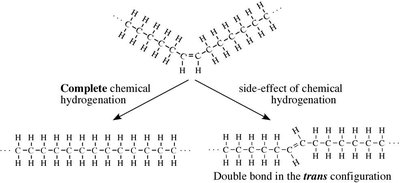
Hydrogenation is the process of adding hydrogen to unsaturated fatty acids, converting them to saturated fats or trans fats. This affects their physical properties and health implications.
Full hydrogenation: Produces saturated fats.
Partial hydrogenation: Produces trans fats, which are associated with negative health effects.
Three Types of Lipids Found in Cells
Cellular lipids are grouped based on their insolubility in water and structural features.
Steroids: Characterized by a four-ring structure; include cholesterol and sex hormones.
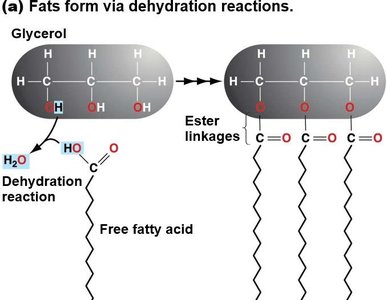
Fats (Triglycerides): Composed of three fatty acids linked to glycerol; primary role is energy storage.
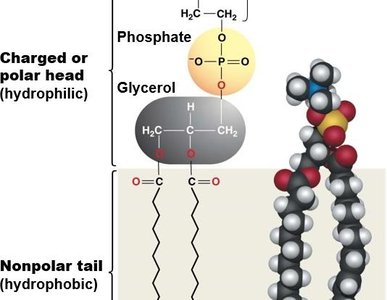
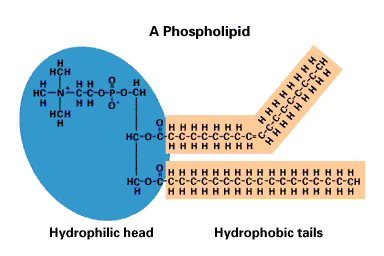
Phospholipids: Composed of two fatty acids, glycerol, and a phosphate group; primary role is membrane formation.
Phospholipids and Amphipathic Nature
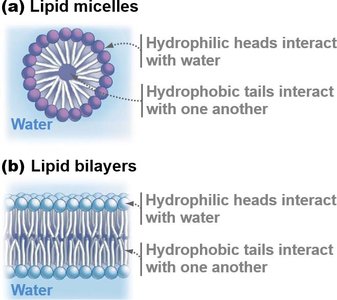
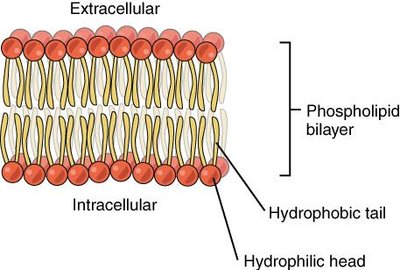
Phospholipids are amphipathic, containing both hydrophilic (head) and hydrophobic (tail) regions. This property is crucial for membrane formation.
Hydrophilic head: Contains glycerol, phosphate, and a charged or polar group.
Hydrophobic tail: Composed of two nonpolar fatty acid or isoprene chains.
Lipids and Chemical Evolution
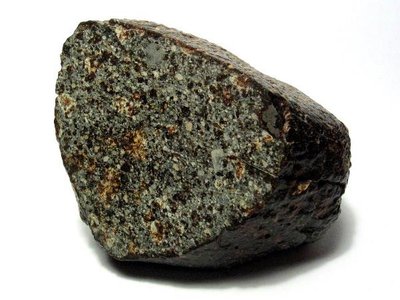
Evidence suggests that lipids were present during chemical evolution, as simple lipids can be synthesized under early Earth conditions and are found in meteorites.
Section 6.2: Phospholipid Bilayers
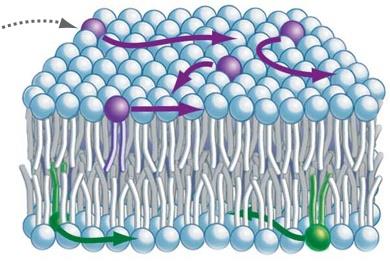
Phospholipids spontaneously form bilayers in aqueous environments, creating the basic structure of cell membranes. Artificial vesicles called liposomes are used to study membrane properties.
Bilayer formation: Hydrophilic heads face outward toward water, hydrophobic tails face inward.
Vesicles: Small, membrane-bound structures formed by phospholipids.
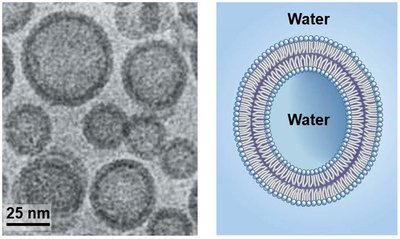
Membrane Permeability and Selectivity
Lipid bilayers exhibit selective permeability, allowing certain substances to cross more easily than others. Permeability depends on molecular size, polarity, and membrane composition.
High permeability: Small, nonpolar molecules (O2, CO2, N2)
Moderate permeability: Small, uncharged polar molecules (H2O, glycerol)
Low permeability: Large, uncharged polar molecules (glucose, sucrose)
Very low permeability: Small ions (Cl-, K+, Na+)
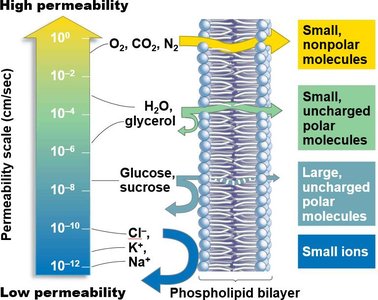
Experimental Measurement of Membrane Permeability
Planar bilayer experiments are used to measure how rapidly solutes cross membranes, depending on phospholipid type and presence of proteins or other molecules.
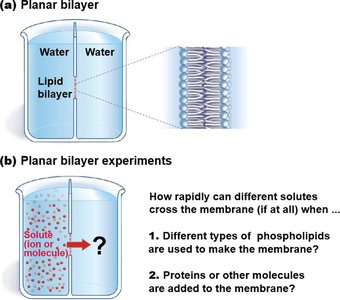
Factors Affecting Membrane Permeability
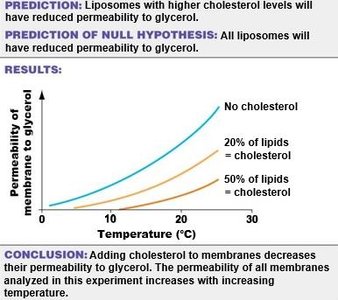
Membrane permeability is influenced by hydrocarbon tail length, saturation, temperature, and cholesterol content.
Longer tails: Reduce permeability
Saturation: Reduces permeability
Low temperature: Reduces fluidity and permeability
Cholesterol: Increases density of hydrophobic section, decreases permeability
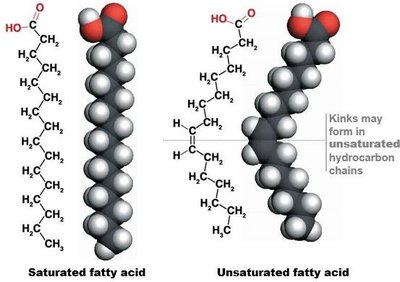
Summary Table: Factors Affecting Membrane Permeability
Factor | Effect on Permeability |
|---|---|
Tail Length | Longer tails decrease permeability |
Saturation | More saturated tails decrease permeability |
Temperature | Lower temperature decreases permeability |
Cholesterol | Higher cholesterol decreases permeability |
Key Equations
Ester Linkage Formation (Dehydration Reaction):
Permeability (P):
Where: D = diffusion coefficient K = partition coefficient Δx = membrane thickness
Conclusion
Lipids are essential for cell membrane structure and function. Their chemical properties, such as saturation, tail length, and amphipathic nature, determine membrane fluidity and permeability. Understanding these principles is fundamental to cell biology and the study of life's origins.
