 Back
Lipids: Structure, Function, and Biological Importance
Study Guide - Smart Notes
 Tailored notes based on your materials, expanded with key definitions, examples, and context.
Lipids: Structure, Function, and Biological Importance
Overview of Lipids
Lipids are a diverse group of hydrophobic biological molecules that play crucial roles in energy storage, structural integrity of cell membranes, and metabolic signaling. Unlike other macromolecules, lipids do not form polymers and are unified by their insolubility in water due to their largely hydrocarbon composition.
Hydrophobic Nature: Lipids are hydrophobic because they consist mostly of hydrocarbons, forming nonpolar covalent bonds.
Main Classes: The most biologically important lipids are fats, phospholipids, and steroids.
Functions: Lipids serve as energy storage molecules, structural components of membranes, and metabolic regulators.
Fats (Storage Lipids)
Structure and Synthesis of Fats
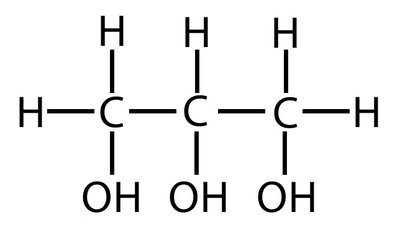
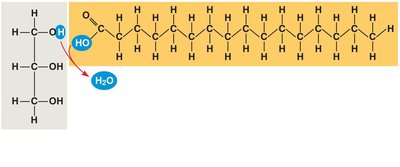
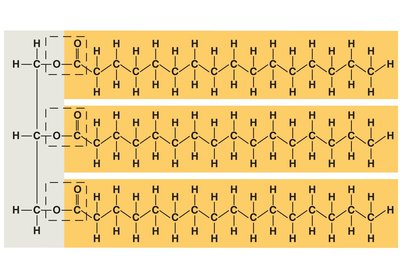
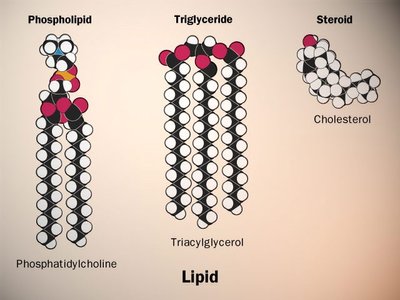
Fats, also known as triacylglycerols or triglycerides, are constructed from two types of smaller molecules: glycerol and fatty acids. Glycerol is a three-carbon alcohol, each carbon bearing a hydroxyl group, while fatty acids are long hydrocarbon chains with a terminal carboxyl group.
Glycerol: A three-carbon molecule with each carbon attached to a hydroxyl group.
Fatty Acid: Consists of a carboxyl group attached to a long carbon skeleton.
Ester Linkage: Fats are formed by dehydration (condensation) reactions between the hydroxyl groups of glycerol and the carboxyl groups of fatty acids, resulting in ester linkages.
Biological Role and Storage
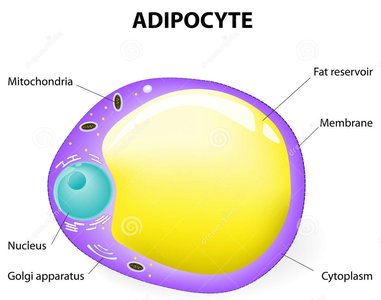
Fats are stored in specialized cells called adipocytes, where they serve as highly efficient energy reserves, yielding about twice as much energy per gram as carbohydrates.
Adipocytes: Specialized cells for fat storage in animals.
Energy Storage: Fats are the primary long-term energy storage molecules in animals.
Saturated vs. Unsaturated Fatty Acids
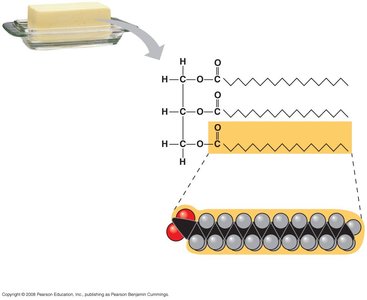
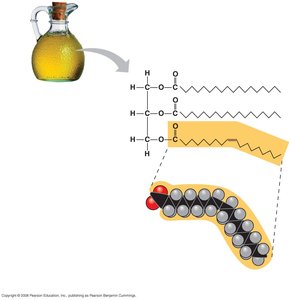
Fatty acids vary in length and in the number and location of double bonds. This variation determines whether a fat is saturated or unsaturated, which in turn affects its physical properties and biological roles.
Saturated Fatty Acids: Have the maximum number of hydrogen atoms and no double bonds; typically solid at room temperature (e.g., animal fats).
Unsaturated Fatty Acids: Contain one or more double bonds, introducing kinks that prevent tight packing; usually liquid at room temperature (e.g., plant and fish oils).
Hydrogenation and Trans Fats
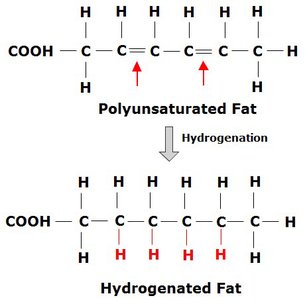
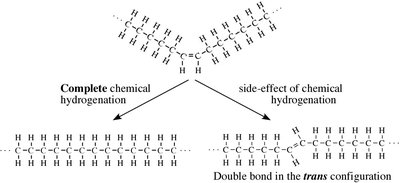
Hydrogenation is the process of converting unsaturated fats to saturated fats by adding hydrogen. This process can also create trans fats, which have been linked to increased risk of cardiovascular disease.
Hydrogenation: Addition of hydrogen to unsaturated fats, making them more saturated and solid at room temperature.
Trans Fats: Unsaturated fats with trans double bonds, often formed as a side effect of hydrogenation; associated with negative health effects.
Phospholipids (Structural Lipids)
Structure and Amphipathic Nature
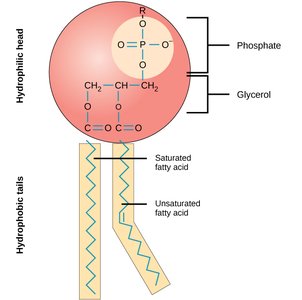
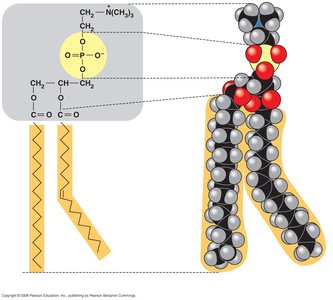
Phospholipids are major structural components of cell membranes. Each phospholipid molecule consists of two fatty acid tails (hydrophobic) and a phosphate group (hydrophilic) attached to glycerol, making the molecule amphipathic.
Hydrophobic Tails: Two fatty acids (one saturated, one unsaturated) attached to glycerol.
Hydrophilic Head: Phosphate group and its attachments, which interact with water.
Amphipathic: Possessing both hydrophobic and hydrophilic regions.
Phospholipid Bilayer and Membrane Structure
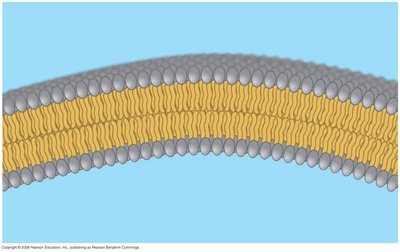
When placed in water, phospholipids spontaneously form bilayers, with hydrophobic tails facing inward and hydrophilic heads facing outward. This arrangement is the foundation of all biological membranes.
Bilayer Formation: Self-assembly of phospholipids in aqueous environments creates a double-layered structure.
Biological Membranes: The phospholipid bilayer is the primary component of cell membranes, providing a barrier and matrix for membrane proteins.
Steroids (Metabolic and Structural Lipids)
Structure and Function of Steroids
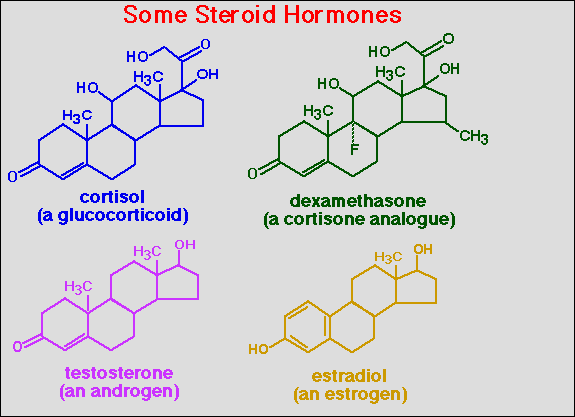
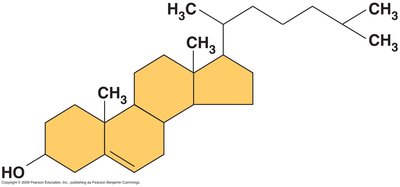
Steroids are lipids characterized by a carbon skeleton consisting of four fused rings. They serve as important signaling molecules and structural components in cell membranes.
Basic Structure: Four fused carbon rings with various functional groups attached.
Cholesterol: A key steroid found in animal cell membranes; precursor for synthesis of steroid hormones.
Steroid Hormones: Include cortisol, testosterone, estradiol, and others, which regulate diverse physiological processes.
Transport of Lipids in the Body
Lipoproteins and Lipid Transport
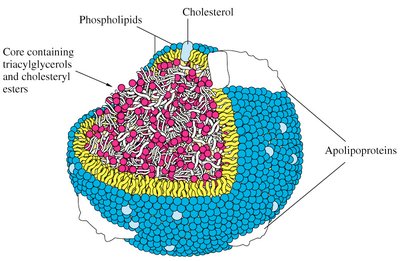
Lipids are insoluble in aqueous environments such as blood, so they are transported as complexes with proteins called lipoproteins. These particles vary in density and function, transporting dietary and endogenous lipids throughout the body.
Lipoproteins: Complexes of lipids and proteins that transport lipids in the bloodstream.
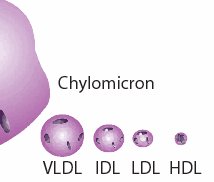
Major Types: Chylomicrons, very low-density lipoprotein (VLDL), intermediate-density lipoprotein (IDL), low-density lipoprotein (LDL), and high-density lipoprotein (HDL).
Function: Deliver dietary and synthesized lipids to tissues for energy, storage, or membrane synthesis.
Lipoprotein Transport Pathwaysncreased risk of atherosclerosis and cardiovascular disease, while HDL is considered protective.
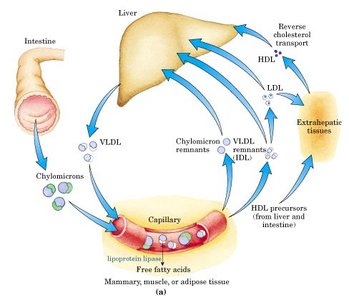
Lipoproteins play a central role in lipid metabolism, transporting triglycerides, cholesterol, and other lipids between the intestine, liver, and peripheral tissues.
Chylomicrons: Transport dietary lipids from the intestine to other tissues.
VLDL, IDL, LDL, HDL: Involved in the transport and redistribution of cholesterol and triglycerides.
Clinical Relevance: High levels of LDL are associated with i
Summary Table: Types and Functions of Lipids
Lipid Type | Structure | Main Function | Example |
|---|---|---|---|
Fats (Triglycerides) | Glycerol + 3 fatty acids | Energy storage | Adipose tissue |
Phospholipids | Glycerol + 2 fatty acids + phosphate group | Membrane structure | Cell membrane |
Steroids | Four fused carbon rings | Signaling, membrane structure | Cholesterol, hormones |
Key Terms and Definitions
Hydrophobic: Repelled by water; nonpolar.
Amphipathic: Having both hydrophilic and hydrophobic regions.
Ester Linkage: Bond formed between a hydroxyl and a carboxyl group via dehydration.
Lipoprotein: Complex of lipid and protein for transport in blood.
Trans Fat: Unsaturated fat with at least one trans double bond.
Additional info:
Phospholipids are essential for the formation of all biological membranes, and their amphipathic nature is critical for membrane fluidity and function.
Steroid hormones derived from cholesterol regulate metabolism, immune response, and reproductive processes.
