 Back
Lipids: Structure, Function, and Biological Roles
Study Guide - Smart Notes
 Tailored notes based on your materials, expanded with key definitions, examples, and context.
Lipids: Structure, Function, and Biological Roles
Introduction to Lipids
Lipids are a diverse group of biological molecules primarily composed of carbon, hydrogen, and oxygen, with some containing additional elements. Unlike proteins, nucleic acids, and polysaccharides, lipids are not true macromolecules because they do not form polymers from monomers via covalent bonds. Instead, their biological functions arise from their hydrophobic and amphipathic properties, which drive their interactions with water and other molecules.
Key Point: Lipids are essential for cellular structure, energy storage, and signaling.
Key Point: Over 10,000 different lipid species have been identified in animal bodies, with around 1,000 present in a single cell.
Chemical Structure and Classification of Lipids
Lipids are generally composed of long hydrocarbon chains or rings, which may be aliphatic (straight or branched) or aromatic (ring structures). Their hydrophobic nature is due to these hydrocarbon components, while some lipids are amphipathic, containing both hydrophobic and hydrophilic regions.
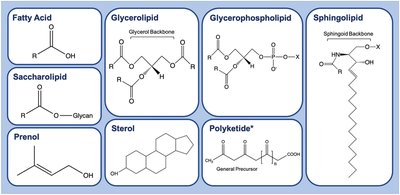
Fatty Acids: Carboxylic acids with long hydrocarbon tails; can be saturated (no double bonds) or unsaturated (one or more double bonds).
Glycerolipids: Composed of glycerol and fatty acids; includes mono-, di-, and triglycerides.
Phospholipids: Glycerol-based lipids with a phosphate group; primary component of cell membranes.
Glycolipids: Lipids with carbohydrate groups; important for cell recognition and signaling.
Sphingolipids: Contain a sphingosine backbone; play structural and signaling roles, especially in nervous tissue.
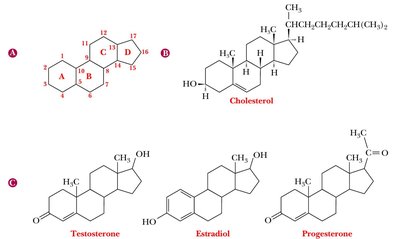
Sterols/Steroids: Four fused hydrocarbon rings; cholesterol is the main sterol in animals, serving both structural and signaling functions.
Biological Functions of Lipids
Lipids serve a variety of essential roles in biological systems, including:
Structural: Form the matrix of biological membranes (e.g., phospholipids, cholesterol).
Energy Storage: Triglycerides store energy in adipose tissue, which can be mobilized via β-oxidation to produce ATP.
Signaling: Some lipids act as hormones (e.g., steroids) or signaling molecules (e.g., prostaglandins).
Cell Recognition: Glycolipids on cell surfaces mediate cell-cell interactions and immune recognition.
Structural Characteristics and Physical Properties
The structure of a lipid determines its physical properties and biological function. Key factors include chain length, degree of saturation, and presence of functional groups.
Chain Length: Short-chain fatty acids are more volatile; most biological fatty acids are 16-18 carbons long.
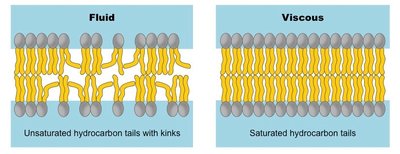
Saturation: Saturated fatty acids pack tightly, making membranes more rigid; unsaturated fatty acids introduce kinks, increasing membrane fluidity.
Trans Fats: Trans double bonds allow tight packing, similar to saturated fats, reducing membrane fluidity.
Lipids and Biological Membranes
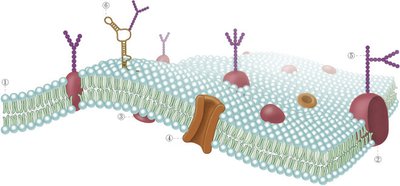
Phospholipids are the primary constituents of cellular membranes, forming bilayers due to their amphipathic nature. Cholesterol and other sterols modulate membrane fluidity and stability. Glycolipids and sphingolipids contribute to membrane structure and cell signaling.
Phospholipid Bilayer: Hydrophilic heads face outward, hydrophobic tails face inward, creating a semi-permeable barrier.
Cholesterol: Inserts between phospholipids, reducing fluidity at high temperatures and preventing solidification at low temperatures.
Glycolipids: Located on the extracellular surface, involved in cell recognition.
Sphingolipids: Abundant in nerve cell membranes, contribute to membrane stability and signaling.
Examples of Lipid Classes and Their Functions
Triglycerides: Main energy storage molecules in animals.
Phospholipids: Form the structural basis of all cell membranes.
Cholesterol: Stabilizes membranes and serves as a precursor for steroid hormones.
Prostacyclins: Signaling molecules involved in inflammation and pain response.
Sphingomyelin: Major component of myelin sheaths in nerve cells.
Membrane Fluidity and Lipid Interactions
Membrane fluidity is influenced by the types of fatty acids present and the presence of cholesterol. Unsaturated fatty acids increase fluidity, while saturated and trans fats decrease it. Cholesterol acts as a fluidity buffer.
Fluid Membranes: Contain more unsaturated fatty acids with kinks, preventing tight packing.
Viscous Membranes: Contain more saturated fatty acids, allowing tight packing and reduced fluidity.
Steroids and Sterols: Structure and Function
Steroids are lipids with a characteristic structure of four fused rings. Sterols are a subgroup of steroids with hydroxyl groups. Cholesterol is the most common animal sterol, serving as a membrane component and precursor for steroid hormones such as testosterone, estradiol, and progesterone.
Structural Role: Cholesterol modulates membrane fluidity and integrity.
Signaling Role: Steroid hormones regulate diverse physiological processes.
Summary Table: Major Lipid Classes
Lipid Class | Structure | Main Function | Example |
|---|---|---|---|
Fatty Acid | Long hydrocarbon chain with carboxyl group | Energy storage, building blocks | Palmitic acid |
Glycerolipid | Glycerol + fatty acids | Energy storage | Triglyceride |
Phospholipid | Glycerol + 2 fatty acids + phosphate group | Membrane structure | Phosphatidylcholine |
Glycolipid | Lipid + carbohydrate | Cell recognition | Glycosphingolipid |
Sphingolipid | Sphingosine backbone | Membrane structure, signaling | Sphingomyelin |
Sterol/Steroid | Four fused rings | Membrane structure, hormones | Cholesterol |
Lesson Recap and Review Questions
What chemical interaction defines the biological functions of lipids? Hydrophobic interactions are central to lipid function, driving membrane formation and energy storage.
What is a biological function of lipids? Name a class of lipids that participates in this function. Energy storage (triglycerides), membrane structure (phospholipids), signaling (steroids).
Name a class of lipid. What defines this lipid structurally? Sphingolipids are defined by a sphingosine backbone.
