 Back
Lipids: Structure, Function, and Membrane Properties
Study Guide - Smart Notes
 Tailored notes based on your materials, expanded with key definitions, examples, and context.
Lipids: Structure and Properties
Definition and General Characteristics
Lipids are a diverse group of carbon-containing compounds found in all organisms. They are characterized by a predominance of C-C and C-H bonds, which are largely nonpolar, making lipids hydrophobic and insoluble in water.
Lipid: A hydrophobic organic molecule, mainly composed of carbon and hydrogen.
Most covalent bonds in lipids are nonpolar, contributing to their insolubility in water.
Electronegativity order: O > N > C ~ S ~ P ~ H (affects polarity of bonds).
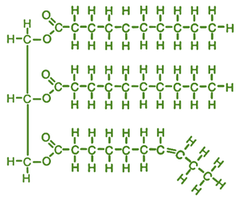
Major Types of Lipids
The three most important types of lipids found in cells are:
Triacylglycerols (fats and oils): Used for energy storage.
Phospholipids: Key components of cellular membranes.
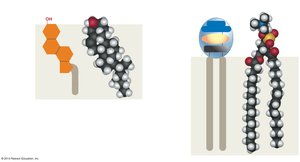
Steroids: Present in membranes, vitamins, and hormones.
Fatty Acids: Building Blocks of Lipids
Structure and Amphipathic Nature
Fatty acids consist of a carboxyl group (polar) and a hydrocarbon chain (nonpolar). They are amphipathic, meaning they have both hydrophilic and hydrophobic regions.
Carboxyl group: Polar, interacts with water.
Hydrocarbon chain: Nonpolar, repels water.
Fatty acids are key building blocks for many lipids.
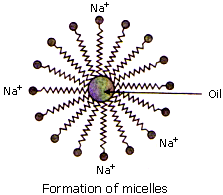
Micelles and Amphipathic Behavior
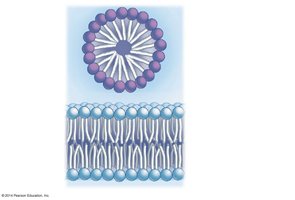
Amphipathic salts of fatty acids spontaneously form micelles in water, with hydrophilic heads facing outward and hydrophobic tails inward.
Micelles are spherical aggregates that help solubilize hydrophobic substances.
Soaps are examples of amphipathic molecules forming micelles.
Saturated vs. Unsaturated Fatty Acids
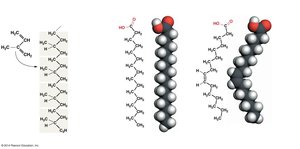
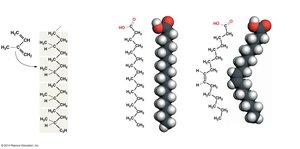
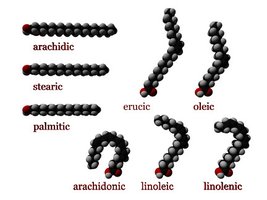
Fatty acids can be saturated (no double bonds) or unsaturated (one or more double bonds).
Saturated fatty acids: Linear, tightly packed, higher melting point.
Unsaturated fatty acids: Cis double bonds cause kinks, less tightly packed, lower melting point.
Monounsaturated: One double bond.
Polyunsaturated: Multiple double bonds.
Triacylglycerols (Fats and Oils)
Structure and Formation
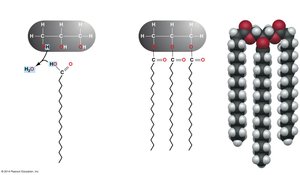
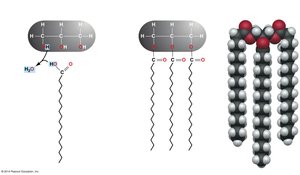
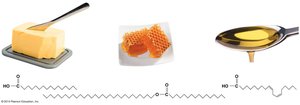
Triacylglycerols are composed of glycerol linked by ester bonds to three fatty acids. They are nonpolar molecules used for energy storage.
Formed via dehydration reactions.
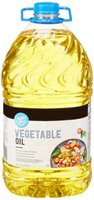
Animal triacylglycerols are called fats; plant triacylglycerols are called oils.
Physical Properties and Functions
Melting point depends on the number of double bonds in fatty acid tails.
More double bonds = more kinks = less tightly packed = more liquid.
In mammals: energy reserve, vitamin absorption, organ protection, insulation.
In plants: energy reserve in seeds.
Phospholipids and Membranes
Structure and Amphipathic Properties
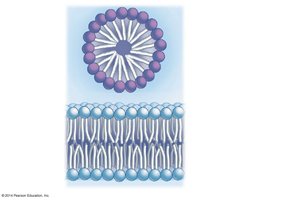
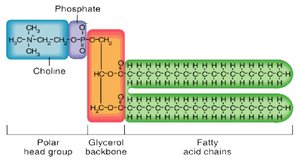
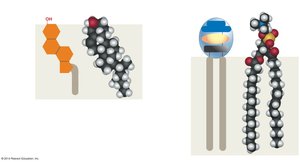
Phospholipids are amphipathic molecules composed of glycerol, two fatty acids, and a polar group (often containing phosphate).
Hydrophilic head (polar group + phosphate + glycerol).
Hydrophobic tails (fatty acids).
Key components of cell membranes.
Phospholipid Bilayers and Membrane Structure
Amphipathic phospholipids spontaneously form bilayers in water, with hydrophilic heads facing outward and hydrophobic tails inward.
Bilayers are the foundation of cell membranes.
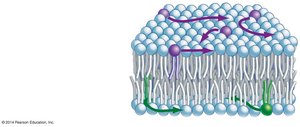
Phospholipids are in constant lateral motion, contributing to membrane fluidity.
Selective Permeability of Membranes
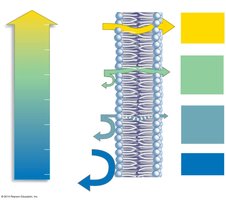
The plasma membrane exhibits selective permeability, allowing certain molecules to cross more easily than others.
Small, nonpolar molecules (O2, CO2, N2) cross easily.
Small, uncharged polar molecules (H2O, glycerol) cross moderately.
Large, uncharged polar molecules (glucose, sucrose) and ions (Na+, Cl-) cross poorly.
Factors Affecting Membrane Permeability
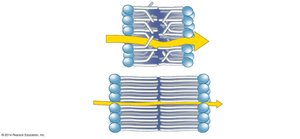
Short and unsaturated hydrocarbon tails increase permeability and fluidity.
Long and saturated tails decrease permeability and fluidity.
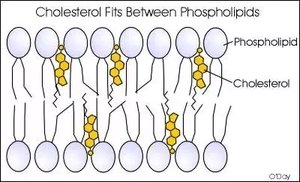
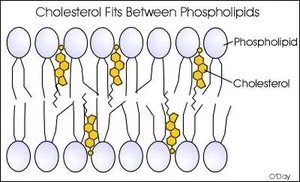
Cholesterol reduces membrane permeability (in animals).
Temperature increases fluidity and permeability.
Steroids and Cholesterol
Structure and Function
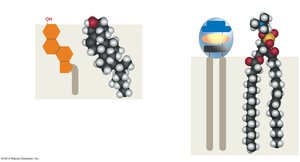
Steroids have a bulky, four-ring structure. Cholesterol is the most abundant steroid in animals and serves several functions.
Component of membranes (reduces permeability).
Precursor of vitamin D.
Precursor for hormones (progesterone, estrogens, testosterone).
Cholesterol does not exist in plants.
Summary Table: Lipid Types and Properties
Lipid Type | Structure | Function | Physical Properties |
|---|---|---|---|
Triacylglycerol | Glycerol + 3 fatty acids | Energy storage | Nonpolar, solid (fats) or liquid (oils) |
Fatty Acid | Carboxyl group + hydrocarbon chain | Building block | Saturated (solid), unsaturated (liquid) |
Phospholipid | Glycerol + 2 fatty acids + polar group | Membrane structure | Amphipathic, forms bilayers |
Cholesterol | Four-ring steroid | Membrane component, hormone precursor | Reduces permeability, increases rigidity |
Learning Objectives and Applications
Identify the structure and function of triacylglycerol, fatty acids, steroids, and phospholipids.
Compare and contrast their physical properties.
Describe how unsaturated bonds alter lipid properties and membrane permeability.
Draw structural formulas and abstract representations of lipids.
Explain selective permeability and the role of cholesterol in membranes.
Key Vocabulary
Lipid, Saturated, Unsaturated, Monounsaturated, Polyunsaturated, Hydrophobic, Hydrophilic, Carboxyl group, Triacylglycerol, Fat, Oil, Steroid, Cholesterol, Phospholipid, Glycerol, Amphipathic, Bilayer, Selective permeability
Equations and Chemical Reactions
Ester Linkage Formation (Dehydration Reaction)
Fatty Acid General Formula
Phospholipid Bilayer Representation
Additional info:
Plants adapt to increased temperatures by increasing the proportion of saturated fatty acids in their membranes, reducing fluidity and permeability.
Organisms have genes encoding enzymes for phospholipid synthesis and modification.
