 Back
Lipids: Structure, Types, and Biological Functions
Study Guide - Smart Notes
 Tailored notes based on your materials, expanded with key definitions, examples, and context.
Lipids
Introduction to Lipids
Lipids are a diverse group of hydrophobic biological molecules that are insoluble in water due to their high proportion of hydrocarbon regions. Unlike carbohydrates, nucleic acids, and proteins, lipids are not polymers. The most biologically important lipids include fats, phospholipids, and steroids, with waxes and some pigments also classified as lipids.
Key Characteristic: Lipids are mostly nonpolar (hydrophobic) and insoluble in water.
Main Types: Fats (triglycerides), phospholipids, steroids, waxes, and pigments.
Fats (Triglycerides)
Structure and Formation
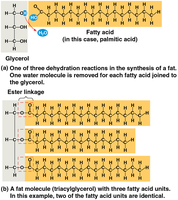
Fats, also known as triglycerides, are constructed from two types of smaller molecules: glycerol and fatty acids. Glycerol is a three-carbon alcohol, each carbon bearing a hydroxyl group. Fatty acids consist of a carboxyl group attached to a long hydrocarbon chain. In a fat molecule, three fatty acids are joined to glycerol by ester linkages, forming a triacylglycerol (triglyceride).
Glycerol: Three-carbon alcohol with hydroxyl groups.
Fatty Acid: Carboxyl group attached to a long carbon skeleton.
Ester Linkage: Bond formed between glycerol and fatty acids via dehydration synthesis.
Properties and Biological Role
Fats are insoluble in water because water molecules hydrogen-bond to each other and exclude the nonpolar fat molecules. The fatty acids in a fat can be identical or different. The primary function of triglycerides in animals is long-term energy storage, insulation, and cushioning of organs.
Energy Storage: Fats store more energy per gram than carbohydrates due to their reduced, nonpolar nature.
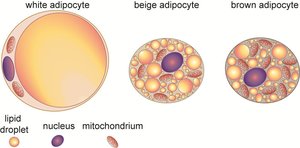
Adipose Tissue: Specialized cells (adipocytes) store fat in animals, providing insulation and protection.
Saturated vs. Unsaturated Fatty Acids
Structural Differences
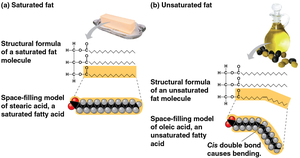
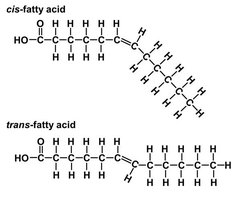
Fatty acids vary in length and in the number and location of double bonds. Saturated fatty acids have no double bonds and are saturated with hydrogen atoms, resulting in straight chains that pack tightly (solid at room temperature). Unsaturated fatty acids have one or more cis double bonds, causing kinks in the chain and preventing tight packing (liquid at room temperature).
Saturated Fatty Acids: No double bonds; found in animal fats like butter.
Unsaturated Fatty Acids: One or more cis double bonds; found in plant oils and fish.
Trans Fats
Trans fats are a subtype of unsaturated fats with trans double bonds, typically produced by hydrogenating vegetable oils. This process can convert cis double bonds to trans, making the fat more solid and increasing its shelf life. Trans fats are associated with increased risk of cardiovascular disease.
Hydrogenation: Process of adding hydrogen to unsaturated fats, creating trans fats.
Health Impact: Trans fats may be more harmful than saturated fats for cardiovascular health.
Fats in Plants: Seeds and Nuts
Energy Storage in Plants
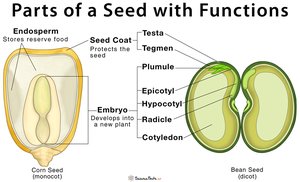
While starch is the main long-term energy storage molecule in most plants, seeds and nuts often store energy as triglycerides, which are more energy-dense. The endosperm of seeds is rich in stored energy molecules, supporting seedling growth until photosynthesis begins.
Seeds and Nuts: High in fats to provide energy for germination and early growth.
Endosperm: Tissue that stores food reserves in seeds.
Phospholipids
Structure and Function
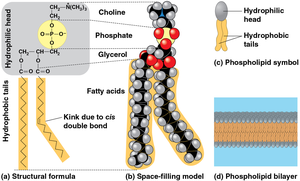
Phospholipids are major components of cell membranes. Each phospholipid molecule consists of two fatty acid tails (hydrophobic) and a phosphate group attached to glycerol (hydrophilic head). This amphipathic nature allows phospholipids to form bilayers in aqueous environments, creating the structural basis of biological membranes.
Amphipathic: Molecule with both hydrophobic and hydrophilic regions.
Phospholipid Bilayer: Double layer structure that forms the core of cell membranes.
Steroids
Structure and Biological Importance
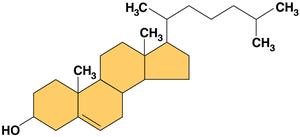
Steroids are lipids characterized by a carbon skeleton consisting of four fused rings. Cholesterol is a key steroid found in animal cell membranes and serves as a precursor for the synthesis of other steroids, including hormones. High levels of cholesterol in the blood are linked to cardiovascular disease.
Cholesterol: Essential for membrane fluidity and as a precursor for steroid hormones.
Steroid Hormones: Include sex hormones (estrogen, testosterone) and corticosteroids.
Summary Table: Major Types of Lipids
Lipid Type | Structure | Main Function | Example |
|---|---|---|---|
Fats (Triglycerides) | Glycerol + 3 fatty acids | Energy storage, insulation, cushioning | Butter, olive oil, adipose tissue |
Phospholipids | Glycerol + 2 fatty acids + phosphate group | Cell membrane structure | Phosphatidylcholine |
Steroids | Four fused carbon rings | Membrane component, hormones | Cholesterol, testosterone |
