 Back
BackMacroevolution, the Fossil Record, and Major Events in the History of Life
Study Guide - Smart Notes
 Tailored notes based on your materials, expanded with key definitions, examples, and context.
Relationship of Phylogeny to Classification
Phylogeny and Biological Classification
Phylogeny refers to the evolutionary history and relationships among species or groups of organisms. Biological classification aims to organize species into groups that reflect these evolutionary relationships.
Monophyletic groups include an ancestor and all its descendants, accurately reflecting evolutionary history.
Paraphyletic groups include an ancestor and some, but not all, of its descendants.
Polyphyletic groups are formed from unrelated organisms descended from more than one ancestor.
Modern taxonomy strives to ensure that named groups are monophyletic, aligning classification with phylogeny.
The Fossil Record: Formation and Use
Formation of Fossils and Sedimentary Rocks
The fossil record provides evidence of past life and evolutionary events. Fossils typically form in sedimentary rocks, which accumulate in layers called strata at the bottoms of bodies of water.
Organisms buried in sediment may become compressed and preserved as fossils.
Strata are distinct layers of sedimentary rock; the oldest layers are at the bottom, and the youngest at the top.
Stratigraphy is the study of rock layers and their fossil content, allowing for relative dating of fossils.
Radiometric Dating
Absolute dating of rocks and fossils is achieved through radiometric dating, which relies on the predictable decay of radioactive isotopes.
Common isotopes used include carbon-14 (for recent fossils), potassium-40, and uranium-238 (for older rocks).
The half-life of an isotope is the time required for half of the original amount to decay.
By measuring the ratio of parent to daughter isotopes, the age of a sample can be calculated.
For example, carbon-14 dating is effective for materials up to about 50,000 years old, while potassium-argon and uranium-lead dating are used for much older samples.
Geologic Time Scale
Geologists use stratigraphy and radiometric dating to construct the geologic time scale, dividing Earth's history into eons, eras, and periods. Major events in the history of life are placed within this framework.
Eons: Hadean, Archaean, Proterozoic, Phanerozoic
Eras of the Phanerozoic: Paleozoic, Mesozoic, Cenozoic
Key periods: Ediacaran, Cambrian, Permian, Cretaceous
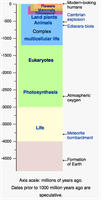
Major Events in the History of Life
Origin of Life (3.5–4 Billion Years Ago)
Life on Earth began between 3.5 and 4 billion years ago. Four key steps are hypothesized in the origin of life:
Abiotic synthesis of organic compounds (e.g., amino acids, nucleotides)
Abiotic synthesis of macromolecules (e.g., proteins, nucleic acids)
Formation of protocells (membrane-bound droplets capable of maintaining an internal environment)
Formation of self-replicating, information-containing, catalytic molecules (e.g., RNA)
Earliest Cells and Stromatolites (3.5 Billion Years Ago)
The oldest direct evidence of life comes from fossil stromatolites, layered structures formed by cyanobacteria and other prokaryotes.
Photosynthesis and the Oxygen Revolution (~2.7 Billion Years Ago)
Photosynthetic prokaryotes began producing oxygen, leading to the accumulation of atmospheric O2. This event, known as the oxygen revolution, dramatically altered Earth's environment and enabled the evolution of aerobic metabolism.
Origin of Eukaryotes (1.8 Billion Years Ago)
Eukaryotic cells, characterized by a nucleus and membrane-bound organelles, evolved through processes including membrane infolding and endosymbiosis (origin of mitochondria and plastids).
Multicellularity (~1.2 Billion Years Ago)
Multicellular eukaryotes evolved, with the oldest fossils interpreted as photosynthetic algae. Multicellularity arose independently in several lineages, including plants, fungi, and animals.
Ediacaran Biota (635–542 Million Years Ago)
Soft-bodied multicellular organisms became common during the Ediacaran period, preceding the Cambrian explosion.
Cambrian Explosion (535–525 Million Years Ago)
The Cambrian explosion marks the rapid appearance of most major animal phyla, many with hard skeletons. This event is well-documented in the fossil record and is associated with increased predation and ecological complexity.
Colonization of Land (~475–420 Million Years Ago)
Multicellular eukaryotes, including plants, fungi, and arthropods, colonized terrestrial environments. Adaptations to prevent dehydration and new reproductive strategies were essential for this transition.
Microevolution and Macroevolution
Definitions and Relationship
Microevolution refers to evolutionary changes within populations or species, such as changes in allele frequencies. Macroevolution encompasses larger-scale evolutionary patterns, such as the origin of new groups, mass extinctions, and major transitions in the history of life. Macroevolution is essentially microevolution extended over long time scales.
Physical Context of the History of Life
Plate Tectonics and Continental Drift
The Earth's crust is divided into lithospheric plates that move over time, altering the positions of continents and oceans. This movement, known as continental drift, has influenced ocean circulation, climate, and the distribution of organisms.
Atmospheric Oxygen Concentrations
Changes in atmospheric O2 have been driven by biological processes (e.g., photosynthesis) and have, in turn, affected the evolution and extinction of many lineages.
Earth's Climate
Earth's climate has fluctuated dramatically, with periods of warming and cooling influencing the evolution and distribution of life.
Volcanic Activity
Large volcanic eruptions can inject ash and gases into the atmosphere, affecting climate and causing mass extinctions. For example, the end-Permian mass extinction is associated with massive volcanic activity in Siberia.
Meteorite Impacts
Occasional large meteorite impacts have caused global environmental changes and mass extinctions, such as the impact at the end of the Cretaceous period that contributed to the extinction of the dinosaurs.
Case Study: Evolution of the Pigeon Head Crest
Genetic Basis of the Head Crest
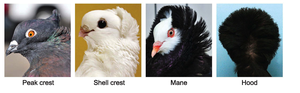
The evolution of the head crest in pigeons is a well-studied example of a morphological trait with a simple genetic basis. All crested breeds share a single nucleotide change in the EphB2 gene, resulting in an amino acid substitution (arginine to cysteine) in the protein product.
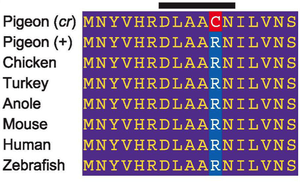
Function of EphB2
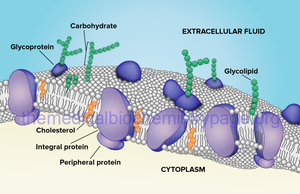
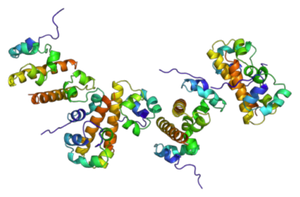
EphB2 encodes a transmembrane protein involved in developmental processes, including nervous system development. The mutation leads to a reversal of feather polarity on the back of the head, producing the crest phenotype.
Variation in Crest Morphology
Different breeds of pigeons exhibit distinct crest morphologies, all associated with the same genetic change.
Essential Vocabulary
Stratigraphy: Study of rock layers and layering.
Radiometric dating: Method for determining the age of materials using radioactive isotopes.
Half-life: Time required for half of a radioactive substance to decay.
Abiotic synthesis: Formation of organic molecules from inorganic precursors without biological intervention.
Protocell: Simple, membrane-bound structure that may have preceded true cells.
Ribozyme: RNA molecule with catalytic activity.
RNA world: Hypothesis that early life was based on RNA as both genetic material and catalyst.
Stromatolite: Layered structure formed by microbial communities, especially cyanobacteria.
Oxygen revolution: Rapid increase in atmospheric oxygen due to photosynthesis.
Serial endosymbiosis: Theory that eukaryotic organelles originated via symbiosis between different prokaryotes.
Cambrian explosion: Rapid diversification of animal life during the Cambrian period.
Plate tectonics: Movement of Earth's lithospheric plates.
Continental drift: Gradual movement of continents over geological time.
Pangaea: Supercontinent that existed during the late Paleozoic and early Mesozoic eras.
