 Back
BackMacroevolution: The Origin and Diversification of Life
Study Guide - Smart Notes
 Tailored notes based on your materials, expanded with key definitions, examples, and context.
Macroevolution: The Origin and Diversification of Life
Introduction to Macroevolution
Macroevolution examines the broad patterns of evolutionary change above the species level, including the origin of new species and the diversity of life on Earth. It contrasts with microevolution, which focuses on changes within populations.
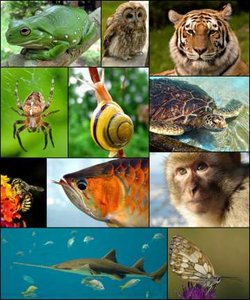
Macroevolution studies how Earth's species became so diverse, with approximately 1.8 million species identified and potentially hundreds of millions yet to be discovered.
Key topics include the origin of life, species definitions, mechanisms of speciation, evidence for macroevolution, and the construction of phylogenetic trees.
Origin of Life
The origin of life on Earth is a foundational topic in biology, tracing the transition from non-living chemical systems to the first living cells.
The Sun and planets formed from cosmic dust about 4.5 billion years ago. Early Earth had an atmosphere rich in water vapor, nitrogen, and carbon dioxide.
Energy from lightning and volcanic activity drove chemical reactions, forming organic compounds necessary for life.
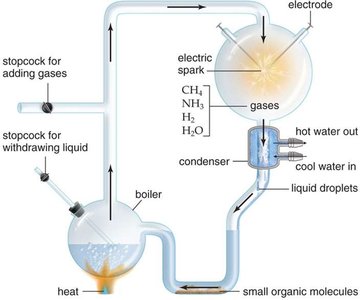
Stanley Miller's classic experiment simulated early Earth conditions, demonstrating the abiotic synthesis of organic molecules.
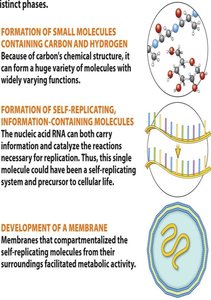
Life originated in three main phases:
Formation of small molecules containing carbon and hydrogen
Formation of self-replicating, information-containing molecules (e.g., RNA)
Development of a membrane to compartmentalize molecules
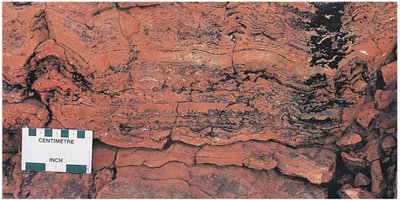
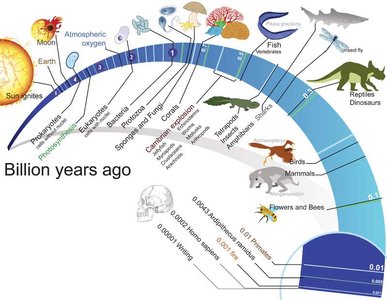
The earliest evidence of life dates to about 3.8 billion years ago, with chemotrophic prokaryotes (both heterotrophs and autotrophs).
Fossils of phototrophic prokaryotes (producing sulfur, not oxygen) appear around 3.4 billion years ago. Cyanobacteria, which produced oxygen, appear by 2.7 billion years ago, leading to the "Great Oxidation Event."
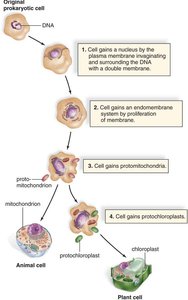
The first cells were prokaryotic (domains Bacteria and Archaea). Eukaryotic cells evolved later, gaining a nucleus, endoplasmic reticulum, and mitochondria, eventually leading to multicellular organisms.
Requirements for Life
Life requires a source of energy, organic molecules, a means of storing and transmitting information, and a boundary (membrane) to separate the internal environment from the external world.
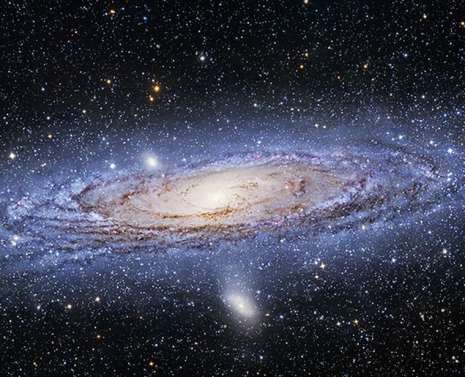
These requirements inform the search for life beyond Earth, both within our solar system and in the broader universe.
Species and Speciation
Taxonomy and Species Concepts
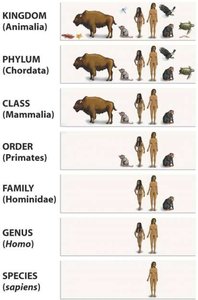
Taxonomy is the hierarchical classification of organisms, originally designed by Carolus Linnaeus. The species is the most specific level of classification.
Biological species concept: A group of organisms whose members can interbreed and produce fertile offspring.
Other species concepts include morphological (based on physical traits), ecological (based on ecological niche), and phylogenetic (based on shared ancestry and DNA).
Reproductive Barriers and Species Isolation
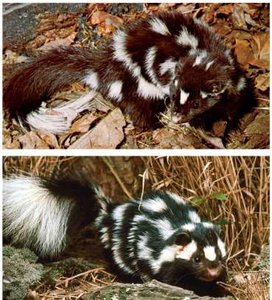
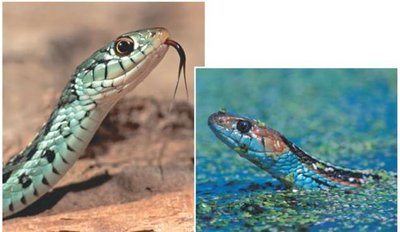
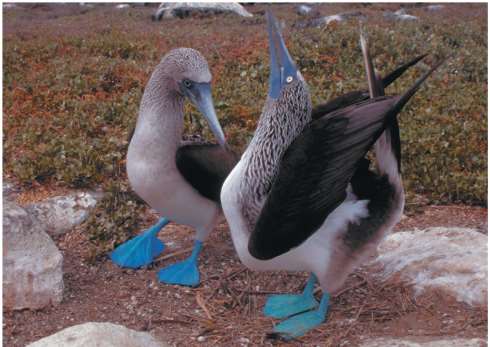
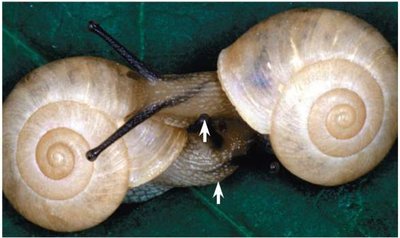
Reproductive barriers prevent related species from interbreeding, maintaining species boundaries.
Prezygotic barriers: Prevent mating or fertilization (temporal, habitat, behavioral, mechanical, gametic isolation).
Postzygotic barriers: Reduce hybrid viability or fertility (e.g., sterile hybrids like mules).
Mechanisms of Speciation
Speciation is the process by which new species arise, often through the evolution of reproductive isolation.
Allopatric speciation: Occurs when populations are geographically separated, leading to divergence.
Sympatric speciation: Occurs without geographic separation, often due to chromosomal changes, habitat differentiation, or sexual selection.
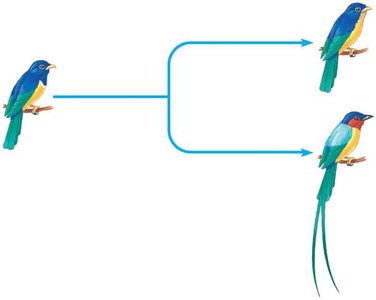
Adaptive radiation: The rapid evolution of many species from a common ancestor, often following colonization, mass extinction, or evolutionary innovation.
Evidence for Macroevolution
Fossil Evidence
Fossils provide direct evidence of past life and evolutionary transitions. Fossilized remains can be dated and used to reconstruct evolutionary history, including "missing links" between major groups.
Fossil evidence supports the transition of tetrapods to land and back to the sea.
Biogeographical Evidence
Biogeography studies the distribution of species across geographic areas. Related species are often found in close proximity, and fossil records reflect the history of continental drift.
Exceptions to biogeographical patterns are explained by the movement of continents (e.g., Gondwanaland).
Anatomical and Embryological Evidence
Comparative anatomy reveals homologous structures—body parts with similar structure but different functions—indicating common ancestry. Vestigial structures are remnants of features that served important functions in ancestors.
Embryological similarities among vertebrates (e.g., tails and gill pouches) further support common descent.
Biochemical Evidence
All living organisms use DNA, ATP, and proteins, sharing the same genetic code. Molecular homologies, such as shared genes and protein structures, provide strong evidence for common ancestry.
Phylogenetic Trees
Phylogenetic trees are diagrams that depict evolutionary relationships based on fossil, morphological, and molecular data. They help trace the lineage of major groups, including the evolution of vertebrates and hominins.
Many hominin species coexisted, but only Homo sapiens remains today.
Summary
Macroevolution encompasses the processes that generate biodiversity, including the origin of life, speciation, and the evidence supporting evolutionary theory. Understanding these concepts is essential for interpreting the history and diversity of life on Earth.
