 Back
BackMacroevolution: The Origin and Diversification of Life
Study Guide - Smart Notes
 Tailored notes based on your materials, expanded with key definitions, examples, and context.
Macroevolution: The Origin and Diversification of Life
Introduction to Macroevolution
Macroevolution examines the broad patterns of evolutionary change above the species level, including the origin of new species and the diversity of life on Earth. It contrasts with microevolution, which focuses on evolutionary changes within populations.
Macroevolution studies how Earth's species became so diverse, with approximately 1.8 million species identified and potentially hundreds of millions yet to be discovered.
Key topics include the origin of life, species definitions, mechanisms of speciation, evidence for macroevolution, and the construction of phylogenetic trees.
Origin of Life
The origin of life on Earth is a foundational topic in biology, tracing the transition from non-living chemical compounds to the first living cells.
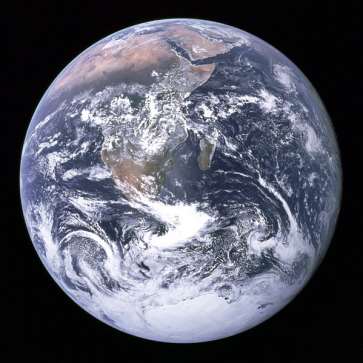
Formation of Earth: The Sun and planets formed from cosmic dust about 4.5 billion years ago. Earth's gravity allowed it to retain an atmosphere rich in water vapor, nitrogen, and carbon dioxide.
Energy Sources: Energy from lightning, volcanic activity, and ultraviolet radiation drove chemical reactions among atmospheric gases, leading to the formation of organic molecules.
Miller-Urey Experiment: Stanley Miller's classic experiment simulated early Earth conditions, demonstrating that organic compounds could form spontaneously from inorganic precursors.
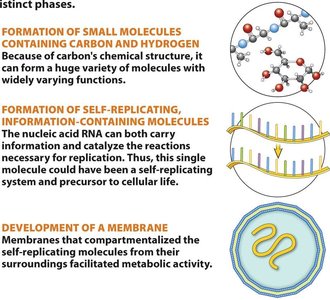
Three Phases of Life's Origin:
Formation of small molecules containing carbon and hydrogen.
Formation of self-replicating, information-containing molecules (e.g., RNA).
Development of a membrane to compartmentalize and protect these molecules.
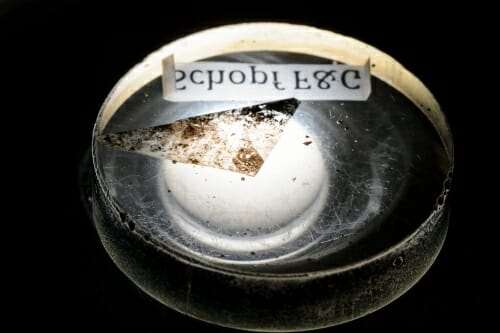
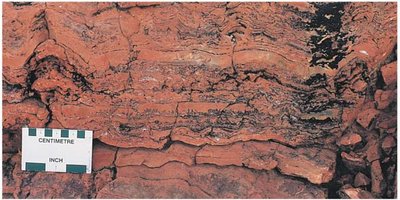
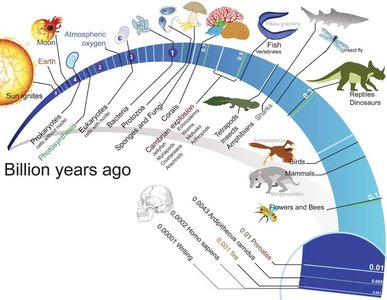
Earliest Life Forms: Life began around 3.8 billion years ago with chemotrophic prokaryotes, followed by phototrophic prokaryotes (3.4 billion years ago) and cyanobacteria (2.7 billion years ago), which contributed to the Great Oxidation Event.
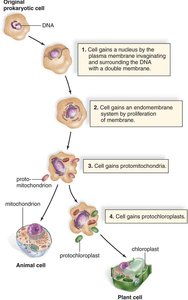
Evolution of Eukaryotes: The first cells were prokaryotic (domains Bacteria and Archaea). Eukaryotic cells (domain Eukarya) evolved through the acquisition of a nucleus, endoplasmic reticulum, and mitochondria, eventually leading to multicellular organisms.
Taxonomy and Species Definition
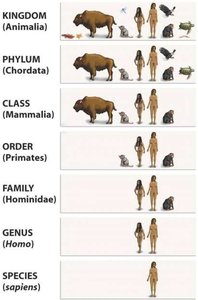
Taxonomy is the hierarchical classification of organisms, originally designed by Carolus Linnaeus. The species is the most specific taxonomic rank.
Biological Species Concept: A species is defined as a group of organisms that can interbreed and produce fertile offspring.
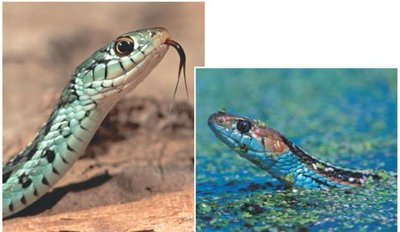
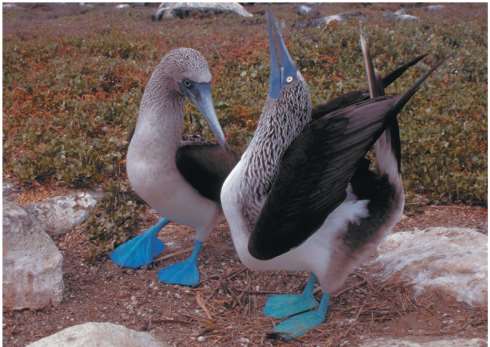
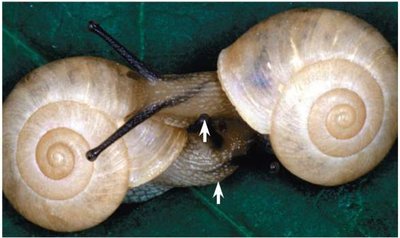
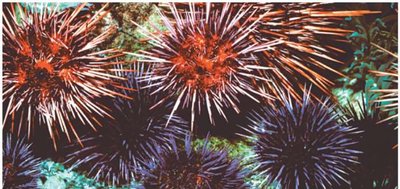
Reproductive Barriers: Mechanisms that prevent species from interbreeding are classified as prezygotic (before fertilization) or postzygotic (after fertilization).
Prezygotic Barriers: Temporal, habitat, behavioral, mechanical, and gametic isolation.
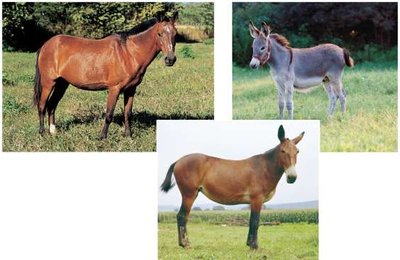
Postzygotic Barriers: Reduced hybrid viability or fertility (e.g., mules).
Other Species Concepts:
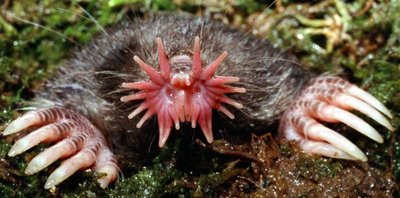
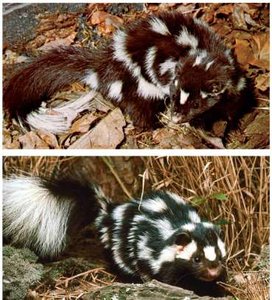
Morphological: Based on physical traits; useful for fossils and asexual organisms but subjective.
Ecological: Based on ecological niche.
Phylogenetic: Based on shared ancestry and genetic data.
Mechanisms of Speciation
Speciation is the process by which new species arise, often through the evolution of reproductive isolation.
Allopatric Speciation: Occurs when populations are geographically separated, leading to divergence.
Sympatric Speciation: Occurs without geographic separation, often due to chromosomal changes, habitat differentiation, or sexual selection.
Adaptive Radiation: The rapid evolution of many species from a common ancestor, often following colonization, mass extinction, or evolutionary innovation.
Evidence for Macroevolution
Multiple lines of evidence support macroevolution, including fossils, biogeography, anatomy, embryology, and molecular biology.
Fossil Evidence: Fossils provide records of ancient life, document transitions, and reveal "missing links." Fossil strata can be dated to reconstruct evolutionary timelines.
Biogeographical Evidence: Related species are often found in close proximity, and continental drift explains exceptions. Fossils in a region often resemble modern organisms from the same area.
Anatomical Evidence: Homologous structures (e.g., vertebrate forelimbs) indicate common ancestry. Vestigial structures are remnants of ancestral features with reduced function.
Embryological Evidence: Early embryos of vertebrates share similar features, such as tails and gill pouches.
Biochemical Evidence: All organisms use DNA, ATP, and the same genetic code, and share many genes and proteins.
Phylogenetic Trees
Phylogenetic trees are diagrams that depict evolutionary relationships among species based on morphological and molecular data.
They help reconstruct the evolutionary history of life, showing how groups diverged from common ancestors.
Modern humans (Homo sapiens) evolved from a common ancestor with other hominins about 7 million years ago.
Summary
Macroevolution explains the origin and diversification of life through mechanisms such as speciation and adaptive radiation, supported by extensive evidence from fossils, anatomy, biogeography, embryology, and molecular biology. Understanding these processes provides insight into the unity and diversity of life on Earth.
