 Back
Macromolecules: Nucleic Acids, Proteins, and Lipids – Structure and Function
Study Guide - Smart Notes
 Tailored notes based on your materials, expanded with key definitions, examples, and context.
Nucleic Acids: Structure and Function
Introduction to Nucleic Acids
Nucleic acids are essential macromolecules that store and transmit genetic information in all living organisms. They are polymers called polynucleotides, made up of monomers known as nucleotides.
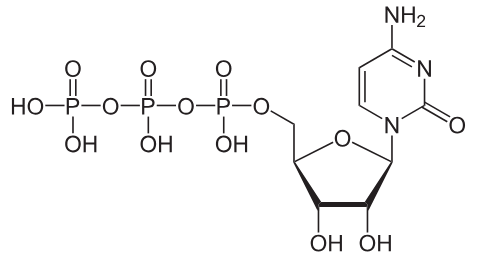
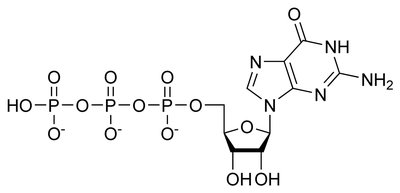
Nucleotides consist of a nitrogenous base, a pentose sugar, and one or more phosphate groups.
A nucleoside is a nucleotide without the phosphate group (just the base and sugar).
There are two main types of nucleic acids: DNA (deoxyribonucleic acid) and RNA (ribonucleic acid), distinguished by their sugars (deoxyribose in DNA, ribose in RNA).
Nitrogenous bases are classified as pyrimidines (cytosine, thymine, uracil) and purines (adenine, guanine).
Building Nucleic Acids
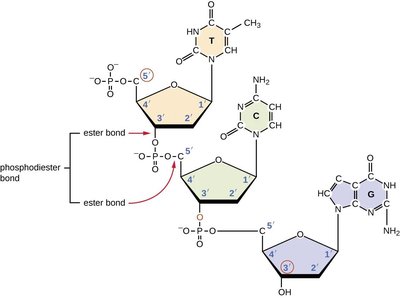
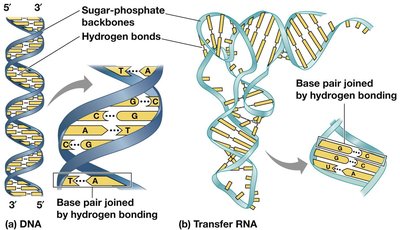
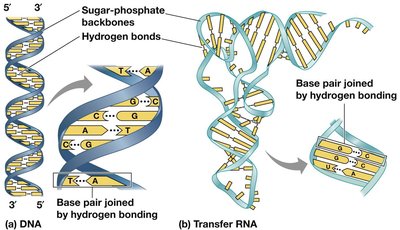
Nucleotides are linked together by phosphodiester bonds to form the backbone of nucleic acids. DNA and RNA strands have directionality, running from the 5' to 3' end.
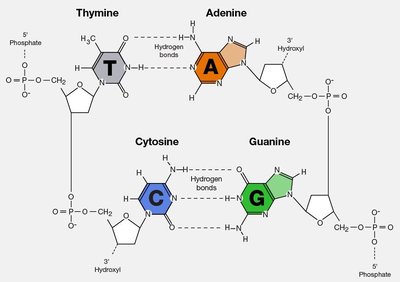
DNA is typically double-stranded, forming a double helix, while RNA is usually single-stranded but can form complex structures through base pairing.
Base pairing in DNA: Adenine (A) pairs with Thymine (T), and Guanine (G) pairs with Cytosine (C).
In RNA, Uracil (U) replaces Thymine and pairs with Adenine.
Discovery of DNA Structure
The double-helix structure of DNA was discovered in 1953, with significant contributions from Rosalind Franklin, who used X-ray crystallography to reveal the helical nature of DNA.
This discovery explained how genetic information could be faithfully replicated.

Central Dogma of Molecular Biology
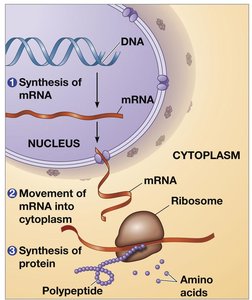
The flow of genetic information in cells follows the central dogma: DNA is transcribed into RNA, which is then translated into protein. This process ensures the accurate transfer of genetic instructions for cellular function.
Transcription: DNA is used as a template to synthesize messenger RNA (mRNA).
Translation: mRNA is decoded by ribosomes to build proteins from amino acids.
Proteins: Structure and Function
Introduction to Proteins
Proteins are the most versatile macromolecules in cells, responsible for catalyzing reactions, providing structural support, transporting molecules, and more. They are polymers of amino acids, linked by peptide bonds to form polypeptides.
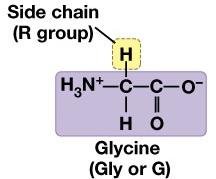
There are 20 standard amino acids, each with a unique side chain (R group).
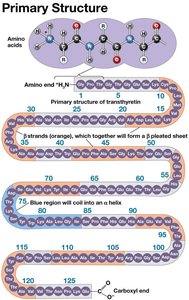
The sequence of amino acids determines the protein's structure and function.
Levels of Protein Structure
Proteins have four levels of structure, each contributing to their final shape and function:
Primary structure: The linear sequence of amino acids in a polypeptide chain.
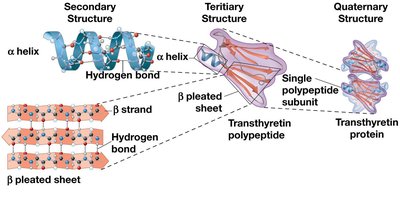
Secondary structure: Local folding into α-helices and β-pleated sheets, stabilized by hydrogen bonds.
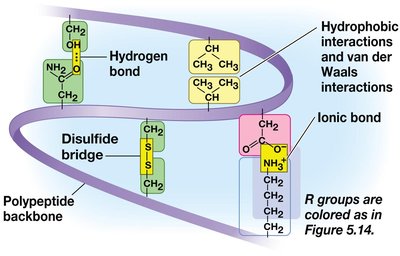
Tertiary structure: The overall 3D shape of a single polypeptide, determined by interactions among R groups (hydrogen bonds, ionic bonds, hydrophobic interactions, van der Waals forces, and disulfide bridges).
Quaternary structure: The assembly of multiple polypeptide subunits into a functional protein complex.

Protein Folding and Denaturation
The correct folding of proteins is essential for their function. Physical and chemical conditions such as pH, temperature, and salt concentration can affect protein structure. Denaturation is the loss of a protein's native structure, rendering it inactive. Some proteins require chaperones to fold properly.
Denaturation can sometimes be reversed, but not always.
High fevers can cause protein denaturation in the body, which can be fatal.
Protein Functions
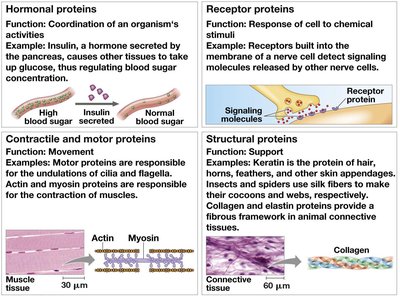
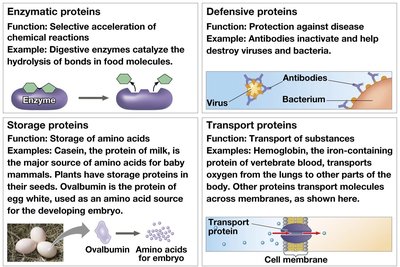
Proteins perform a wide variety of functions in cells:
Enzymatic proteins: Catalyze biochemical reactions (e.g., digestive enzymes).
Defensive proteins: Protect against disease (e.g., antibodies).
Storage proteins: Store amino acids (e.g., ovalbumin in eggs).
Transport proteins: Move substances across membranes (e.g., hemoglobin).
Hormonal proteins: Coordinate organismal activities (e.g., insulin).
Receptor proteins: Respond to chemical stimuli.
Contractile and motor proteins: Enable movement (e.g., actin, myosin).
Structural proteins: Provide support (e.g., collagen, keratin).
Enzymes
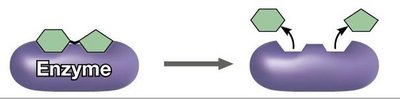
Enzymes are proteins that act as biological catalysts, speeding up chemical reactions without being consumed. They are highly specific for their substrates and can be used repeatedly.
Enzyme function depends on the precise shape of the active site, which binds the substrate.
Protein Structure Prediction
Predicting how a protein folds from its amino acid sequence is a major challenge in biology. Advances such as AlphaFold have made significant progress in this area, using artificial intelligence to predict protein structures with high accuracy.


Lipids: Structure and Function (Overview)
Introduction to Lipids
Lipids are a diverse group of hydrophobic molecules that do not form true polymers. They are important for energy storage, membrane structure, and signaling.
Major types include fats, phospholipids, and steroids.
Fats are made from glycerol and fatty acids; phospholipids are key components of cell membranes; steroids have a characteristic four-ring structure (e.g., cholesterol).
Additional info: Detailed lipid structure and function will be covered in a later lecture.
Bioinformatics and 'Omics
Genomics and Proteomics
Modern biology uses computational tools to analyze large datasets of DNA, RNA, and protein sequences. Genomics is the study of entire genomes, while proteomics focuses on the structure and function of proteins.
Bioinformatics combines biology, computer science, and statistics to extract knowledge from biological data.
Additional info: These approaches are essential for understanding complex biological systems and for applications such as personalized medicine.
