 Back
Macromolecules: Structure and Function in Biology
Study Guide - Smart Notes
 Tailored notes based on your materials, expanded with key definitions, examples, and context.
Macromolecules: Structure and Function
Introduction to Macromolecules
Macromolecules are large, complex molecules essential for life, composed of smaller subunits called monomers. They include carbohydrates, proteins, nucleic acids, and lipids, each with unique structural and functional roles in cells. - Macromolecule: A molecule with large molecular mass, formed by covalent bonds between repeating units (monomers). - Polymer: A long chain of monomers linked together. - Monomer: The basic building block of a polymer. 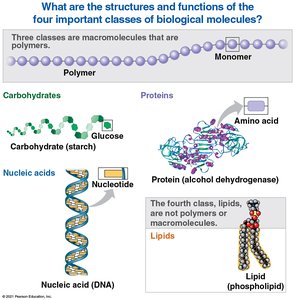
Types of Macromolecules
There are four major classes of biological macromolecules: carbohydrates, proteins, nucleic acids, and lipids. - Carbohydrates: Serve as fuel and building material. - Proteins: Perform a wide range of cellular functions. - Nucleic Acids: Store and transmit genetic information. - Lipids: Energy storage, membrane structure, and signaling. 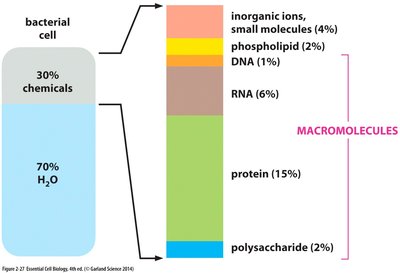
Polymer Formation and Breakdown
Dehydration and Hydrolysis Reactions
Biological polymers are synthesized and broken down by specific chemical reactions. - Dehydration (Condensation) Reaction: Joins monomers by removing a water molecule, forming a covalent bond. - Hydrolysis Reaction: Breaks covalent bonds by adding a water molecule, releasing monomers. 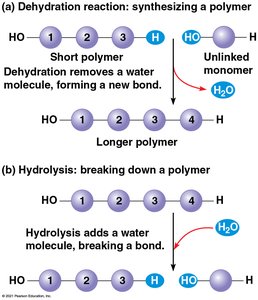
Carbohydrates
Monosaccharides: Simple Sugars
Monosaccharides are the simplest carbohydrates, typically with the formula . They are classified by the number of carbons and functional groups. - Examples: Glucose, galactose, fructose, ribose. - Isomers: Monosaccharides can exist as structural isomers (e.g., glucose vs. fructose). - Functional Groups: Hydroxyl (–OH) and carbonyl (C=O) groups. 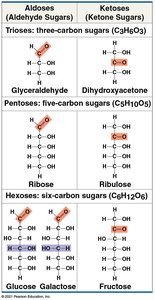

Glucose: Structure and Isomers
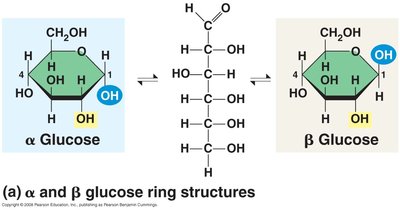
Glucose exists in both linear and ring forms, with ring formation favored in aqueous solutions. The ring can be either α or β, depending on the position of the hydroxyl group on carbon 1. - α-Glucose: OH group on carbon 1 is below the ring. - β-Glucose: OH group on carbon 1 is above the ring. 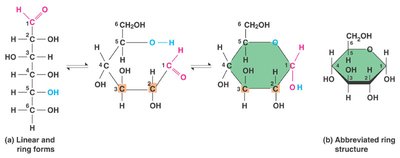
Disaccharides and Polysaccharides
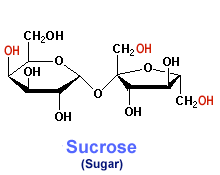
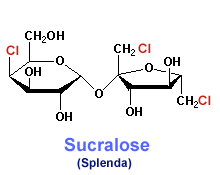
Disaccharides are formed by dehydration reactions between two monosaccharides, creating a glycosidic linkage. Polysaccharides are long chains of monosaccharides, serving as energy storage or structural materials. - Disaccharides: Examples include maltose, sucrose, lactose. - Polysaccharides: Starch (plants), glycogen (animals), cellulose (plants), chitin (fungi and arthropods). 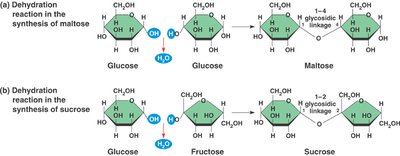
Polysaccharide Structure and Function
The architecture and function of polysaccharides depend on their monomers and glycosidic linkages. - Starch: Plant energy storage, composed of α-glucose; includes amylose (unbranched) and amylopectin (branched). - Glycogen: Animal energy storage, highly branched α-glucose polymer. - Cellulose: Structural component of plant cell walls, unbranched β-glucose polymer. - Chitin: Structural polysaccharide in fungi and arthropods, contains nitrogen. 


Nucleic Acids
Structure and Function
Nucleic acids (DNA and RNA) are polymers of nucleotides, responsible for storing and transmitting genetic information. - Nucleotide: Composed of a pentose sugar, nitrogenous base, and phosphate group. - Phosphodiester Linkage: Covalent bond joining nucleotides. - DNA: Double-stranded, contains deoxyribose and bases A, T, C, G. - RNA: Single-stranded, contains ribose and bases A, U, C, G.
Proteins
Amino Acids and Protein Structure
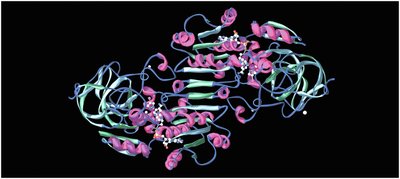
Proteins are polymers of amino acids, each with a unique sequence and 3D structure. - Amino Acid: Contains an amino group, carboxyl group, and variable side chain (R group). - Peptide Bond: Covalent bond joining amino acids. - Levels of Structure: Primary (sequence), secondary (α-helix, β-sheet), tertiary (overall shape), quaternary (multiple polypeptides). 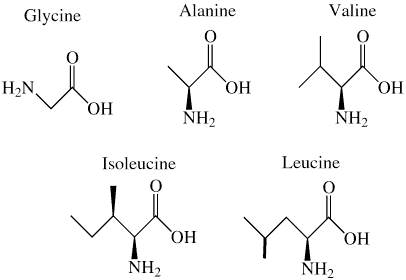
Protein Function
Proteins perform diverse functions, including catalysis (enzymes), structural support, transport, signaling, and defense. - Enzymes: Catalyze biochemical reactions. - Structural Proteins: Provide support (e.g., collagen). - Transport Proteins: Move substances (e.g., hemoglobin). - Hormones: Regulate physiological processes (e.g., insulin). 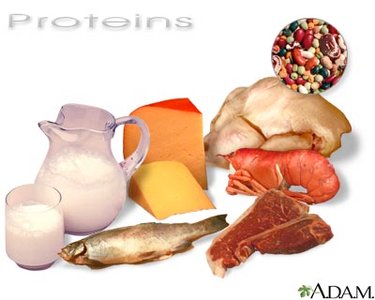
Lipids
Structure and Types
Lipids are a diverse group of hydrophobic molecules, not true polymers. They include fats, phospholipids, and steroids. - Fats (Triglycerides): Glycerol + fatty acids, energy storage. - Phospholipids: Major component of cell membranes, amphipathic. - Steroids: Four fused rings, includes cholesterol and hormones.
Summary Table: Macromolecules
Type | Monomer | Polymer | Bond Type | Main Function |
|---|---|---|---|---|
Carbohydrates | Monosaccharide | Polysaccharide | Glycosidic linkage | Energy, structure |
Proteins | Amino acid | Polypeptide | Peptide bond | Catalysis, structure, transport |
Nucleic Acids | Nucleotide | Polynucleotide | Phosphodiester linkage | Genetic information |
Lipids | Fatty acid (not true monomer) | Triglyceride, phospholipid, steroid | Ester linkage | Energy, membranes, signaling |
Emergent Properties and Biological Importance
Emergent Properties
Macromolecules exhibit properties not found in their individual monomers, such as complex 3D structure, catalytic activity, and information storage.
Biological Relevance
Understanding macromolecules is essential for studying cell biology, genetics, metabolism, and physiology.
Additional info:
- The diversity of polymers arises from the arrangement of monomers. - DNA and proteins are universal in all cells, but each cell expresses only the proteins it needs. - Protein misfolding can cause diseases (e.g., Alzheimer's). - Lipids are not true polymers but are essential for cell membranes and energy storage.
