 Back
BackMacromolecules: Structure, Formation, and Biological Roles
Study Guide - Smart Notes
 Tailored notes based on your materials, expanded with key definitions, examples, and context.
Macromolecules
Definition and Importance
Macromolecules are large, complex molecules essential for life, composed of thousands or millions of smaller subunits. They are fundamental to the structure and function of cells and organisms.
Definition: Macromolecules are organic compounds made primarily of carbon, hydrogen, oxygen, and other elements, held together by covalent bonds.
Examples: Carbohydrates, lipids, proteins, and nucleic acids.
Diversity: The vast diversity among living organisms is largely due to differences in their macromolecules, especially proteins and nucleic acids.
Formation of Macromolecules
Macromolecules are synthesized within cells through specific chemical reactions.
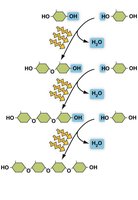
Dehydration Synthesis (Condensation Reaction): Subunits are joined together, and a water molecule is removed for each bond formed. This process requires energy, which is stored in the chemical bonds.
Equation:
Breakdown of Macromolecules
To release energy, macromolecules are broken down into their subunits.
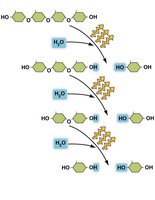
Hydrolysis Reaction: The reverse of dehydration synthesis; water is added, breaking the bonds between subunits and releasing energy.
Equation:
Carbohydrates
Structure and Function
Carbohydrates are macromolecules with a carbon backbone, hydrogen, and oxygen in a 2:1 ratio. They are used for energy and structural support.
Structure: Carbon is "hydrated" (C:H:O ratio is 1:2:1).
Uses: Energy source for most organisms; structural support in plants and some animals.
Classification of Carbohydrates
Monosaccharides: Simplest sugars, usually with five or six carbons in a ring structure.
Examples: Glucose, fructose, ribose, deoxyribose.
Disaccharides: Two monosaccharides joined by dehydration synthesis.
Examples: Sucrose (glucose + fructose), lactose (glucose + galactose), maltose (glucose + glucose).
Oligosaccharides: Short chains of monosaccharides, often involved in cell recognition and communication as glycoproteins.
Polysaccharides: Long chains of monosaccharides, used for energy storage and structural support.
Examples: Glycogen (animal storage), starch (plant storage), chitin (animal structure), cellulose (plant structure).
Lipids
Structure and Biological Importance
Lipids are hydrophobic macromolecules, insoluble in water, and crucial for energy storage, membrane structure, and signaling.
Sub-classes: Triglycerides, phospholipids, steroids.
Triglycerides
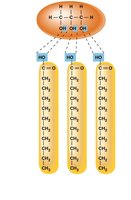
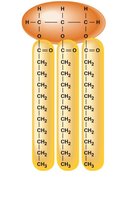
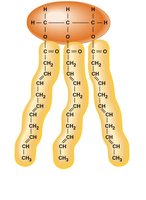
Triglycerides, also known as neutral fats, are formed by dehydration synthesis from glycerol and three fatty acids.
Structure: One glycerol molecule (head) and three fatty acid chains (tails).
Function: Stored in adipose tissue as an energy reserve.
Saturated Fats
Characteristics: Each carbon in the fatty acid tail has two hydrogen atoms; only single bonds (C-C); tails are straight, allowing tight packing; solid at room temperature.
Examples: Animal fats like butter and bacon grease.
Health Impact: High intake may contribute to cardiovascular disease.
Unsaturated Fats
Characteristics: Fewer than two hydrogens per carbon; at least one double bond (C=C); tails are kinked, preventing tight packing; liquid at room temperature (oils).
Examples: Vegetable oils.
Phospholipids
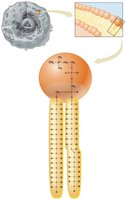
Phospholipids are modified lipids that form the primary structural component of cell membranes.
Structure: Two fatty acid tails attached to glycerol, with a negatively charged phosphate group.
Special Property: The phosphate head is polar and hydrophilic (water-soluble), while the fatty acid tails are nonpolar and hydrophobic (water-insoluble).
Steroids
Steroids are a distinct class of lipids with a unique ring structure.
Structure: Steroid nucleus consists of three six-membered carbon rings and one five-membered ring, with various side groups.
Example: Cholesterol, which is a precursor for many steroid hormones.
Summary Table: Macromolecule Classes
Class | Structure | Main Functions | Examples |
|---|---|---|---|
Carbohydrates | Carbon backbone, C:H:O ratio 1:2:1 | Energy, structural support | Glucose, starch, cellulose |
Lipids | Hydrocarbon chains, insoluble in water | Energy storage, membranes, signaling | Triglycerides, phospholipids, steroids |
Proteins | Amino acid chains | Enzymes, structure, transport | Hemoglobin, collagen |
Nucleic acids | Nucleotide chains | Genetic information | DNA, RNA |
References
Johnson, M.D. (2017). Human biology: Concepts and current issues (8th ed). Pearson Education Inc.
Johnson, M.D. & Long, S (2021). Human biology: Concepts and current issues (9th ed). Pearson Education Inc.
