 Back
Macromolecules: Structure, Function, and Biological Importance
Study Guide - Smart Notes
 Tailored notes based on your materials, expanded with key definitions, examples, and context.
Macromolecules
Overview of Macromolecules
All living organisms are composed of four main elements: carbon, nitrogen, oxygen, and hydrogen. These elements form both organic and inorganic molecules.
Organic molecules contain carbon (e.g., glucose C6H12O6).
Inorganic molecules do not contain carbon (e.g., water H2O).
Macromolecules are large molecules made from smaller units called monomers. The process of joining monomers to form polymers is called polymerization.
Monomer: Small molecule that can join with others.
Polymer: Large molecule made of repeating monomers.
Polymerization: The process of linking monomers together.
Polymerization by Dehydration Synthesis
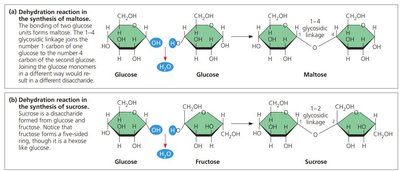
Dehydration synthesis is the process by which monomers are joined to form polymers, involving the removal of a water molecule (H2O).
One monomer loses an OH group, another loses an H, forming water.
This reaction is catalyzed by enzymes.
Breaking Down Polymers by Hydrolysis
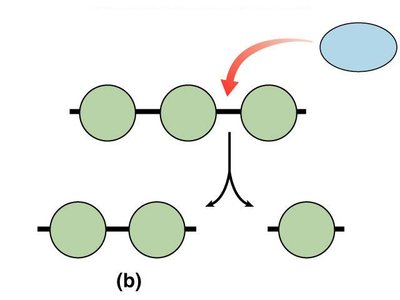
Hydrolysis is the process of breaking polymers into monomers by adding water.
Water is split into H+ and OH–, which attach to the ends of the resulting monomers.
Enzymes facilitate this reaction.
Carbohydrates
Structure and Function
Carbohydrates are macromolecules used primarily as energy sources for cells.
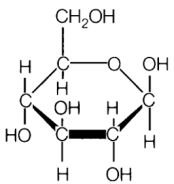
Monomers: Monosaccharides (simple sugars like glucose and fructose).
Polymers: Polysaccharides (complex carbohydrates like glycogen in animals and starch in plants).
Carbohydrates are found in foods such as bread, pasta, and sugar.
Formation and Breakdown
Monosaccharides undergo dehydration synthesis to form polysaccharides.
Polysaccharides: Starch and Cellulose
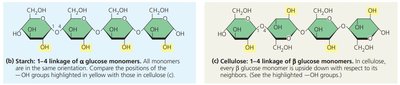
Polysaccharides are polymers with hundreds to thousands of monosaccharides.
Starch: Storage form in plants.
Cellulose: Structural component in plant cell walls.
Lipids
Structure and Function
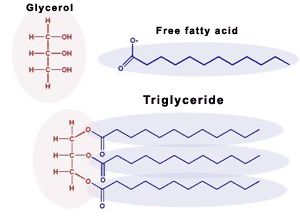
Lipids are macromolecules used for long-term energy storage and as structural components of cell membranes.
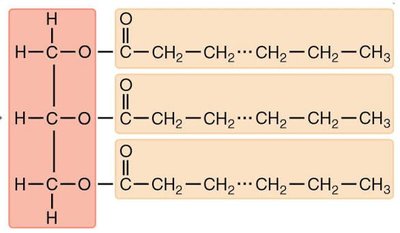
Monomers: Fatty acid chains and a glycerol head, joined by ester bonds.
Polymers: Fats (triglycerides) and phospholipids.
Lipids are hydrophobic, meaning they repel water.
Phospholipids and Cell Membranes
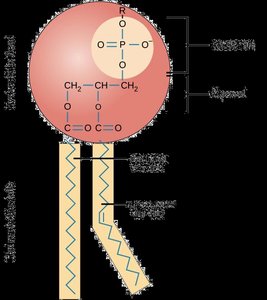
Phospholipids are essential for cell membrane structure.
Composed of a glycerol head (with a phosphate group) and two fatty acid chains.
The head is hydrophilic (water-loving), while the tails are hydrophobic (water-fearing).
Saturated vs. Unsaturated Fatty Acids
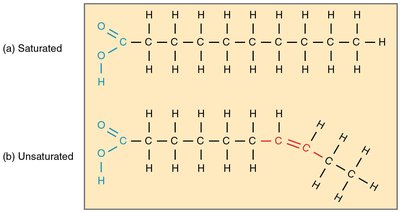
Saturated: All single bonds, solid at room temperature, found in animals.
Unsaturated: One or more double bonds, liquid at room temperature, found in plants.
Sterols and Steroids
Sterols are chemical messengers, including cholesterol and hormones (testosterone, estrogen).
Structure: Four carbon rings.
Nucleic Acids
Structure and Function
Nucleic acids store and transmit genetic information.
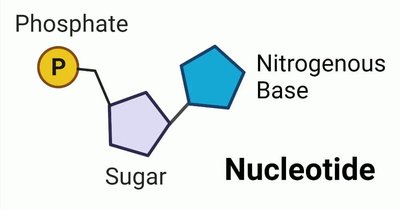
Monomers: Nucleotides (composed of a sugar, phosphate group, and nitrogenous base).
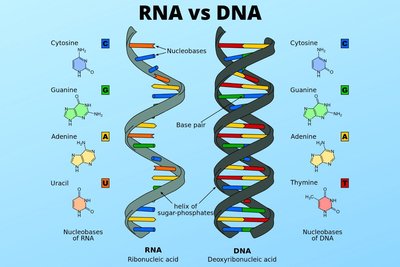
Polymers: RNA and DNA.
DNA uses bases A, T, C, G and is double-stranded; RNA uses A, U, C, G and is single-stranded.
Proteins
Structure and Function
Proteins carry out gene expression, provide structure, transport materials, defend against pathogens, and catalyze chemical reactions (enzymes).
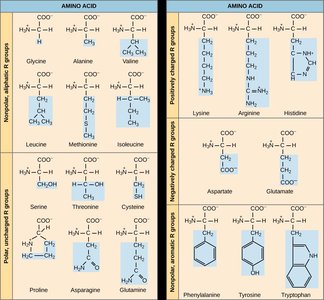
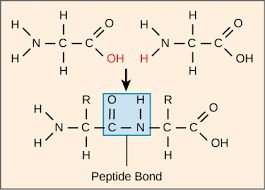
Monomers: Amino acids (20 different types, joined by peptide bonds).
Polymers: Polypeptides or enzymes.
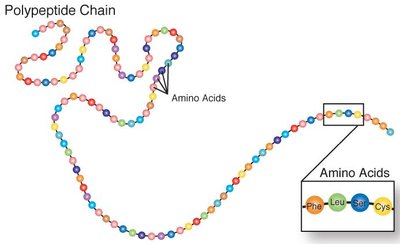
Protein Structure Levels
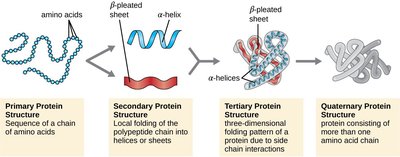
Proteins have four levels of structure:
Primary: Sequence of amino acids.
Secondary: Local folding (e.g., alpha helices, beta sheets).
Tertiary: 3D folding of the entire polypeptide chain.
Quaternary: Multiple polypeptide chains coming together.
Central Dogma of Molecular Biology
The central dogma describes the flow of genetic information:
Replication: DNA copies itself.
Transcription: DNA is transcribed into RNA.
Translation: RNA is translated into protein.
Proteins determine traits.
Example: The gene for hemoglobin is transcribed and translated to produce the hemoglobin protein, which carries oxygen in blood.
Additional info: Academic context was added to clarify the chemical processes and biological significance of macromolecules, as well as to provide definitions and examples for each class.
