 Back
BackMajor Events in the History of Life: Fossil Record, Cell Evolution, Adaptive Radiations, and Developmental Genes
Study Guide - Smart Notes
 Tailored notes based on your materials, expanded with key definitions, examples, and context.
Concept 25.2: The Fossil Record Documents the History of Life
Evolution of Jaw Structure in Vertebrates
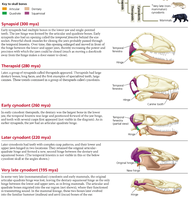
The fossil record provides evidence for gradual transitions in anatomical features, such as the evolution of the jaw joint in vertebrates. Early synapsids had jaw joints composed of multiple bones, while modern mammals possess a jaw joint made of a single dentary bone and squamosal bone. This transition is significant for understanding both feeding and hearing adaptations.
Jaw Joint Evolution: Early vertebrates had jaw joints made of quadrate and articular bones, while mammals have a dentary-squamosal joint.
Dentary Bone: In mammals, the dentary bone is a single, large lower jaw bone.
Sound Transmission: Quadrate and articular bones in mammals are repurposed for sound transmission in the middle ear.
Gradual Transition: Fossil evidence shows intermediate forms, documenting the evolutionary process.
Example: Fossil synapsids and cynodonts illustrate the stepwise changes in jaw structure.
Concept 25.3: Key Events in Life’s History
Origins of Unicellular and Multicellular Organisms
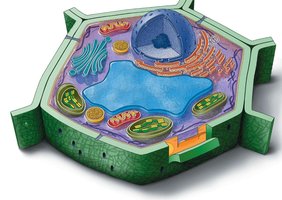
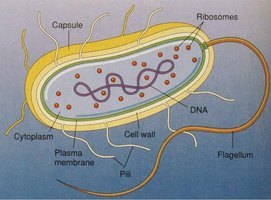
The emergence of prokaryotes and eukaryotes marks a fundamental division in the history of life. Prokaryotes (bacteria and archaea) lack a nucleus and internal membranes, while eukaryotes (animals, plants, fungi, protists) possess these features, enabling greater complexity and multicellularity.
Prokaryotes: No nucleus, no internal membranes, circular DNA, small (70S) ribosomes.
Eukaryotes: Nucleus, internal membranes (Golgi, ER), linear chromosomes, large (80S) ribosomes.
Example: Bacteria and archaea are prokaryotes; animals, plants, fungi, and protists are eukaryotes.
Endosymbiosis and the Origin of Organelles
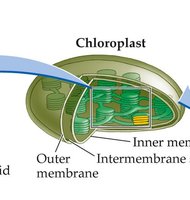
The endosymbiotic theory explains the origin of mitochondria and chloroplasts in eukaryotic cells. These organelles are descended from bacteria that were engulfed by ancestral eukaryotes, leading to a symbiotic relationship.
Evidence for Endosymbiosis: Double membranes, own DNA, enzymes, and ribosomes similar to bacteria.
Mitochondria: Originated from aerobic bacteria; present in animal and plant cells.
Chloroplasts: Originated from photosynthetic bacteria; present in plant cells.
Example: Mitochondria and chloroplasts retain features of their bacterial ancestors.
Concept 25.4: The Rise and Fall of Groups of Organisms
Adaptive Radiations
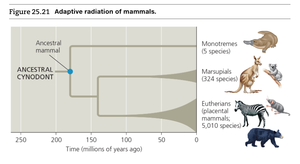
Adaptive radiations occur when a single ancestral species rapidly diversifies into multiple new forms, often following mass extinctions or the colonization of new environments. This process increases biodiversity and leads to the formation of new groups.
Speciation and Extinction Rates: Groups with high speciation rates can diversify rapidly, while those with high extinction rates decline.
Example: The adaptive radiation of mammals after the extinction of dinosaurs.
Concept 25.5: Major Changes in Body Form from Developmental Genes
Regulation of Developmental Genes
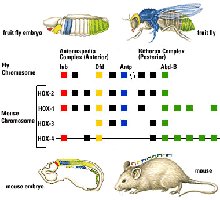
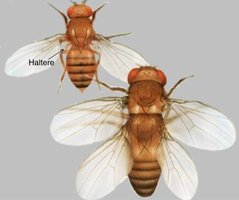
Major evolutionary changes in body form can result from alterations in the sequences and regulation of developmental genes, such as Hox genes. These genes control the layout of the body plan by turning on specific genes at the right time and place during development.
Hox Genes: Determine the identity and arrangement of body segments.
Gene Regulation: Proper timing and location of gene expression is crucial for normal development.
Duplicated Genes: Allow for modified and more complex body plans.
Example: Changes in Hox gene expression can lead to dramatic differences in body structure.
Consequences of Misregulation
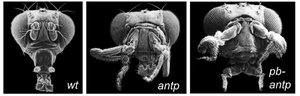
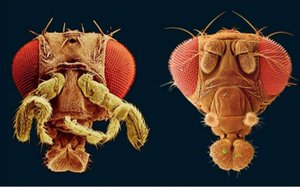
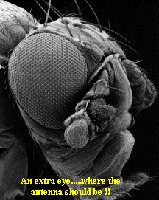
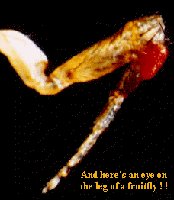
Turning developmental genes on or off at the wrong time or place can result in abnormal body plans, illustrating the importance of precise gene regulation in evolution and development.
Example: Mutations in Hox genes can cause extra limbs or misplaced organs in model organisms like fruit flies.
Examples of Developmental Variation
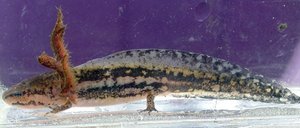
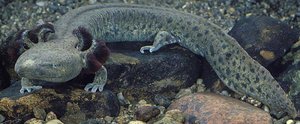
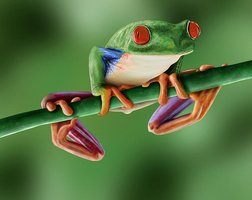
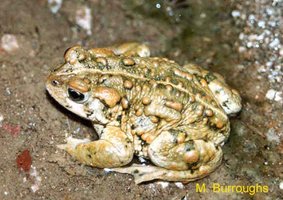
Variation in developmental gene regulation can also explain differences in life cycles and body forms, such as the retention of larval features in adult salamanders (paedomorphosis) or differences in limb structure among frogs.
Paedomorphosis: Adult retains juvenile features, such as gills and tail fin.
Adaptive Morphology: Limb structure varies according to ecological needs (e.g., climbing vs. hopping).
Summary Table: Prokaryotes vs. Eukaryotes
Feature | Prokaryotes | Eukaryotes |
|---|---|---|
Nucleus | No | Yes |
Internal Membranes | No | Yes |
DNA Structure | Circular, naked | Linear, with histones |
Ribosome Size | 70S | 80S |
Examples | Bacteria, Archaea | Animals, Plants, Fungi, Protists |
Summary Table: Jaw Joint Evolution
Group | Jaw Joint Bones | Sound Transmission |
|---|---|---|
Early Synapsids | Quadrate & Articular | No |
Therapsids | Quadrate & Articular | No |
Cynodonts | Quadrate & Articular | No |
Mammals | Dentary & Squamosal | Quadrate & Articular transmit sound |
Key Equation: Endosymbiosis Theory
The endosymbiosis theory can be summarized as:
Additional info: Expanded explanations and context were added to clarify evolutionary transitions, cell structure, and developmental gene regulation for exam preparation.
