 Back
Mammalian Evolution: Traits, Adaptations, and Diversity
Study Guide - Smart Notes
 Tailored notes based on your materials, expanded with key definitions, examples, and context.
Mammalian Traits and Evolution
Defining Characteristics of Mammals
Mammals are a diverse group of vertebrates distinguished by several unique traits that have enabled their evolutionary success. These characteristics are foundational to understanding mammalian biology and their adaptation to various environments.
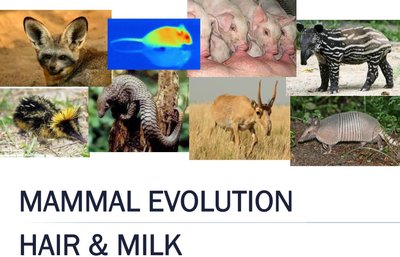
Hair/Fur: All mammals possess hair or fur, which provides insulation and protection. Hair is a defining feature of mammals and is used for thermoregulation, camouflage, and sensory functions.
Mammary Glands: Female mammals have mammary glands that produce milk, nourishing their young and supporting extensive parental care.
Internal Fertilization and Viviparity: Most mammals fertilize eggs internally and give birth to live young (viviparity), with the exception of monotremes.
Extensive Parental Care: Mammals invest significant energy in caring for their offspring, increasing survival rates.
Physiological Adaptations
Mammals have evolved efficient systems to support their high metabolic rates and complex behaviors.
Efficient Respiratory and Circulatory Systems: These systems deliver oxygen rapidly to tissues, supporting endothermy and activity.
Kidneys: Mammalian kidneys conserve water by concentrating waste, an adaptation to terrestrial life.
External Pinnae (Ears): Most mammals have external ears that enhance hearing.
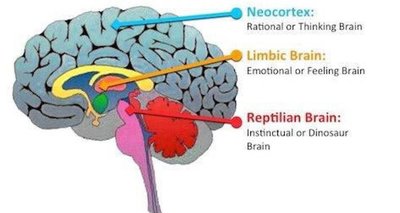
Large Brain-to-Body Size Ratio: Mammals possess relatively large brains, supporting advanced behaviors and learning.
Mammalian Adaptations
Adaptations in mammals are closely linked to their survival and ecological success.
Gaseous Exchange: Mammals have lungs adapted for efficient oxygen uptake, supporting their high metabolic rates.
Thermoregulation (Endothermy): Mammals maintain a constant internal temperature, allowing activity in diverse environments.
Skin and Insulation: Hair and specialized skin structures provide insulation against temperature extremes.
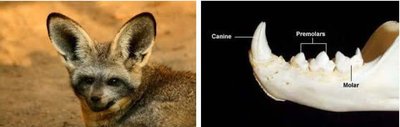
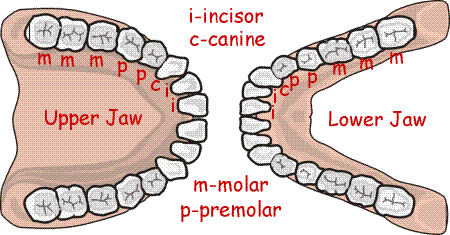
Teeth and Diet: Mammals have differentiated teeth (incisors, canines, premolars, molars) suited to their diets.
Mammalian Phylogeny and Closest Relatives
Evolutionary Origins
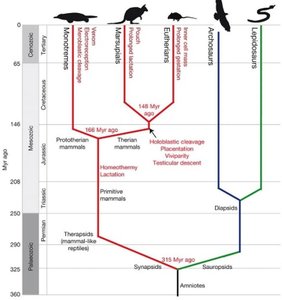
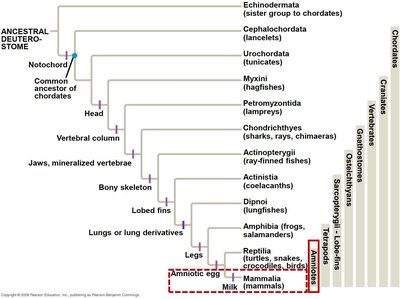
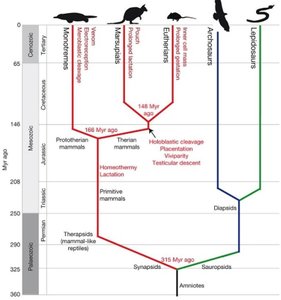
Mammals evolved from synapsid ancestors known as mammal-like reptiles (therapsids). The evolutionary tree highlights the divergence of mammals from other vertebrates.
Synapsids: Early mammal-like reptiles that gave rise to modern mammals.
Therapsids: Advanced synapsids with traits closer to mammals.
Major Groups of Mammals
Monotremes
Monotremes are the most primitive group of living mammals, characterized by egg-laying and the absence of nipples.
Distribution: Found in Australia and New Guinea.
Key Traits: Lay eggs, secrete milk from mammary glands (no nipples), share features with reptiles.
Examples: Echidna, Platypus
Marsupials
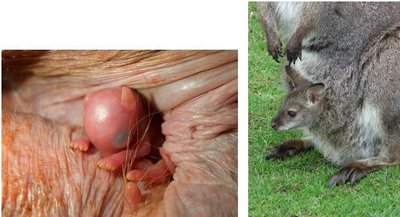
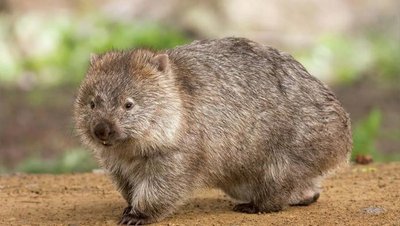
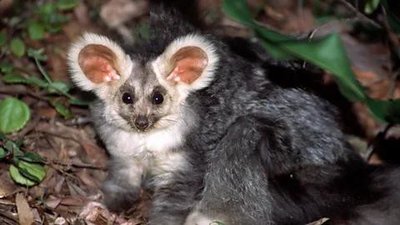
Marsupials give birth to young at an early stage of development, which then continue to grow in a pouch.
Distribution: Australia, New Zealand, South America.
Key Traits: Pouch for development, nipples for feeding, short gestation.
Examples: Opossums, Kangaroos, Koalas
Eutherians (Placental Mammals)
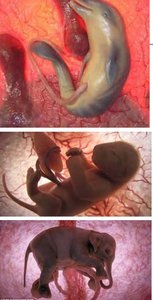
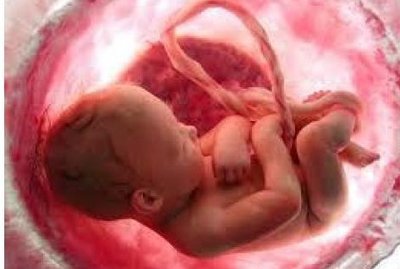
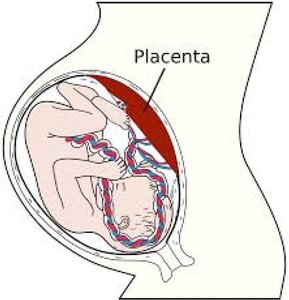
Eutherians are the most diverse group of mammals, characterized by the presence of a placenta and longer gestation periods.
Key Traits: Placenta for nutrient and gas exchange, well-developed young at birth, nipples for feeding.
Examples: Humans, Elephants, Dogs, Cows
Benefits of Eutherian Reproduction
Advantages of Placental Development
The placenta provides several benefits to eutherian mammals, contributing to their evolutionary success.
Safety and Warmth: Developing young are protected within the mother's body.
Enhanced Nutrition and Oxygen: Placenta facilitates efficient transfer of nutrients and oxygen.
Well-Developed Young: Offspring are born at a more advanced stage, increasing survival.
Predator Avoidance: Internal development reduces exposure to environmental hazards.
Trends in Mammalian Radiation
Diversity and Adaptation
Mammals have radiated into a wide range of habitats, exhibiting increased complexity and diversity.
Complexity of Design: Mammals show advanced anatomical and physiological traits.
Diversity of Diet: Adaptations in teeth and digestive systems allow varied diets.
Increase in Body Size: Mammals range from tiny bats to massive whales.
Modern Mammals
Species Diversity
There are approximately 6,500 extant species of mammals, with rodents and bats representing the largest orders.
Return to the Sea: Aquatic Mammals
Cetaceans and Sirenians
Some mammals have adapted to aquatic environments, forming two main groups: cetaceans and sirenians.
Cetaceans: Includes baleen whales (filter feeders) and toothed whales (predators using echolocation).
Sirenians: Includes manatees and dugongs, herbivorous mammals closely related to elephants.
Order: Primates
Primate Classification and Characteristics
Primates are mammals with advanced traits, including large brains, grasping hands, and complex social behaviors. They are divided into prosimians and anthropoids.
Prosimians: Lemurs and tarsiers, primitive primates.
Anthropoids: Monkeys, apes, and humans.
Hominoids: Includes gibbons, orangutans, gorillas, chimpanzees, bonobos, and humans.
Primate Evolution and Traits
Short Jaws: Adapted for varied diets.
Eyes on Front of Face: Enhanced depth perception.
Grasping Hands and Feet: Opposable thumbs for manipulation.
Large Brain: Supports learning and social behavior.
Extended Parental Care: Long developmental periods.
Hominin Evolution
Early Hominids and Genus Australopithecus
Hominins are a subgroup of primates that includes modern humans and their extinct relatives. Early hominids walked upright and had reduced canine teeth.
Genus Australopithecus: Includes species like A. afarensis ("Lucy") and A. africanus.
Bipedalism: Foramen magnum located underneath the skull.
Brain Size: Smaller than modern humans but larger than apes.
Genus Homo
Homo habilis: First stone tool users.
Homo ergaster: Long-distance walking, first fire users.
Homo erectus: First to migrate out of Africa.
Homo neanderthalensis: Complex social structures, burial practices.
Homo sapiens: Modern humans, characterized by upright posture, large brains, language, and symbolic thought.
Evidence for Evolution
Scientific Support
Evolution is supported by multiple lines of evidence, including biogeography, fossil records, homologies, and DNA sequencing.
DNA Commonality: Humans share 96–98% DNA with chimpanzees, 75% with mice, and 99.5% with other humans.
Summary Table: Major Mammalian Groups
Group | Key Traits | Examples |
|---|---|---|
Monotremes | Egg-laying, no nipples, mammary glands | Echidna, Platypus |
Marsupials | Pouch, nipples, short gestation | Kangaroo, Koala, Opossum |
Eutherians | Placenta, long gestation, well-developed young | Human, Elephant, Dog, Cow |
