 Back
BackManaging Our Waste: Biological and Environmental Perspectives
Study Guide - Smart Notes
 Tailored notes based on your materials, expanded with key definitions, examples, and context.
Managing Our Waste
Introduction to Waste Management
Waste management is a critical aspect of environmental biology, focusing on the handling, reduction, and disposal of unwanted materials produced by human activities. Understanding the types, sources, and methods of waste management is essential for minimizing environmental impact and promoting sustainability.
Waste: Any unwanted material resulting from human activity.
Municipal solid waste (MSW): Waste from homes, businesses, and institutions.
Industrial solid waste: Waste from production, mining, and agriculture.
Hazardous waste: Solid or liquid waste that is toxic, chemically reactive, or otherwise dangerous.
Types of Waste and Their Management
Municipal Solid Waste: Includes paper, plastics, food scraps, yard trimmings, and more. Major sources are packaging and consumer goods.
Industrial Solid Waste: Generated by manufacturing, mining, and agriculture; often managed by industries themselves.
Hazardous Waste: Defined by the EPA as ignitable, corrosive, reactive, or toxic. Includes synthetic organics and heavy metals.
Components of Waste Management
Waste management consists of three main components:
Reduction: Minimizing the amount of waste produced.
Recovery: Removing materials from the waste stream for recycling or composting.
Safe Disposal: Ensuring waste is disposed of in a manner that minimizes environmental harm.
Waste Reduction Strategies
Source Reduction: Manufacturers use less packaging; consumers buy less and use goods longer.
Recovery: Recycling and composting remove waste from the stream.
Reuse: Repurposing items, donating, and buying used goods.
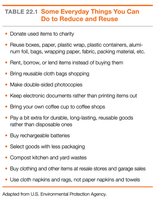
Table: Everyday Things You Can Do to Reduce and Reuse
Action |
|---|
Donate used items to charity |
Reuse boxes, paper, plastic wrap, containers |
Rent, borrow, or lend items |
Bring reusable bags shopping |
Make double-sided photocopies |
Keep electronic documents |
Bring your own coffee cup |
Buy durable, long-lasting goods |
Buy rechargeable batteries |
Select goods with less packaging |
Compost kitchen and yard waste |
Buy used items at resale shops |
Use cloth napkins and towels |
Composition and Trends in Municipal Solid Waste
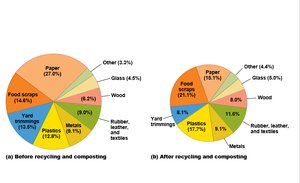
The composition of municipal solid waste changes before and after recycling and composting, with paper, plastics, and food scraps being major components.
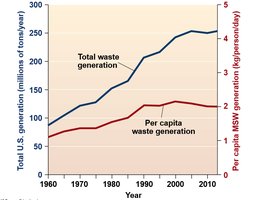
Waste generation per capita has increased significantly since 1960.
Source reduction and recycling are key strategies for managing waste.
Recycling and Composting
Recycling: Collecting used materials and reprocessing them into new products. Saves energy and reduces environmental impact.
Composting: Biological conversion of food and yard waste into humus or mulch. About 20% of the waste stream is compostable.
Table: Recovery Rates for Various Materials in the United States
Material | Percentage Recycled or Composted |
|---|---|
Lead-acid batteries | 99 |
Steel cans | 71 |
Newspapers | 67 |
Paper and paperboard | 63 |
Yard trimmings | 60 |
Aluminum cans | 55 |
Tires | 41 |
Glass containers | 34 |
Total plastics | 9 |
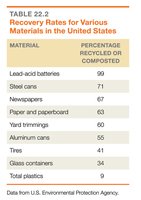
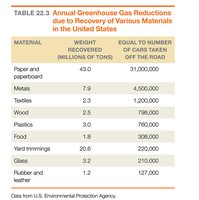
Table: Annual Greenhouse Gas Reductions due to Recovery of Various Materials
Material | Weight Recovered (Millions of Tons) | Equivalent Number of Cars Taken Off the Road |
|---|---|---|
Paper and paperboard | 43.0 | 37,000,000 |
Metals | 7.9 | 4,500,000 |
Textiles | 2.3 | 700,000 |
Wood | 3.5 | 796,000 |
Plastics | 3.8 | 300,000 |
Food | 1.6 | 200,000 |
Yard trimmings | 20.6 | 2,600,000 |
Glass | 3.2 | 127,000 |
Rubber and leather | 1.2 | 127,000 |
Geographic Variation in Recycling Rates
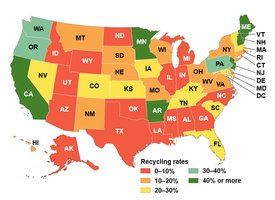
Recycling rates vary significantly among states, influenced by local policies and programs.
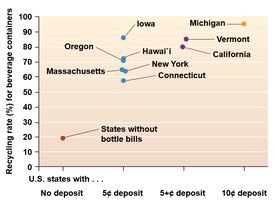
States with bottle deposit laws ("bottle bills") have higher recycling rates for beverage containers.
Externalities of producing new goods are not included in market prices, affecting recycling incentives.
Landfills
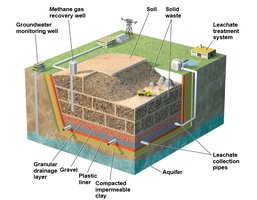
Landfills are the primary method of waste disposal in the United States. Modern landfills are engineered to minimize environmental impact.
Waste is buried under ground, layered with soil, and broken down slowly by bacteria.
Anaerobic breakdown produces biogas, which can be harvested.
Leachate (liquid from waste) is collected and treated to prevent water pollution.
Landfills must meet EPA standards under the Resource Conservation and Recovery Act.
Incineration
Incineration is an alternative to landfills, involving the burning of waste at high temperatures.
Reduces waste volume by up to 95%.
Produces ash that must be disposed of in hazardous waste landfills.
Emissions are scrubbed to reduce air pollution.
Heat generated can be used for energy production (waste-to-energy).
Industrial Solid Waste
Industries generate large amounts of waste, often managed in their own landfills.
Industrial ecology aims to reuse waste within or between processes.
Efficiency increases if waste production is costly.
Hazardous Waste
Hazardous waste poses significant risks due to its toxicity, reactivity, and potential for environmental harm.
EPA categories: ignitable, corrosive, reactive, toxic.
Households are major contributors.
Synthetic organic materials and heavy metals are especially hazardous.
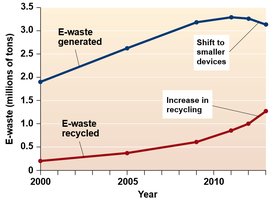
Electronic waste (e-waste) is a growing problem; recycling is increasing.
Cleanup of Hazardous Sites
CERCLA (Superfund) is administered by the EPA to identify and clean up hazardous sites.
Cleanup is costly and slow; relatively few sites have been fully remediated.
Disposal of Hazardous Waste
Landfills: More strictly designed than municipal landfills.
Surface impoundments: Lined ponds where waste evaporates; residue is disposed of.
Injection wells: Waste injected into deep porous rock below aquifers.
Radioactive waste: No permanent disposal site currently available.
Summary Table: Waste Management Methods
Waste Type | Management Method | Key Features |
|---|---|---|
Municipal Solid Waste | Landfill, Incineration, Recycling, Composting | EPA standards, biogas recovery, recycling rates |
Industrial Solid Waste | Industrial landfills, reuse, industrial ecology | State guidelines, process integration |
Hazardous Waste | Special landfills, surface impoundments, injection wells | Strict design, EPA regulation, Superfund cleanup |
Key Equations and Concepts
Waste Generation Rate:
Reduction in Greenhouse Gases:
Conclusion
Effective waste management is essential for environmental health and sustainability. Strategies include reduction, reuse, recycling, composting, and safe disposal, with increasing emphasis on minimizing hazardous waste and improving recovery rates. Biological processes such as composting and anaerobic breakdown in landfills play a key role in waste management, linking this topic to broader ecological and environmental biology concepts.
