 Back
BackLec 22
Study Guide - Smart Notes
 Tailored notes based on your materials, expanded with key definitions, examples, and context.
Mass Extinctions and the Cambrian Explosion
Introduction to Mass Extinctions and the Cambrian Explosion
The history of life on Earth is punctuated by episodes of rapid diversification and catastrophic extinction. Two of the most significant events are the Cambrian Explosion, which marks the rapid appearance of most major animal phyla, and mass extinction events, which have periodically reshaped the diversity of life. Understanding these phenomena provides insight into evolutionary processes, the resilience of ecosystems, and the factors influencing species survival.
The Cambrian Explosion
Overview of the Cambrian Explosion
The Cambrian Explosion refers to a relatively short period (~40 million years) beginning around 541 million years ago, during which nearly all major animal phyla first appeared in the fossil record. This event represents a dramatic increase in morphological diversity and complexity among multicellular organisms.
Timeframe: Occurred during the Cambrian period, which constitutes about 1% of Earth's history.
Significance: Marks the first appearance of most animal body plans and the establishment of complex ecosystems.
Fossil Evidence: Key fossil sites include the Burgess Shale (Canada) and Chengjiang (China), which preserve a wide variety of soft-bodied organisms.
Pre-Cambrian Life: Prior to the Cambrian, most organisms were small, simple, and often lacked hard parts.
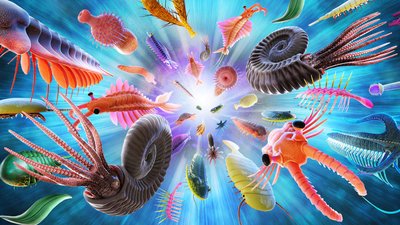
Major Innovations and Animal Phylogeny
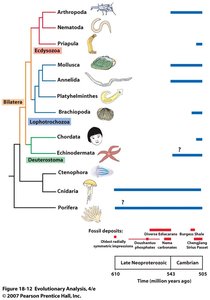
Many evolutionary innovations, such as bilateral symmetry, segmentation, and hard exoskeletons, first appear during the Cambrian. Phylogenetic studies suggest that the lineages leading to modern animal phyla diverged well before their first appearance in the fossil record.
Bilaterians: Animals with bilateral symmetry and three germ layers (triploblasty) are first clearly represented in Cambrian fossils.
Protostomes and Deuterostomes: The two major evolutionary branches of bilaterians, which include most animal phyla, diverged before the Cambrian.
Cladograms: Molecular and morphological data indicate that the diversification of animal lineages began in the Proterozoic Eon, but morphological diversity exploded in the Cambrian.
Fossil Evidence from the Cambrian and Precambrian
Fossils from the Cambrian and immediately preceding periods provide critical evidence for the timing and nature of early animal evolution.
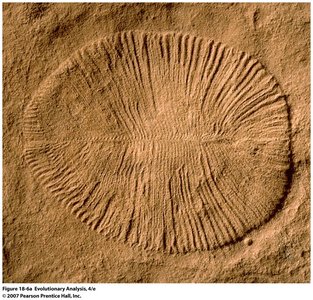
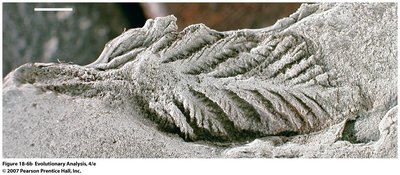
Precambrian Fossils: Include enigmatic forms such as Charnia and other Ediacaran biota, which are often difficult to relate to modern groups.
Cambrian Fossils: Show a wide range of body plans, including arthropods, mollusks, and early chordates such as Haikouichthys.
Weird Fossils: Many Cambrian organisms have no modern descendants, highlighting the experimental nature of early animal evolution.
Causes of the Cambrian Explosion
Several hypotheses have been proposed to explain the rapid diversification of animal life during the Cambrian Explosion:
Increase in Atmospheric Oxygen: Higher oxygen levels may have enabled the evolution of larger, more active animals (Knoll and Carroll, 1999).
Genetic Innovations: The evolution of developmental genes (e.g., Hox genes) may have facilitated new body plans.
Ecological Interactions: Predator-prey dynamics and the evolution of skeletons may have driven an evolutionary arms race.
Environmental Changes: Changes in ocean chemistry and the breakup of supercontinents may have created new ecological opportunities.
Mass Extinctions
Definition and Patterns of Mass Extinction
Mass extinctions are events in which a large proportion of Earth's species (typically >60%) disappear in a relatively short geological time frame. These events have had profound impacts on the history of life, often resetting evolutionary trajectories and opening ecological niches for surviving lineages.
Background Extinction Rate: The normal, ongoing rate of species loss due to local extinctions over time.
Mass Extinction Events: Five major mass extinctions are recognized in the Phanerozoic Eon, including the end-Permian and end-Cretaceous events.
Periodicity: Some evidence suggests periodicity in mass extinctions, with large events occurring roughly every 26 million years (Sepkoski & Raup, 1984).
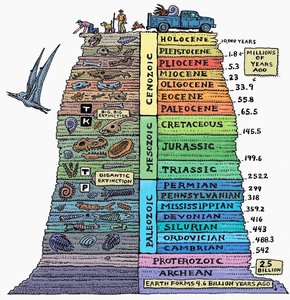
Causes of Mass Extinctions
Mass extinctions are typically caused by extrinsic (environmental) factors rather than intrinsic (biological) ones. Major causes include:
Asteroid Impacts: The Chicxulub impact is linked to the end-Cretaceous extinction that wiped out the non-avian dinosaurs.
Volcanism: Large-scale volcanic eruptions can alter climate and ocean chemistry.
Climate Change: Rapid shifts in temperature, sea level, and atmospheric composition can disrupt ecosystems.
Other Factors: Ocean anoxia, changes in sea level, and continental drift may also contribute.
Patterns and Consequences of Extinction
Extinction risk is influenced by both intrinsic and extrinsic factors. While small populations are more vulnerable due to demographic and genetic factors, mass extinctions can eliminate even widespread and abundant species.
Species Range: Species with small geographic ranges are generally more prone to extinction, except during mass extinction events (e.g., KT boundary).
Minimum Viable Population: Populations below a certain size are at high risk due to genetic deterioration and demographic stochasticity.
Red Queen Hypothesis: Suggests that species must continually adapt to survive in changing environments.
Extinction Risk for Extant Species
Modern species face extinction risks from both natural and anthropogenic factors. Conservation biology seeks to understand and mitigate these risks.
Specialists vs. Generalists: Species with narrow ecological niches (specialists) are at greater risk.
Life History Traits: r-selected species (high reproductive rate) may recover more quickly than K-selected species (low reproductive rate, long lifespan).
Conservation Challenges: Incomplete taxonomy and inadequate theoretical frameworks complicate risk assessment.
Summary Table: Major Mass Extinctions and Their Causes
Extinction Event | Time (mya) | Estimated Species Loss (%) | Main Causes |
|---|---|---|---|
End-Ordovician | 444 | ~85 | Glaciation, sea level fall |
Late Devonian | 375 | ~75 | Global cooling, anoxia |
End-Permian | 252 | ~96 | Volcanism, climate change |
End-Triassic | 201 | ~80 | Volcanism, climate change |
End-Cretaceous (KT) | 66 | ~76 | Asteroid impact, volcanism |
Key Terms and Concepts
Cambrian Explosion: Rapid diversification of animal life ~541 mya.
Mass Extinction: Sudden loss of a large proportion of species.
Background Extinction Rate: Normal rate of species loss.
Protostomes/Deuterostomes: Major evolutionary branches of bilaterians.
Red Queen Hypothesis: Ongoing adaptation required for survival.
Minimum Viable Population: Smallest population size needed for long-term survival.
Additional info: The Cambrian Explosion is best understood as an explosion of morphological diversity rather than the origin of all animal lineages. Many lineages diverged earlier but remained small and simple until the Cambrian.
