 Back
BackMeasurements in Biology: The Metric System and Data Analysis
Study Guide - Smart Notes
 Tailored notes based on your materials, expanded with key definitions, examples, and context.
Measurements in Biology
Accuracy and Precision
Accurate and precise measurements are fundamental in biological research. Accuracy refers to how close a measurement is to the true value, while precision refers to how close repeated measurements are to each other. Both are necessary for reliable scientific data.
Accuracy: Closeness to the true or correct value.
Precision: Closeness of repeated measurements to each other, regardless of accuracy.
Example: In archery, arrows close to the bullseye are accurate; arrows clustered together are precise.
Measurements can be:
Accurate but not precise
Precise but not accurate
Neither accurate nor precise
Both accurate and precise
The Metric System
The metric system is the standard for scientific measurement worldwide, based on units of ten for easy conversion. The most modern form is the International System of Units (SI).
Basic units: meter (m) for length, liter (L) for volume, kilogram (kg) for mass, degrees Celsius (°C) for temperature.
Prefixes: Used to indicate multiples or fractions of units (e.g., kilo-, centi-, milli-).
Prefix | Symbol | Value |
|---|---|---|
kilo | k | 1000 |
centi | c | 0.01 |
milli | m | 0.001 |
micro | µ | 0.000001 |
nano | n | 0.000000001 |
Use decimals, not fractions.
Metric symbols are always singular and separated from numbers by a space (except °C).
Conversions are straightforward due to the base-ten system.
Length and Area
The meter (m) is the basic unit of length. Area is measured in squared units (e.g., cm2).
1 m = 100 cm = 1000 mm = 0.001 km
1 cm2 = 100 mm2
Example: The diameter of a penny is about 1.9 cm.
Volume
Volume is the space occupied by an object, measured in cubed units. The liter (L) is the basic unit.
1 L = 1000 cm3 = 1000 mL
1 cm3 = 0.000001 m3
Example: A chicken egg is about 60 mL.
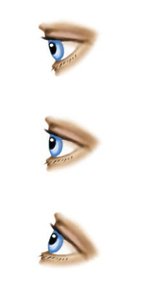
Volumes are measured with pipets and graduated cylinders. The meniscus (curved surface) should be read at eye level for accuracy.
Mass
The kilogram (kg) is the basic unit of mass. Mass is measured with balances.
1 kg = 1000 g
1 mg = 0.001 g
Example: A basketball is about 0.62 kg.
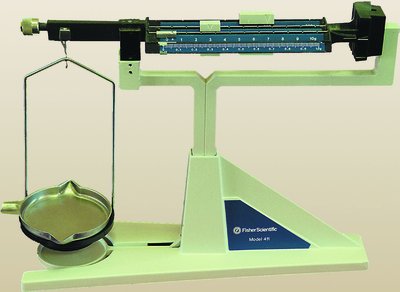
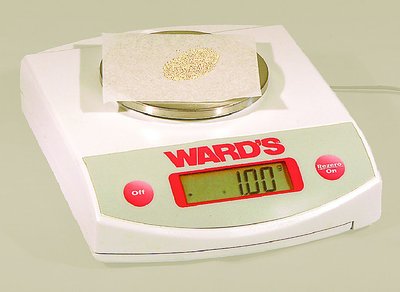
Biologists use triple-beam balances and electronic balances for measuring mass.
Note: Mass is not the same as weight; mass is the amount of matter, while weight is the force of gravity on that matter.
Density
Density is mass per unit volume, a key property for understanding whether objects float or sink.
Formula:
Example: Water has a density of about 1 g/mL at room temperature.
Temperature
Temperature measures the kinetic energy of molecules. Biologists use the Celsius scale (°C), where water freezes at 0°C and boils at 100°C.
Typical biological temperatures: Room temperature (22°C), human body (37°C).
Conversion formula:
Significant Figures
Significant figures are the digits in a measurement that are known with certainty plus one estimated digit. The number of significant figures reflects the precision of the measuring instrument.
When adding/subtracting, the answer should have no more precision than the least precise measurement.
When converting units, do not add extra precision.
When multiplying/dividing, the answer should have the same number of significant figures as the least precise measurement.

Understanding Numerical Data: Statistics
Statistics help biologists organize, summarize, and analyze data. Common measures include mean, median, range, and standard deviation.
Mean: Arithmetic average.
Median: Middle value when data are ordered.
Range: Difference between largest and smallest values.
Standard deviation (SD): Indicates how measurements vary about the mean.
For many distributions, mean ± 1 SD includes 68% of measurements, mean ± 2 SD includes 95%.
Inquiry-Based Learning in Biology
Biologists use inquiry-based learning to investigate questions such as how leaf area and shape vary. This involves forming hypotheses, designing experiments, collecting data, and analyzing results.
Observation: Leaves are adapted for absorbing light.
Question: How do surface area and shape of leaves vary?
Hypothesis: Formulate a testable statement.
Experimental Design: Outline procedures and supplies.
Data Collection: Record and analyze measurements.
Additional info: These procedures and concepts are foundational for laboratory work in biology, enabling students to collect, analyze, and interpret quantitative data accurately.
