 Back
Mechanisms of Gene Expression: Transcription and Translation
Study Guide - Smart Notes
 Tailored notes based on your materials, expanded with key definitions, examples, and context.
Gene Expression: The Central Dogma
Overview of Gene Expression
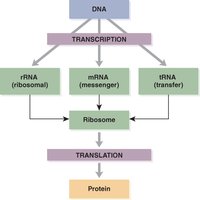
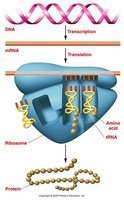
Gene expression is the process by which information from a gene is used to synthesize functional gene products, typically proteins. The central dogma of molecular biology describes the flow of genetic information from DNA to RNA to protein.
Transcription: DNA is transcribed into RNA.
Translation: RNA is translated into protein.
Types of RNA: Messenger RNA (mRNA), ribosomal RNA (rRNA), and transfer RNA (tRNA) are key players in this process.
RNA Structure and Differences from DNA
Key Structural Differences
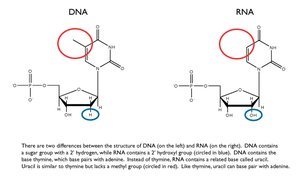
RNA and DNA are both nucleic acids, but they differ in several important ways.
Ribose vs. Deoxyribose: RNA contains ribose sugar, while DNA contains deoxyribose.
Uracil vs. Thymine: RNA uses uracil (U) instead of thymine (T) found in DNA.
Transcription: DNA to RNA
Mechanism of Transcription
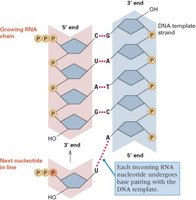
Transcription is the process by which RNA is synthesized from a DNA template.
RNA Polymerase: The enzyme responsible for synthesizing RNA from the DNA template.
Base Pairing: In RNA synthesis, uracil pairs with adenine.
Transcription Bubble: DNA unwinds to allow RNA polymerase access to the template strand.
Gene Structure and Essential Elements
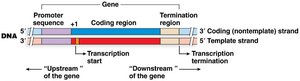
Genes contain specific regions that are crucial for transcription.
Promoter: The sequence where RNA polymerase binds to initiate transcription.
Coding Region: The part of the gene that is transcribed into RNA.
Termination Region: Signals the end of transcription.
RNA Polymerase and Sigma Factors in Bacteria
RNA Polymerase Structure and Function
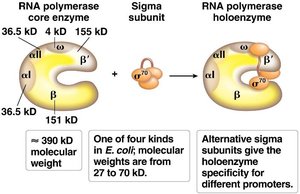
In bacteria, RNA polymerase requires a sigma subunit to recognize promoter sequences.
Core Enzyme: Responsible for RNA synthesis.
Sigma Subunit: Directs the core enzyme to specific promoters.
Bacterial Sigma Subunits Table
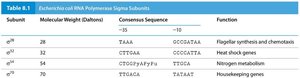
The table below summarizes the main sigma subunits, their consensus sequences, and functions:
Subunit | Molecular Weight (kDa) | Consensus Sequence (-35) | Consensus Sequence (-10) | Function |
|---|---|---|---|---|
σ28 | 28 | TAAA | CCGATATA | Flagellar synthesis and chemotaxis |
σ32 | 32 | CTTGAAA | CCGATATA | Heat shock genes |
σ54 | 54 | CTGGCACGTTT | TTGCA | Nitrogen metabolism |
σ70 | 70 | TTGACA | TATAAT | Housekeeping genes |
Transcription Initiation, Elongation, and Termination
Stages of Transcription
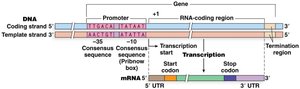
Transcription occurs in three main stages:
Initiation: RNA polymerase binds to the promoter region.
Elongation: RNA polymerase synthesizes RNA by adding nucleotides.
Termination: RNA polymerase releases the RNA transcript at the terminator sequence.




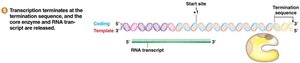
Termination Mechanisms
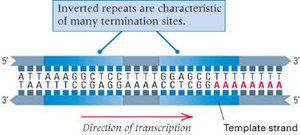
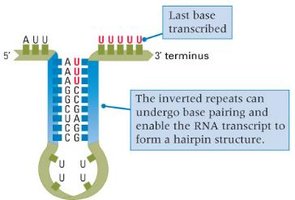
Self-termination: Involves formation of a hairpin loop and a U-rich region in the RNA transcript.
Protein-dependent termination: Requires additional terminator proteins.
Transcription on Different DNA Strands
Gene Arrangement and Promoters
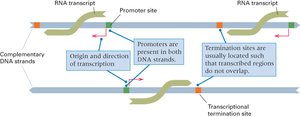
Only one DNA strand is transcribed for any one gene.
Different genes can be transcribed from different strands.
Eukaryotic Transcription: Promoters and Initiation
Promoter Elements in Eukaryotes
Eukaryotic promoters contain several consensus sequences, including the TATA box, CAAT box, and GC-rich box.
TATA box: Located about -25 from the transcription start site; principle binding site for transcription factors.
Transcription Factors: Proteins that help RNA polymerase recognize and bind to promoter sequences.

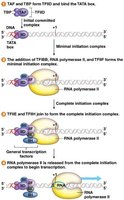
Transcription Initiation Complex
TBP (TATA Binding Protein): Binds to the TATA box.
TFIID: Contains TBP and other factors.
TFIIB, TFIIE, TFIIH: Additional factors that bridge and unwind DNA, and promote processivity.
Enhancers and Regulation of Transcription
Enhancer Sequences
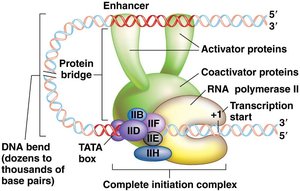
Enhancers are DNA elements that increase transcription levels by recruiting transcription factors.
Can be located upstream or downstream of the gene.
Interact with promoter and transcription machinery via protein bridges.
Signal Transduction and Responsive Transcription
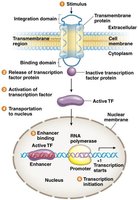
Transcription factor activity can be regulated by cellular signals.
Allows cells to adapt gene expression to environmental conditions.
Post-Transcriptional RNA Processing
RNA Processing Steps
Eukaryotic mRNA undergoes several modifications before translation:
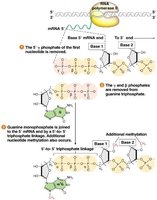
5' Capping: Addition of 7-methylguanosine cap for protection and ribosome binding.
3' Polyadenylation: Addition of poly-A tail for stability and export.
Splicing: Removal of introns and joining of exons.
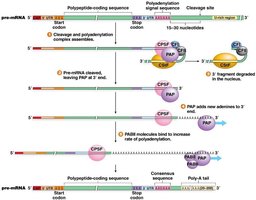
RNA Splicing Mechanism
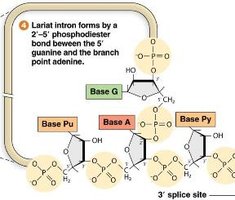
Introns are removed via specific splice sites (5' GU, 3' AG, branch site A).
Splicing forms a lariat structure and joins exons.
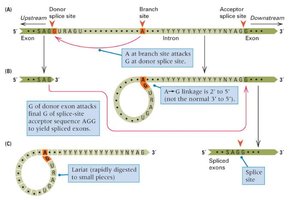
Microscopic Evidence for Introns
Hybridization of mRNA to DNA template shows loops corresponding to introns.
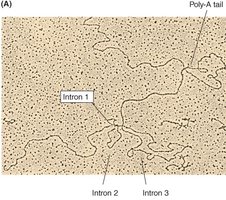
Alternative Splicing and Exon Shuffling
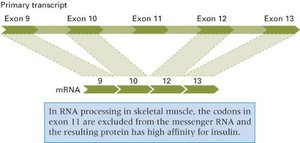
Alternative splicing allows for different protein products from the same gene.
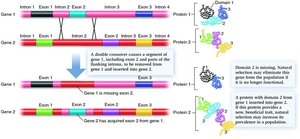
Exon shuffling can create new gene functions through recombination.
Quantitative PCR and Microarray Analysis
Quantitative PCR (qPCR)
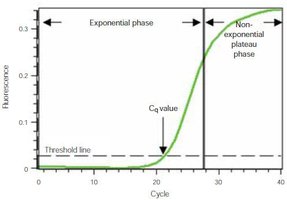
Monitors PCR product accumulation in real time.
Cycle threshold (Cq) is inversely proportional to template amount.
Microarray Analysis
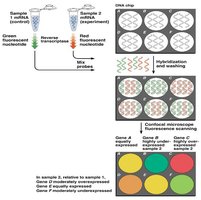
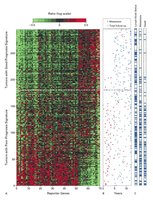
Detects changes in expression of many genes simultaneously.
Used to predict disease progression based on gene expression patterns.
RNA-seq Principles
RNA-seq Workflow
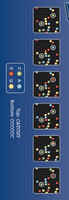
mRNA is isolated, converted to cDNA, and sequenced.
Number of sequencing reads reflects gene abundance.
Translation: RNA to Protein
Polypeptide Structure and Synthesis
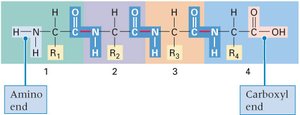
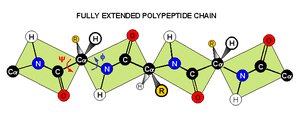
Amino acids are joined by peptide bonds to form polypeptides.
Polypeptides have an amino end and a carboxyl end.
Colinearity of DNA and Protein
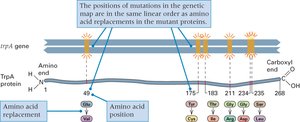
DNA sequence determines amino acid sequence in a linear, point-to-point manner.
Translation Components
mRNA: Provides coding sequence.
Ribosomes: Site of protein synthesis.
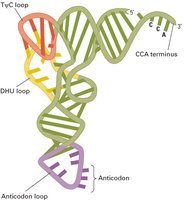
tRNA: Adaptor molecules with anticodon and amino acid attachment site.
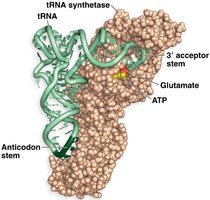
Aminoacyl tRNA synthetase: Enzyme that charges tRNA with the correct amino acid.
Prokaryotic vs. Eukaryotic mRNA Translation
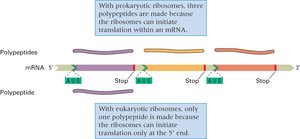
Prokaryotic mRNAs can be polycistronic; eukaryotic mRNAs are monocistronic.
Translation Initiation and Elongation
Initiation in Eukaryotes
Cap binding proteins and initiation factors assemble the ribosome at the start codon (AUG).
Kozak sequence helps identify the correct start codon.
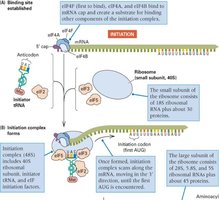
Elongation Cycle
Entry of tRNA into A site.
Peptide bond formation.
Translocation of ribosome and ejection of uncharged tRNA.
Termination
Occurs when a stop codon is reached.
Release factor enters A site and releases the new protein.
The Genetic Code and Wobble Hypothesis
Properties of the Genetic Code
Unambiguous: Each codon codes for one amino acid.
Degenerate: Some amino acids are specified by more than one codon.
Commaless, Nonoverlapping, Nearly universal.
Triplet Code and Wobble Base Pairing
Three bases (codon) specify an amino acid.
Wobble hypothesis: Third base pairing is less stringent, allowing flexibility.
Mutation Effects on Translation
Types of Mutations
Nonsense mutation: Changes a codon to a stop codon, truncating the protein.
Missense mutation: Changes a codon to code for a different amino acid.
Conservative substitution: Preserves chemical properties.
Nonconservative substitution: Changes chemical properties.
Summary
This guide covers the essential mechanisms of gene expression, including transcription, RNA processing, translation, and regulation. Understanding these processes is fundamental to molecular biology and genetics.
