 Back
Meiosis and Genetic Variation: Study Notes for General Biology
Study Guide - Smart Notes
 Tailored notes based on your materials, expanded with key definitions, examples, and context.
Meiosis and Sexual Life Cycles
Key Concepts
Meiosis is a fundamental process in sexually reproducing organisms that ensures genetic diversity and maintains chromosome number across generations. It alternates with fertilization in the life cycle, reducing chromosome sets from diploid to haploid and contributing to evolution through genetic variation.
Offspring acquire genes from parents by inheriting chromosomes
Fertilization and meiosis alternate in sexual life cycles
Meiosis reduces chromosome sets from diploid to haploid
Genetic variation produced in sexual life cycles contributes to evolution
Inheritance and Transmission of Genes
Heredity, Variation, and Genetics
Heredity is the transmission of traits from one generation to the next, while variation refers to differences among individuals of the same species. Genetics is the scientific study of heredity and variation.
Genes: Units of hereditary information consisting of specific nucleotide sequences in DNA.
Inherited Traits: Examples include eye color, hair color, blood type, height, and freckles.
Transmission: Genes are passed from parents to offspring via gametes (egg and sperm).
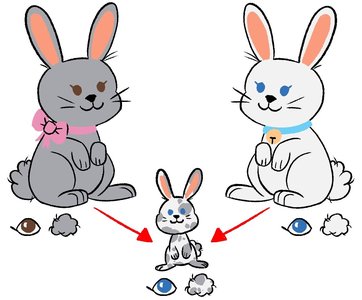
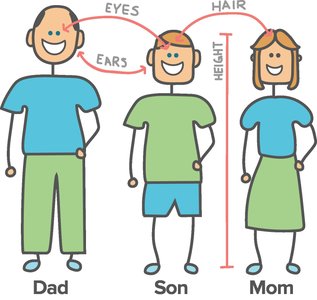
Molecular Basis of Inheritance
The transmission of hereditary traits is based on DNA replication, which produces copies of genes that can be passed from parents to offspring. Gametes transmit genes from one generation to the next, and fertilization unites male and female gametes, passing on genes from both parents.
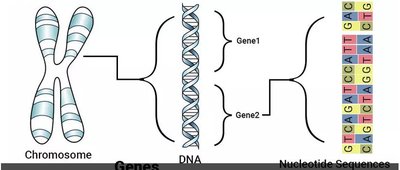
Genes and Chromosomes
Each chromosome contains hundreds to thousands of genes, which are precise sequences of nucleotides. The locus is a gene’s specific location along the length of a chromosome.
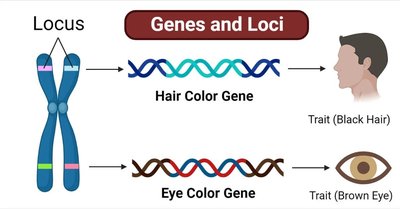
Comparison of Asexual and Sexual Reproduction
Asexual Reproduction
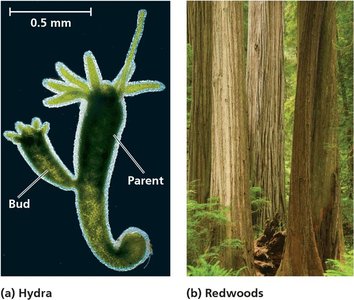
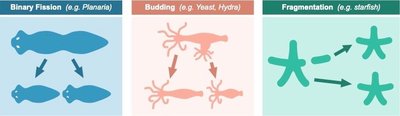
Asexual reproduction generates offspring from a single parent without the fusion of gametes. Offspring are usually genetically identical to the parent (clones), though genetic variation can arise through mutations.
Examples: Binary fission, budding, fragmentation.
Sexual Reproduction
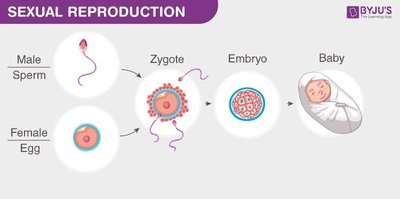
Sexual reproduction involves the fusion of two gametes, resulting in offspring with unique combinations of genes inherited from both parents. This process generates genetic variation among siblings and between offspring and parents.
Mechanisms generating genetic variation: Behavior of chromosomes during the sexual life cycle.
Fertilization and Meiosis in Sexual Life Cycles
Life Cycle Overview
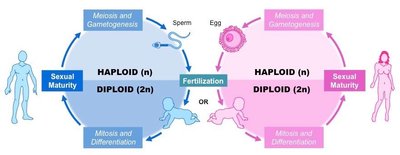
The life cycle is the sequence of stages in the reproductive history of an organism, from conception to production of its own offspring. Fertilization and meiosis alternate in this cycle.
Chromosome Sets in Human Cells
Chromosome Number and Structure
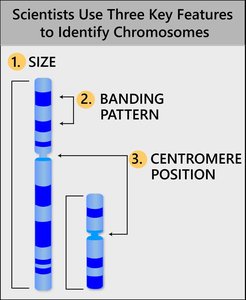
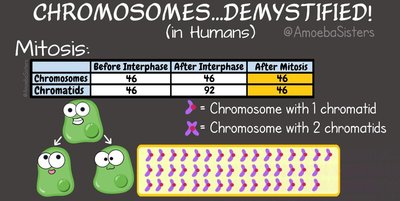
Humans have 46 chromosomes in each somatic cell, arranged in pairs. Chromosomes are duplicated before mitosis and can be distinguished by size, centromere position, and banding pattern.
Karyotype: A display of chromosome pairs arranged by size and shape.
Homologous Chromosomes: Chromosomes of a pair with the same length, centromere position, and staining pattern, carrying genes for the same inherited characters.
Types of Chromosomes
Autosomes: Chromosomes not involved in sex determination (pairs 1-22).
Sex Chromosomes: Chromosomes responsible for determining sex (pair 23: X and Y).
Chromosome Sets: Haploid vs Diploid
Humans inherit one chromosome of each pair from each parent, resulting in two sets of 23 chromosomes (maternal and paternal). Somatic cells are diploid (2n = 46), while gametes are haploid (n = 23).
Haploid: One set of chromosomes (n).
Diploid: Two sets of chromosomes (2n).
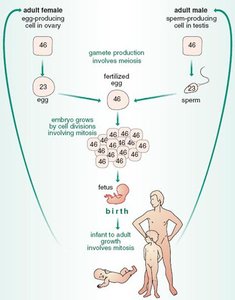
Behavior of Chromosome Sets in the Human Life Cycle
Fertilization and Development
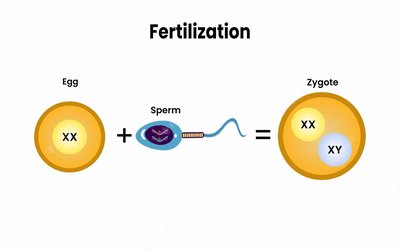
The human life cycle begins when a haploid sperm fuses with a haploid egg during fertilization, producing a diploid zygote. Mitosis of the zygote and its descendants generates all somatic cells, while gametes are produced by meiosis.
Meiosis: Process and Outcomes
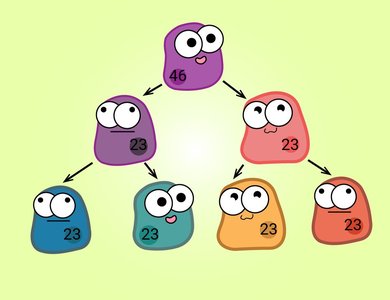
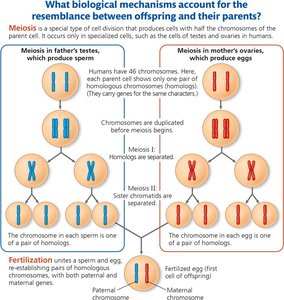
Meiosis consists of two rounds of cell division (Meiosis I and II) but only one round of DNA replication, resulting in four daughter cells with half the chromosome number of the parent cell. In humans, gametes are the only haploid cells, and meiosis occurs in germ cells during gamete production.
The Stages of Meiosis
Meiosis I
Prophase I: Chromosomes condense, homologs pair, crossing over occurs, chiasmata form.
Metaphase I: Homologous pairs align at the metaphase plate, independent assortment occurs.
Anaphase I: Homologous chromosomes separate, sister chromatids remain together.
Telophase I: Each cell has a haploid set of duplicated chromosomes; cytokinesis forms two haploid cells.
Meiosis II
Prophase II: Chromosomes move toward the metaphase plate.
Metaphase II: Chromosomes align at the metaphase plate.
Anaphase II: Sister chromatids separate and move toward opposite poles.
Telophase II: Chromosomes decondense, nuclear membrane reforms, cytokinesis forms four haploid daughter cells.
Comparison of Mitosis and Meiosis
Unique Events in Meiosis
Synapsis and crossing over (Prophase I)
Alignment of homologous pairs at the metaphase plate (Metaphase I)
Separation of homologs (Anaphase I)
Sister chromatid cohesion released in two steps: arms (Anaphase I) and centromeres (Anaphase II)
Genetic Variation in Sexual Life Cycles
Origins of Genetic Variation
Genetic variation arises from the behavior of chromosomes during meiosis and fertilization. Three main mechanisms contribute:
Independent assortment of chromosomes: Each pair sorts its maternal and paternal homologs independently, resulting in possible combinations.
Crossing over: Produces recombinant chromosomes with new combinations of alleles.
Random fertilization: Fusion of randomly selected gametes produces a zygote with any of about 70 trillion possible diploid combinations.
Evolutionary Significance
Genetic diversity generated by sexual reproduction is a key factor in evolution. While asexual reproduction can perpetuate successful allele combinations, sexual reproduction's ability to generate diversity is crucial for adaptation and evolutionary persistence.
Table: Comparison of Asexual and Sexual Reproduction
Feature | Asexual Reproduction | Sexual Reproduction |
|---|---|---|
Number of Parents | One | Two |
Genetic Variation | Low (except for mutations) | High (due to meiosis and fertilization) |
Mechanism | Mitosis | Meiosis and fertilization |
Examples | Binary fission, budding, fragmentation | Fusion of gametes (egg and sperm) |
Table: Chromosome Sets in Human Cells
Cell Type | Chromosome Number | Chromosome Sets |
|---|---|---|
Somatic Cell | 46 | Diploid (2n) |
Gamete | 23 | Haploid (n) |
Table: Mechanisms of Genetic Variation
Mechanism | Description | Result |
|---|---|---|
Independent Assortment | Homologous chromosomes sort independently during meiosis I | possible combinations |
Crossing Over | Exchange of genetic material between homologous chromosomes | Recombinant chromosomes |
Random Fertilization | Random fusion of gametes | Millions of possible zygote combinations |
Additional info: Academic context and explanations have been expanded for clarity and completeness.
