 Back
Meiosis and Sexual Life Cycles: Chromosomes, Genes, and Genetic Variation
Study Guide - Smart Notes
 Tailored notes based on your materials, expanded with key definitions, examples, and context.
Meiosis and Sexual Life Cycles
Chromosomes and Cell Types
Every eukaryotic species has a characteristic number of chromosomes in each cell nucleus. Chromosomes are thread-like structures composed of DNA and proteins, carrying genetic information essential for life.
Somatic cells are non-reproductive body cells and contain two sets of chromosomes (diploid, 2n). In humans, this is 46 chromosomes.
Gametes are reproductive cells (sperm and eggs) and contain half as many chromosomes (haploid, n). In humans, this is 23 chromosomes.
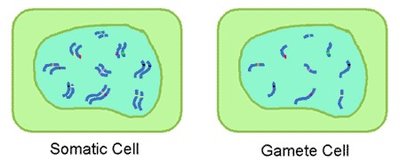
Example: Human somatic cells have 46 chromosomes, while gametes have 23.
Chromosome Numbers Across Species
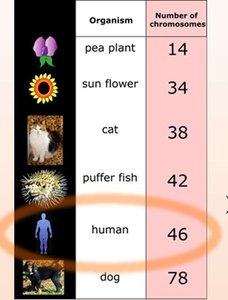
The number of chromosomes varies among species, but this number does not determine organism complexity.
Humans: 46 chromosomes
Dog: 78 chromosomes
Pea plant: 14 chromosomes
Sunflower: 34 chromosomes
Cat: 38 chromosomes
Puffer fish: 42 chromosomes
Heredity, Genes, and Loci
Heredity is the transmission of traits from one generation to the next. Genes are units of heredity, segments of DNA located at specific positions (loci) on chromosomes.
Genes are passed to the next generation via gametes.
Each gene occupies a specific locus on a chromosome.
Asexual vs. Sexual Reproduction
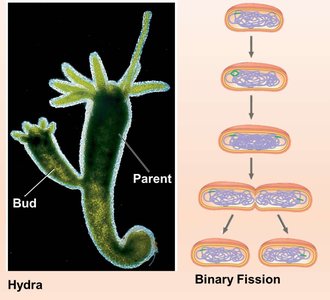
Organisms reproduce either asexually or sexually, affecting genetic diversity.
Asexual reproduction: A single individual passes all its genes to offspring by mitotic division. Offspring are genetically identical to the parent.
Sexual reproduction: Two parents produce offspring with unique combinations of genes through gamete fusion.

Sexual Life Cycle and Fertilization
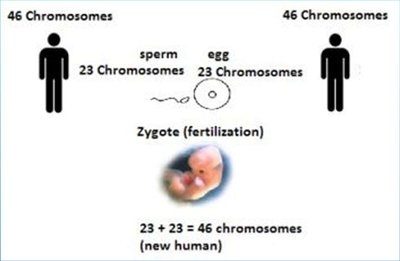
In sexually reproducing organisms, gametes are produced in gonads (testes or ovaries) by meiosis, not mitosis. Fertilization is the union of sperm and egg, forming a zygote with a complete set of chromosomes.
Sperm cell: 23 chromosomes
Egg cell: 23 chromosomes
Zygote: 46 chromosomes (diploid)
Homologous Chromosomes and Karyotypes
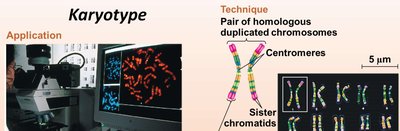
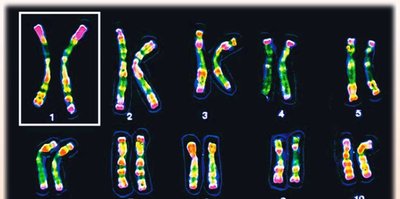
Chromosomes are organized in pairs called homologous chromosomes. A karyotype is an ordered display of these pairs from a cell.
Homologous chromosomes have the same length, centromere position, and banding pattern, but are not identical.
One homolog comes from the mother, the other from the father.
Humans have 23 pairs: 22 pairs of autosomes and 1 pair of sex chromosomes (XX or XY).
Sex Chromosomes and Autosomes
Sex chromosomes determine the sex of an individual. Autosomes are all other chromosomes.
Females: XX (homologous pair)
Males: XY (non-homologous pair)
22 pairs of autosomes
Ploidy: Diploid and Haploid Cells
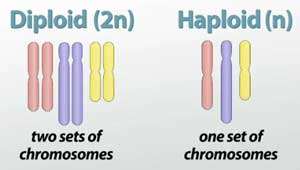
Ploidy refers to the number of sets of chromosomes in a cell.
Diploid (2n): Two sets of chromosomes (somatic cells)
Haploid (n): One set of chromosomes (gametes)
Humans: 2n = 46, n = 23
Meiosis: The Process of Making Gametes
Meiosis is a specialized type of cell division that reduces the chromosome number by half, producing four haploid gametes from one diploid cell. It consists of two consecutive divisions: meiosis I and meiosis II.
Meiosis I: Separation of homologous chromosomes
Meiosis II: Separation of sister chromatids
Each daughter cell has half the chromosome number of the parent cell
Genetic Variation in Sexual Reproduction
Three mechanisms contribute to genetic variation in sexually reproducing organisms:
Crossing over: Exchange of genetic material between non-sister chromatids during prophase I of meiosis, creating new combinations of genes.
Independent assortment: Random distribution of homologous chromosomes to gametes during metaphase I.
Random fertilization: Any sperm can fuse with any egg, resulting in numerous possible genetic combinations.
Key Definitions and Concepts
Ploidy: Number of sets of chromosomes in a cell
Heredity: Transmission of traits from one generation to the next
Gene: Unit of heredity, segment of DNA
Homologous chromosomes: Chromosome pairs with similar structure and gene content
Karyotype: Ordered display of chromosome pairs
Haploid: Cell with one set of chromosomes (n)
Diploid: Cell with two sets of chromosomes (2n)
Zygote: Fertilized egg cell (diploid)
Gamete: Reproductive cell (haploid)
Crossing over: Exchange of genetic material between homologous chromosomes
Chiasmata: X-shaped regions where crossing over occurs
Tetrad: Group of four chromatids formed during synapsis
Synapsis: Pairing and physical connection of homologous chromosomes
Comparison of Mitosis and Meiosis
Mitosis: Produces two genetically identical diploid cells for growth and repair
Meiosis: Produces four genetically unique haploid gametes for sexual reproduction
Meiosis includes crossing over and independent assortment, increasing genetic diversity
Trisomy 21 (Down Syndrome)
Trisomy 21 is a genetic disorder caused by the presence of an extra chromosome 21, resulting in 47 chromosomes. It is attributed to nondisjunction during meiosis.
Term | Definition |
|---|---|
Ploidy | Number of sets of chromosomes in a cell |
Haploid | One set of chromosomes (n) |
Diploid | Two sets of chromosomes (2n) |
Homologous chromosomes | Chromosome pairs with similar structure and gene content |
Karyotype | Ordered display of chromosome pairs |
Gamete | Reproductive cell (haploid) |
Zygote | Fertilized egg cell (diploid) |
Crossing over | Exchange of genetic material between homologous chromosomes |
Chiasmata | X-shaped regions where crossing over occurs |
Tetrad | Group of four chromatids formed during synapsis |
Synapsis | Pairing and physical connection of homologous chromosomes |
Formulas and Equations
Diploid number:
Haploid number:
Number of possible chromosome combinations from independent assortment:
Example: In humans, , so possible combinations.
Additional info: The notes have been expanded to include definitions, examples, and academic context for clarity and completeness.
