 Back
BackMeiosis and Sexual Life Cycles: Mechanisms of Genetic Variation
Study Guide - Smart Notes
 Tailored notes based on your materials, expanded with key definitions, examples, and context.
Meiosis and Sexual Life Cycles
Introduction
This chapter explores the mechanisms of heredity, the differences between asexual and sexual reproduction, and the cellular processes that generate genetic diversity. Understanding meiosis and the sexual life cycle is fundamental to grasping how traits are inherited and how evolution operates at the genetic level.
Inheritance of Genes
Heredity and Variation
Heredity is the transmission of traits from one generation to the next. Offspring are not exact clones of their parents, leading to variation among individuals.
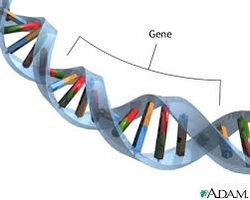
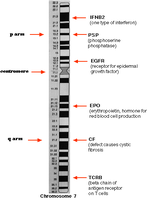
Genes are the units of heredity, composed of DNA, and are inherited from parents. They program traits by encoding enzymes and proteins essential for biological function.
Genes are located on chromosomes, with each chromosome containing hundreds to thousands of genes. The locus is the specific location of a gene on a chromosome.
Gametes and Chromosome Number
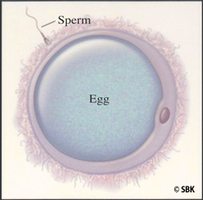
Gametes (sperm and egg) are reproductive cells that carry half the full set of chromosomes (haploid, n).
At fertilization, gametes unite to form a zygote with a full set of chromosomes (diploid, 2n).
Asexual vs Sexual Reproduction
Asexual Reproduction
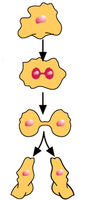
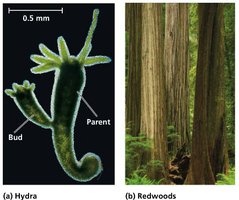
Involves a single parent and produces genetically identical offspring (clones).
Common in unicellular organisms and some plants and animals.

Sexual Reproduction
Involves two parents, each contributing half of the genetic material to the offspring.
Results in genetically unique offspring, increasing genetic variation within a population.
Example: Strawberry Plants
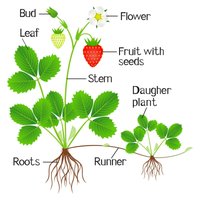
Strawberries can reproduce both sexually (via seeds) and asexually (via runners).
If the diploid number is 14, gametes produced by meiosis will have 7 chromosomes.
Chromosomes and Karyotypes
Chromosome Structure and Types
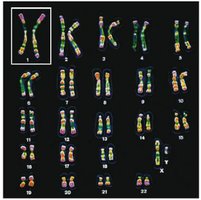
Humans have 46 chromosomes, arranged in 23 pairs.
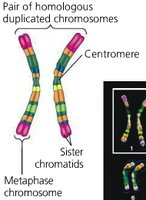
Homologous chromosomes are pairs that have the same length, gene position, and staining pattern.
Autosomes are non-sex chromosomes; sex chromosomes (X and Y) determine biological sex.
Sex Determination
Eggs always carry an X chromosome; sperm carry either X or Y.
XX results in a female; XY results in a male.
Somatic Cells vs Gametes
Somatic cells are diploid (2n) and contain 46 chromosomes in humans.
Gametes are haploid (n) and contain 23 chromosomes.
Germ cells are the only cells that undergo meiosis to produce gametes.
Life Cycle and Alternation of Generations
Overview of the Human Life Cycle
The life cycle is the sequence of stages in the reproductive history of an organism, from conception to the production of its own offspring.
In humans, the cycle alternates between haploid gametes and diploid somatic cells.
Fertilization restores the diploid number, and mitosis allows growth and development.
Meiosis: The Reduction Division
Purpose and Overview
Meiosis reduces the chromosome number by half, producing four genetically unique haploid cells from one diploid cell.
Consists of two sequential divisions: Meiosis I and Meiosis II.
Key Terms
Homologs: Chromosomes with the same genes but possibly different alleles, one from each parent.
Sister chromatids: Identical copies of a chromosome, joined at the centromere, formed during DNA replication.
Meiosis I
Prophase I: Homologous chromosomes pair up and exchange genetic material (crossing over).
Metaphase I: Homologous pairs align at the metaphase plate.
Anaphase I: Homologous chromosomes separate to opposite poles.
Telophase I & Cytokinesis: Two haploid cells form, each with duplicated chromosomes.
Meiosis II
Prophase II: Spindle apparatus forms in each haploid cell.
Metaphase II: Chromosomes align at the metaphase plate.
Anaphase II: Sister chromatids separate to opposite poles.
Telophase II & Cytokinesis: Four haploid cells with unduplicated chromosomes are produced.
Genetic Variation in Sexual Reproduction
Sources of Genetic Variation
Independent Assortment of Chromosomes: Random orientation of homologous pairs during metaphase I leads to many possible combinations of maternal and paternal chromosomes in gametes.
Crossing Over: Homologous chromosomes exchange genetic material during prophase I, creating recombinant chromosomes with new allele combinations.
Random Fertilization: Any sperm can fuse with any egg, further increasing genetic diversity.
Mathematical Example
Humans have 23 pairs of chromosomes, so the number of possible combinations due to independent assortment is .
Random fertilization multiplies this diversity: possible zygote combinations (not including crossing over).
Evolutionary Significance of Sexual Reproduction
Advantages of Sexual Reproduction
Genetic variation produced by meiosis and fertilization is essential for evolution by natural selection.
The Red Queen Hypothesis suggests that sexual reproduction provides an evolutionary advantage in changing environments by generating diverse offspring.
Summary Table: Mitosis vs Meiosis
Feature | Mitosis | Meiosis |
|---|---|---|
Number of divisions | 1 | 2 |
Number of daughter cells | 2 | 4 |
Chromosome number in daughter cells | Diploid (2n) | Haploid (n) |
Genetic identity | Identical to parent | Genetically unique |
Role in organism | Growth, repair, asexual reproduction | Sexual reproduction, gamete formation |
Key Terms and Concepts
Diploid (2n): Cell with two sets of chromosomes.
Haploid (n): Cell with one set of chromosomes.
Homologous chromosomes: Chromosome pairs, one from each parent, with the same genes.
Crossing over: Exchange of genetic material between homologous chromosomes during prophase I of meiosis.
Independent assortment: Random distribution of homologous chromosomes during meiosis I.
Random fertilization: Any sperm can fertilize any egg, increasing genetic variation.
