 Back
BackMeiosis and Sexual Life Cycles: Mechanisms and Evolutionary Significance
Study Guide - Smart Notes
 Tailored notes based on your materials, expanded with key definitions, examples, and context.
Meiosis and Sexual Life Cycles
Introduction to Heredity and Variation
The transmission of traits from one generation to the next is known as inheritance or heredity. While offspring inherit similarities from their parents, they also exhibit variation. The scientific study of heredity and variation is called genetics.
Genes are the fundamental units of heredity, composed of DNA segments.
Genes are transmitted to the next generation via gametes (sperm and eggs).
Most DNA is organized into chromosomes.
Humans have 46 chromosomes in somatic cells (all body cells except gametes and their precursors).
A gene’s specific location on a chromosome is called its locus.
Comparison of Asexual and Sexual Reproduction
Organisms can reproduce either asexually or sexually, leading to different patterns of genetic inheritance and variation.
Asexual reproduction: A single individual passes all its genes to offspring without gamete fusion, producing genetically identical clones.
Sexual reproduction: Two parents contribute genes, resulting in offspring with unique genetic combinations.
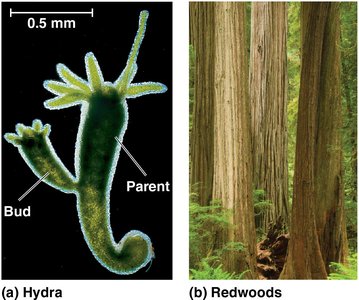
Fertilization and Meiosis in Sexual Life Cycles
A life cycle is the sequence of stages in the reproductive history of an organism. In sexually reproducing organisms, meiosis and fertilization alternate to maintain chromosome number across generations.
Human somatic cells contain 23 pairs of chromosomes (46 total).
A karyotype is an ordered display of chromosome pairs.
Homologous chromosomes (homologs) are pairs with the same length, centromere position, and gene loci.
Sex chromosomes (X and Y) determine sex; autosomes are the remaining 22 pairs.
Each homologous pair includes one chromosome from each parent.
A diploid cell (2n) has two sets of chromosomes; in humans, 2n = 46.
A haploid cell (n) has one set; in humans, n = 23.
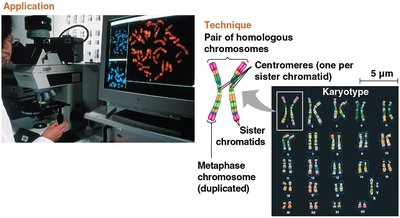
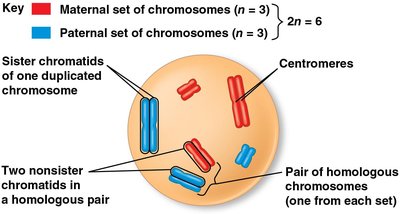
Human Life Cycle and Chromosome Behavior
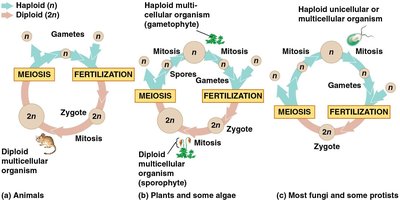
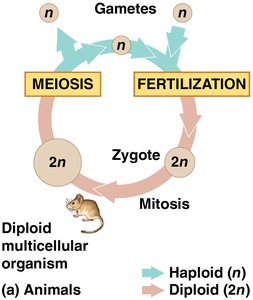
Fertilization unites gametes to form a diploid zygote, which divides by mitosis to develop into an adult. Gametes are produced by meiosis, ensuring chromosome number is maintained across generations.
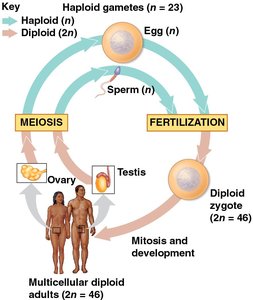
Variety of Sexual Life Cycles
Sexual life cycles differ among organisms in the timing of meiosis and fertilization:
Animals: Gametes are the only haploid cells; fertilization produces a diploid zygote that divides by mitosis.
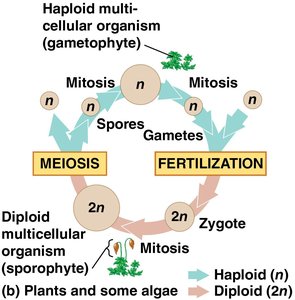
Plants and some algae: Exhibit alternation of generations with both diploid (sporophyte) and haploid (gametophyte) multicellular stages.
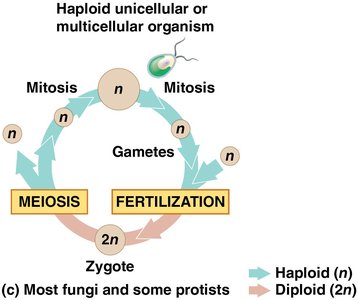
Fungi and some protists: Only the zygote is diploid; meiosis produces haploid cells that divide by mitosis.
Meiosis: Mechanism and Stages
Overview of Meiosis
Meiosis is a specialized type of cell division that reduces the chromosome number by half, producing four genetically distinct haploid cells from one diploid cell. It consists of two sequential divisions: meiosis I and meiosis II.
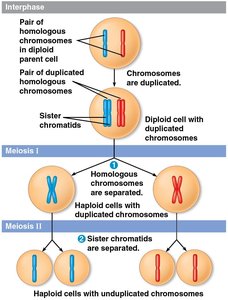
Chromosomes duplicate before meiosis.
Meiosis I separates homologous chromosomes; meiosis II separates sister chromatids.
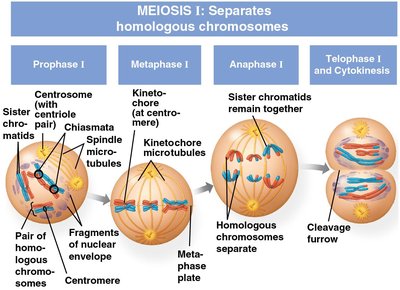
Meiosis I: Separation of Homologous Chromosomes
Prophase I: Homologous chromosomes pair and crossing over occurs at chiasmata.
Metaphase I: Homologous pairs align at the metaphase plate.
Anaphase I: Homologs separate and move to opposite poles; sister chromatids remain together.
Telophase I and Cytokinesis: Two haploid cells form, each with duplicated chromosomes.
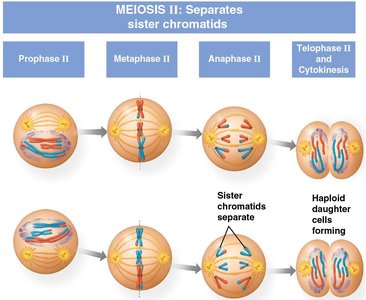
Meiosis II: Separation of Sister Chromatids
Prophase II: Spindle apparatus forms; chromosomes move toward the metaphase plate.
Metaphase II: Chromosomes align at the metaphase plate; sister chromatids are no longer genetically identical due to crossing over.
Anaphase II: Sister chromatids separate and move to opposite poles.
Telophase II and Cytokinesis: Four haploid daughter cells form, each genetically distinct.
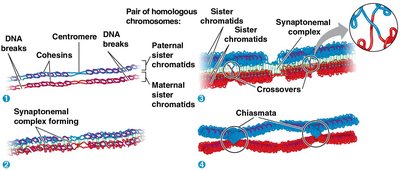
Mechanisms of Genetic Variation in Meiosis
Crossing Over: Occurs during prophase I, where nonsister chromatids exchange genetic material, producing recombinant chromosomes.
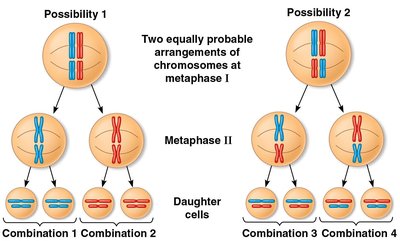
Independent Assortment: Homologous pairs orient randomly at metaphase I, leading to genetic variation in gametes.
Random Fertilization: Any sperm can fuse with any egg, further increasing genetic diversity.
Comparison of Mitosis and Meiosis
Key Differences
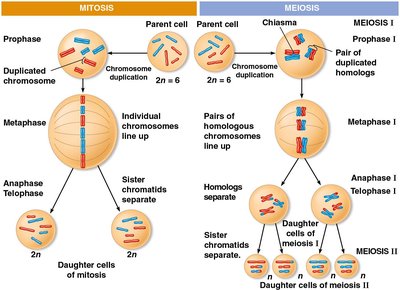
Mitosis: Produces two genetically identical diploid cells; conserves chromosome number.
Meiosis: Produces four genetically unique haploid cells; reduces chromosome number by half.
Three events unique to meiosis I: synapsis and crossing over, alignment of homologous pairs at metaphase plate, and separation of homologs.
Genetic Variation and Evolution
Sources of Genetic Variation
Mutations: The original source of genetic diversity, creating new alleles.
Reshuffling of alleles during sexual reproduction increases variation.
Mechanisms: independent assortment, crossing over, and random fertilization.
Evolutionary Significance
Genetic variation is essential for evolution by natural selection.
Sexual reproduction is nearly universal among animals, promoting genetic diversity.
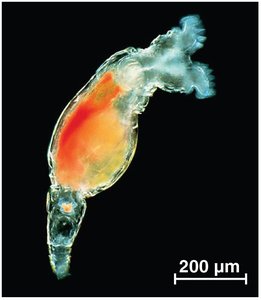
Some asexual organisms, like bdelloid rotifers, increase diversity by incorporating foreign DNA.
Summary Table: Key Differences Between Mitosis and Meiosis
Feature | Mitosis | Meiosis |
|---|---|---|
Number of divisions | 1 | 2 |
Number of daughter cells | 2 | 4 |
Chromosome number in daughter cells | Diploid (2n) | Haploid (n) |
Genetic identity | Identical to parent | Genetically unique |
Role in organism | Growth, repair, asexual reproduction | Sexual reproduction, genetic diversity |
Key Equations
Number of possible chromosome combinations due to independent assortment: where is the haploid number of chromosomes.
Number of possible diploid combinations from random fertilization:
