 Back
Meiosis and Sexual Life Cycles: Mechanisms and Genetic Variation
Study Guide - Smart Notes
 Tailored notes based on your materials, expanded with key definitions, examples, and context.
Meiosis and Sexual Life Cycles
Introduction to Sexual Reproduction and Meiosis
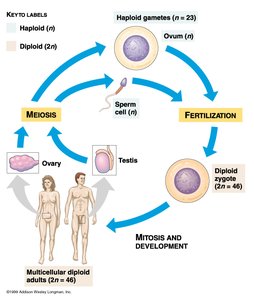
Sexual reproduction is a biological process that results in the recombination of genetic information, producing offspring with genetic variation. Meiosis is the specialized type of cell division that reduces the chromosome number by half, generating haploid gametes (sperm and egg) necessary for sexual reproduction. This process is fundamental for maintaining chromosome number across generations and increasing genetic diversity, which enhances adaptability in changing environments.
Key Terms in Sexual Reproduction
Ploidy (n): Refers to the number of sets of chromosomes in a cell.
Diploid (2n): Cells with two sets of each chromosome type (e.g., somatic cells in humans).
Haploid (n): Cells with one set of each chromosome type (e.g., gametes).
Chromosomes: Structures carrying genes, which are DNA segments influencing hereditary traits.
Alleles: Different versions of a specific gene.
Homologous Chromosomes (Homologues): Chromosomes of the same type from different parents, containing similar genetic information.
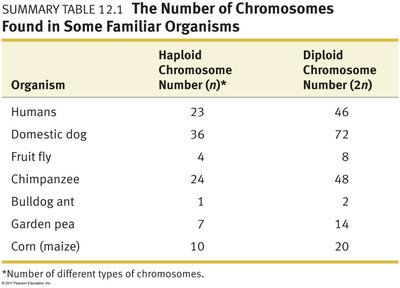
Chromosome Numbers in Organisms
Different organisms have characteristic numbers of chromosomes in their haploid and diploid states. The human genome consists of 23 pairs of chromosomes (46 total), with 22 pairs of autosomes and one pair of sex chromosomes (X and Y). Autosomal genes are typically represented by two alleles, while sex-linked genes are found on the X or Y chromosomes.
Organism | Haploid Chromosome Number (n) | Diploid Chromosome Number (2n) |
|---|---|---|
Humans | 23 | 46 |
Domestic dog | 36 | 72 |
Fruit fly | 4 | 8 |
Chimpanzee | 24 | 48 |
Bulldog ant | 1 | 2 |
Garden pea | 7 | 14 |
Corn (maize) | 10 | 20 |
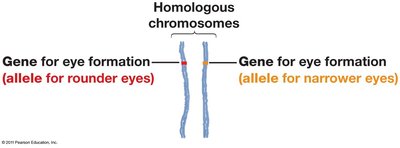
Genes, Alleles, and Homologous Chromosomes
Genes are located on chromosomes and exist in different forms called alleles. Homologous chromosomes carry the same genes but may have different alleles. For example, a gene for eye shape may have an allele for rounder eyes and another for narrower eyes.
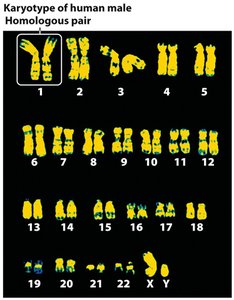
Human Karyotype
A karyotype is a visual representation of all the chromosomes in a cell, arranged in homologous pairs. Humans have 22 pairs of autosomes and one pair of sex chromosomes (XX or XY).
Comparison of Mitosis and Meiosis
Mitosis
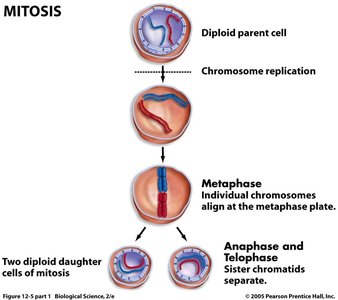
Mitosis is the process by which somatic (body) cells divide, producing two genetically identical diploid daughter cells. It is essential for growth, repair, and asexual reproduction.
Produces 2 daughter cells
Daughter cells are clones of the parent
Daughter cells are diploid
Functions: growth, replacement, repair
Meiosis
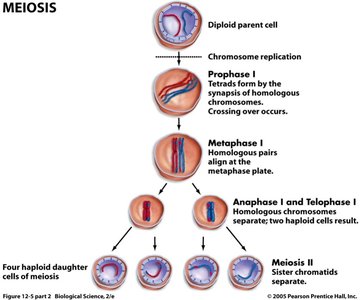
Meiosis is a two-part cell division process that produces up to four genetically distinct haploid gametes. It is essential for sexual reproduction and introduces genetic variation.
Produces up to 4 daughter cells
Daughter cells are distinct from parents
Daughter cells are haploid
Function: generation of gametes (egg & sperm)
The Process of Meiosis
Overview of Meiosis
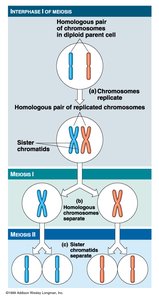
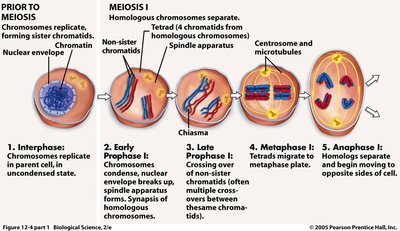
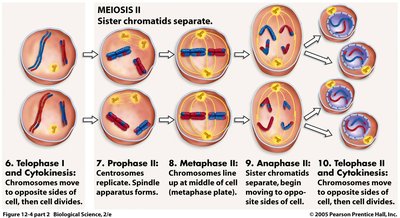
Meiosis consists of two sequential divisions: Meiosis I and Meiosis II. Meiosis I separates homologous chromosomes, while Meiosis II separates sister chromatids, similar to mitosis. The result is up to four haploid cells from one diploid parent cell.
Meiosis I
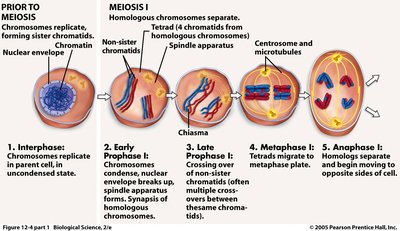
Prophase I: Homologous chromosomes pair up (synapsis) to form tetrads. Crossing over (exchange of genetic material) may occur at chiasmata.
Metaphase I: Tetrads align at the metaphase plate.
Anaphase I: Homologous chromosomes are separated to opposite poles; centromeres remain intact.
Telophase I and Cytokinesis: Chromosomes arrive at poles, and the cell divides, resulting in two haploid cells.
Meiosis II
Meiosis II resembles mitosis but starts with haploid cells. Sister chromatids are separated, resulting in up to four haploid daughter cells.
Mechanisms of Genetic Variation
Sources of Genetic Variation
Sexual reproduction introduces genetic variation through three main mechanisms:
Random Fertilization: The combination of any sperm with any egg results in a vast number of possible zygote genotypes (over 70 trillion combinations in humans).
Independent Assortment: During Anaphase I of meiosis, homologous chromosomes are randomly distributed to daughter cells, resulting in numerous possible combinations of chromosomes.
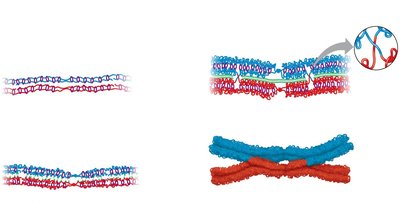
Crossing Over: During Prophase I, homologous chromosomes exchange genetic material, creating new allele combinations on each chromosome.
Independent Assortment Explained
Independent assortment refers to the random orientation of homologous chromosome pairs during Metaphase I, leading to a variety of possible gamete combinations. For humans, this results in about 8 million possible combinations ().
Crossing Over Explained
Crossing over occurs during tetrad formation in Prophase I, where non-sister chromatids exchange genetic segments at chiasmata. This process further increases genetic diversity among gametes.
Summary Table: Chromosomal Vocabulary
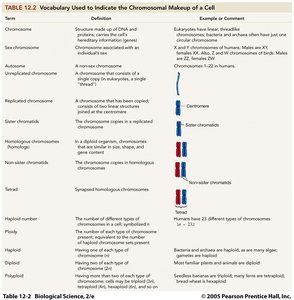
Term | Definition | Example or Comment |
|---|---|---|
Chromosome | Structure made up of DNA and proteins; carries genetic information | Humans have 46 chromosomes in somatic cells |
Autosome | Non-sex chromosome | Humans have 22 pairs of autosomes |
Sex chromosome | Chromosome associated with sex determination | X and Y in humans |
Homologous chromosomes | Chromosomes of the same type, one from each parent | Human chromosome 1 from mother and father |
Sister chromatids | Replicated chromosomes attached at the centromere | Formed during S phase of cell cycle |
Haploid | Having one of each type of chromosome (n) | Gametes (sperm, egg) |
Diploid | Having two of each type of chromosome (2n) | Somatic cells |
Summary: Importance of Meiosis and Sexual Reproduction
Meiosis is essential for sexual reproduction, ensuring the maintenance of chromosome number across generations and generating genetic diversity. This diversity is crucial for evolution and adaptation in populations. The processes of independent assortment, crossing over, and random fertilization collectively produce a vast array of genetic combinations, contributing to the uniqueness of individuals within a species.
