 Back
Back18: Meiosis and Sexual Life Cycles: Mechanisms and Genetic Variation
Study Guide - Smart Notes
 Tailored notes based on your materials, expanded with key definitions, examples, and context.
Meiosis and Sexual Life Cycles
Reduction of Chromosome Number
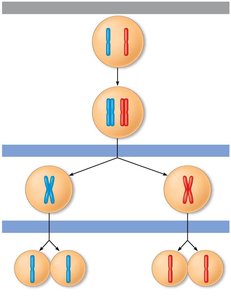
Meiosis is a specialized type of cell division that reduces the chromosome number by half, resulting in the formation of haploid cells from diploid parent cells. This process is essential for sexual reproduction and ensures genetic diversity among offspring.
Diploid cells contain two sets of chromosomes (one from each parent).
Haploid cells contain a single set of chromosomes and are produced by meiosis.
Meiosis consists of two consecutive divisions: Meiosis I and Meiosis II.
Phases of Meiosis
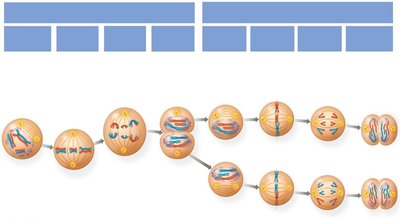
Meiosis occurs in two stages, each with distinct phases. Meiosis I separates homologous chromosomes, while Meiosis II separates sister chromatids.
Meiosis I: Prophase I, Metaphase I, Anaphase I, Telophase I and Cytokinesis
Meiosis II: Prophase II, Metaphase II, Anaphase II, Telophase II and Cytokinesis
Prophase I: Crossing Over and Synapsis
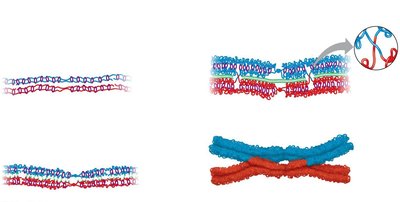
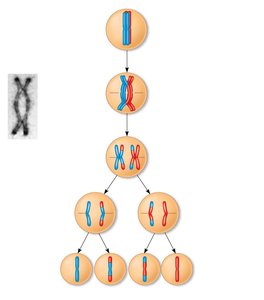
During Prophase I, homologous chromosomes pair up and exchange genetic material through a process called crossing over. This increases genetic variation among gametes.
Synapsis: Homologous chromosomes are held together by the synaptonemal complex.
Chiasmata: X-shaped regions where crossing over occurs.
Cohesins: Proteins that hold sister chromatids together.
Metaphase I
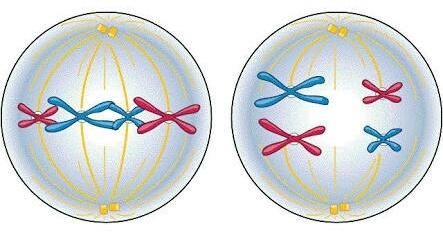
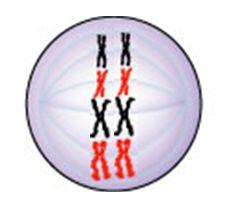
In Metaphase I, pairs of homologous chromosomes align at the metaphase plate. Microtubules attach to the kinetochores of each chromosome, preparing for separation.
Homologous chromosomes face opposite poles.
Microtubules from each pole attach to the kinetochores of one chromosome per tetrad.
Meiosis II
Meiosis II is similar to mitosis but occurs in haploid cells. It separates sister chromatids, resulting in four genetically distinct haploid cells.
Phases: Prophase II, Metaphase II, Anaphase II, Telophase II and Cytokinesis
No chromosome replication occurs between Meiosis I and II.
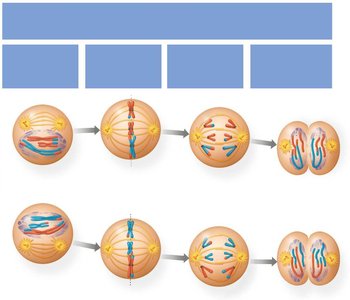
Comparison of Mitosis and Meiosis
Mitosis and meiosis are both forms of cell division, but they serve different purposes and produce different outcomes.
Mitosis: Produces two genetically identical diploid cells for growth and repair.
Meiosis: Produces four genetically unique haploid cells for sexual reproduction.
Mitosis conserves chromosome number; meiosis reduces it by half.
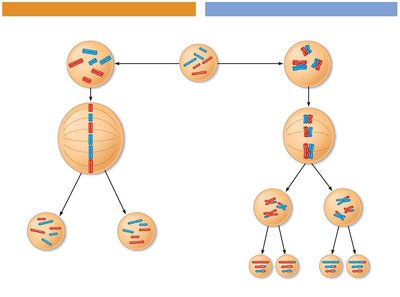
Summary Table: Mitosis vs. Meiosis
The following table summarizes the key differences between mitosis and meiosis:
Property | Mitosis | Meiosis |
|---|---|---|
DNA Replication | Occurs during interphase before mitosis begins | Occurs during interphase before meiosis I begins |
Number of Divisions | One | Two |
Synapsis of Homologous Chromosomes | Does not occur | Occurs during prophase I |
Number of Daughter Cells | Two, genetically identical | Four, genetically different |
Role in Body | Growth, repair, asexual reproduction | Gamete/spore production, genetic variability |
Unique Events in Meiosis
Three events are unique to meiosis and occur during Meiosis I:
Synapsis and crossing over: Homologous chromosomes physically connect and exchange genetic information.
Homologous pairs at the metaphase plate: Homologs align as pairs, not individual chromosomes.
Separation of homologs: Homologous chromosomes are separated during Anaphase I.
Origins of Genetic Variation Among Offspring
Meiosis and fertilization introduce genetic variation through three main mechanisms:
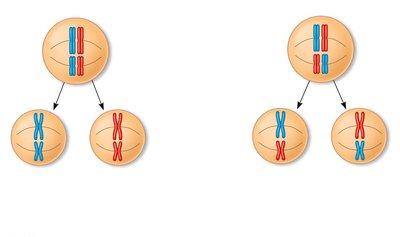
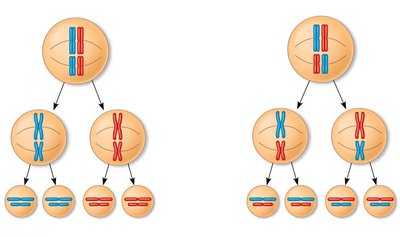
Independent assortment of chromosomes: Homologous pairs orient randomly at Metaphase I, leading to many possible combinations.
Crossing over: Exchange of genetic material between nonsister chromatids creates recombinant chromosomes.
Random fertilization: Any sperm can fuse with any ovum, further increasing genetic diversity.
Mathematical Basis of Genetic Variation
The number of possible combinations due to independent assortment is given by:
Formula: where n is the haploid number.
For humans, , so possible combinations.
Crossing Over
Crossing over during Prophase I produces recombinant chromosomes, combining DNA from both parents. This process is a major source of genetic variation.
On average, one to three crossover events occur per chromosome in humans.
Recombinant chromosomes contain new combinations of alleles.
Random Fertilization
Random fertilization further increases genetic variation. The fusion of two gametes, each with millions of possible chromosome combinations, results in a zygote with a unique genetic identity.
Each zygote is genetically unique due to independent assortment, crossing over, and random fertilization.
For humans, the combination possibilities exceed 70 trillion.
Biological Design and Genetic Diversity
Meiosis and sexual reproduction display biological elegance, parsimony, and harmony by efficiently generating genetic diversity and ensuring the continuity of life.
Genetic variability is crucial for evolution and adaptation.
The mechanisms of meiosis are both efficient and aesthetically organized.
