 Back
Meiosis and Sexual Life Cycles: Structure, Function, and Genetic Variation
Study Guide - Smart Notes
 Tailored notes based on your materials, expanded with key definitions, examples, and context.
Meiosis and Sexual Life Cycles
Key Concepts of Meiosis
Meiosis is a specialized type of cell division that reduces the chromosome number by half, producing haploid gametes and enabling sexual reproduction. This process alternates with fertilization in the life cycle of sexually reproducing organisms, generating genetic variation that is fundamental to evolution.
Heredity: The transmission of traits from one generation to the next.
Variation: Differences between members of the same species.
Genetics: The study of heredity and hereditary variation.
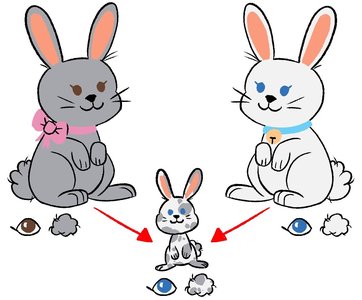
Inheritance of Genes
Genes are units of hereditary information consisting of specific nucleotide sequences in DNA. They are responsible for family resemblances and program cells to synthesize specific proteins and enzymes.
Gene: A segment of DNA that codes for a specific protein or trait.
Example of inherited traits: Eye color, hair color, blood type, height, freckles.
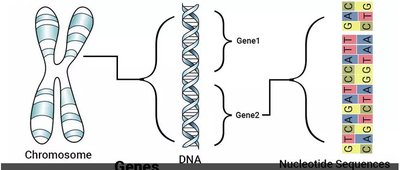
Transmission of Genes
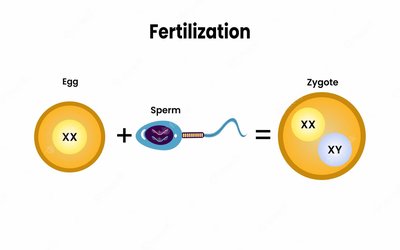
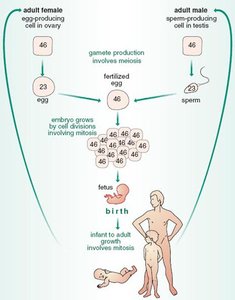
The molecular basis of heredity lies in DNA replication, which produces copies of genes that can be passed from parents to offspring. Gametes (egg and sperm) transmit genes from one generation to the next, and fertilization unites male and female gametes, passing on genes from both parents.
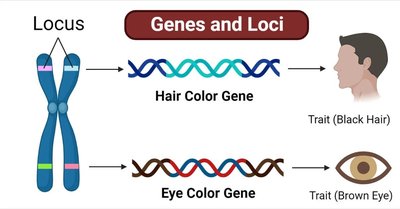
Genes and Loci
Each chromosome contains hundreds to thousands of genes, each located at a specific position called a locus. The locus is the physical location of a gene on a chromosome.
Locus: The specific location of a gene on a chromosome.
Comparison of Asexual and Sexual Reproduction
Asexual Reproduction
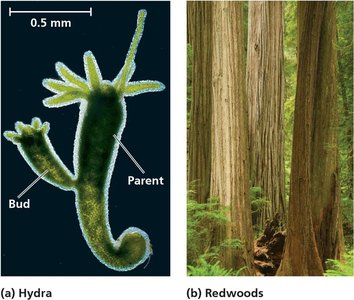
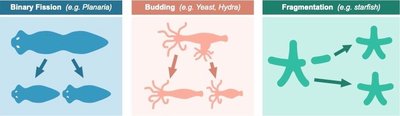
Asexual reproduction involves the generation of offspring from a single parent without the fusion of gametes. Offspring are usually genetically identical to the parent (clones), though genetic variation can arise through mutations.
Methods: Binary fission, budding, fragmentation.
Example: Hydra budding, redwood trees.
Sexual Reproduction
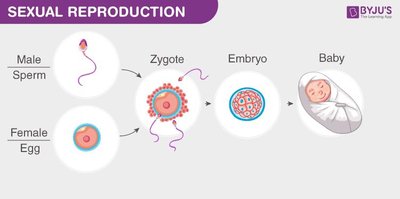
Sexual reproduction arises from the fusion of two gametes, resulting in offspring with unique combinations of genes inherited from both parents. This process generates genetic variation among siblings and between offspring and parents.
Mechanisms generating variation: Behavior of chromosomes during the sexual life cycle.
Fertilization and Meiosis in Sexual Life Cycles
Life Cycle Overview
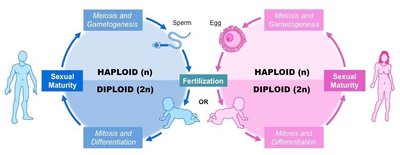
The life cycle is the sequence of stages in the reproductive history of an organism, from conception to production of its own offspring. Fertilization and meiosis alternate in sexual life cycles.
Sets of Chromosomes in Human Cells
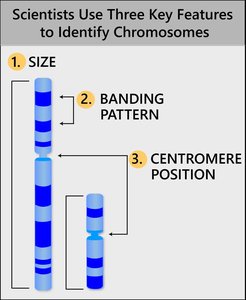
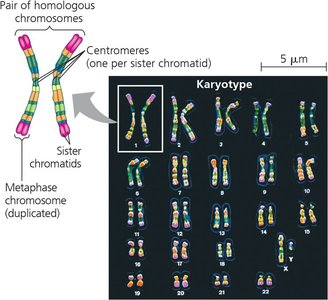
Humans have 46 chromosomes in somatic cells, arranged in 23 pairs. Chromosomes can be distinguished by size, centromere position, and banding pattern. Karyotypes display chromosome pairs arranged by these features.
Homologous chromosomes: Chromosome pairs with the same length, centromere position, and staining pattern, carrying genes for the same inherited characters.
Karyotype: A display of chromosome pairs arranged by size and shape.
Autosomes and Sex Chromosomes
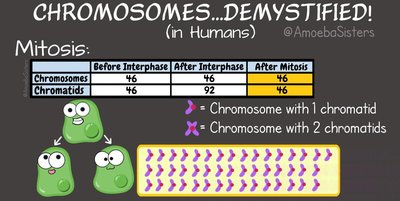
Humans have 22 pairs of autosomes and one pair of sex chromosomes (XX for females, XY for males). Sex chromosomes determine the sex of an individual, and only small parts of X and Y are homologous.
Haploid vs Diploid
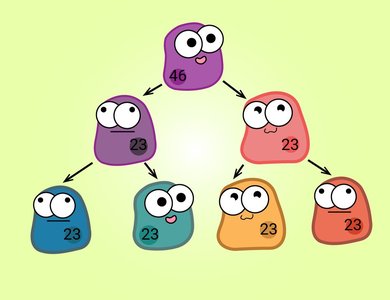
Cells can be haploid (one set of chromosomes, n) or diploid (two sets, 2n). Gametes are haploid, while somatic cells are diploid. The diploid number for humans is 46 (2n=46), and the haploid number is 23 (n=23).
Haploid: n, one set of chromosomes (gametes).
Diploid: 2n, two sets of chromosomes (somatic cells).
Meiosis: Process and Stages
Overview of Meiosis
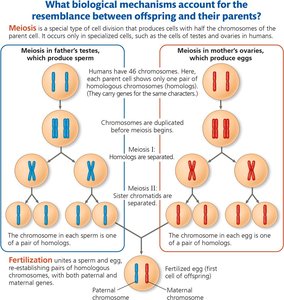
Meiosis consists of two rounds of cell division (Meiosis I and II) but only one round of DNA replication. It results in four daughter cells, each with half the number of chromosomes as the parent cell.
Meiosis I: Homologous chromosomes separate.
Meiosis II: Sister chromatids separate.
Stages of Meiosis
Prophase I: Chromosomes condense, homologs pair, crossing over occurs.
Metaphase I: Homologous pairs align at the metaphase plate (independent assortment).
Anaphase I: Homologous chromosomes separate.
Telophase I: Two haploid cells form; chromosomes are still duplicated.
Prophase II: Spindle forms in each haploid cell.
Metaphase II: Chromosomes align at the metaphase plate.
Anaphase II: Sister chromatids separate.
Telophase II and Cytokinesis: Four haploid daughter cells form, each genetically distinct.
Comparison of Mitosis and Meiosis
Unique Events in Meiosis
Meiosis differs from mitosis in several key ways, especially during Meiosis I:
Synapsis and crossing over (Prophase I).
Alignment of homologous pairs at the metaphase plate (Metaphase I).
Separation of homologs (Anaphase I), while sister chromatids remain attached.
Genetic Variation and Evolution
Origins of Genetic Variation
Genetic variation in sexually reproducing species arises from the behavior of chromosomes during meiosis and fertilization. Three main mechanisms contribute:
Independent assortment: Homologous chromosomes are sorted independently during meiosis, creating many possible combinations.
Crossing over: Produces recombinant chromosomes with new combinations of alleles.
Random fertilization: Any sperm can fuse with any egg, further increasing variation.
The number of possible combinations due to independent assortment is , where n is the haploid number.
Evolutionary Significance
Genetic variation is essential for evolution. While asexual reproduction can perpetuate successful allele combinations, sexual reproduction generates diversity, which is crucial for adaptation and evolutionary persistence.
Table: Comparison of Asexual and Sexual Reproduction
Feature | Asexual Reproduction | Sexual Reproduction |
|---|---|---|
Number of Parents | One | Two |
Genetic Variation | Low (except for mutations) | High (due to meiosis and fertilization) |
Mechanism | Mitosis | Meiosis and fertilization |
Examples | Hydra, redwoods | Humans, rabbits |
Table: Chromosome Features Used in Karyotyping
Feature | Description |
|---|---|
Size | Length of chromosome |
Banding Pattern | Distinctive bands visible after staining |
Centromere Position | Location of centromere along chromosome |
Additional info: Academic context was added to clarify the stages of meiosis, the mechanisms of genetic variation, and the evolutionary significance of sexual reproduction. Tables were inferred and expanded for completeness.
