 Back
Meiosis and Sexual Life Cycles: Structured Study Notes
Study Guide - Smart Notes
 Tailored notes based on your materials, expanded with key definitions, examples, and context.
Meiosis and Sexual Life Cycles
Key Terminology
This section introduces essential terms for understanding meiosis and sexual life cycles.
Meiosis: A type of cell division that reduces the chromosome number by half, producing four haploid cells (gametes).
Gamete: A reproductive cell (sperm or egg) with a haploid chromosome set.
Fertilization: The fusion of two gametes to form a diploid zygote.
Somatic cell: Any cell in the body except gametes; typically diploid.
Karyotype: The ordered display of chromosome pairs from a cell.
Sex chromosome: Chromosomes that determine the sex of an organism (e.g., X and Y in humans).
Autosome: Any chromosome that is not a sex chromosome.
Diploid (2n): Cells with two sets of chromosomes.
Haploid (n): Cells with one set of chromosomes.
Homologous chromosomes: Chromosome pairs, one from each parent, with the same genes at the same loci.
Zygote: The diploid cell formed by fertilization.
Genetics: The scientific study of heredity and variation.
Heredity: Transmission of traits from one generation to the next.
Variation: Differences in appearance or genotype among individuals.
Genes: Units of heredity made up of DNA.
Locus: The specific location of a gene on a chromosome.
Life Cycle: The sequence of stages in the life of an organism.
Alternation of Generations: Life cycle with both diploid and haploid multicellular stages.
Chromosome synapsis: Pairing of homologous chromosomes during meiosis.
Chromosomal crossing over: Exchange of genetic material between homologous chromosomes.
Recombinant chromosomes: Chromosomes that have undergone crossing over.
Sexual vs. Asexual Reproduction
Comparison and Mechanisms
Organisms reproduce either sexually or asexually, each with distinct genetic consequences.
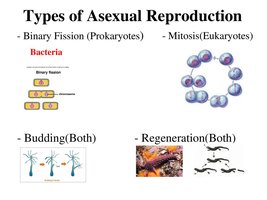
Asexual reproduction: Offspring are genetically identical to the parent (clones). Methods include binary fission, mitosis, budding, regeneration, fragmentation, and agamogenesis.
Sexual reproduction: Involves gamete formation and fusion by fertilization, resulting in offspring genetically different from parents.
Types of Asexual Reproduction
Binary Fission: Common in prokaryotes (bacteria).
Mitosis: Occurs in eukaryotes.
Budding: Occurs in both prokaryotes and eukaryotes.
Regeneration: Occurs in both prokaryotes and eukaryotes.
Importance of Sexual Reproduction
Genetic Variation and Heredity
Sexual reproduction is crucial for generating genetic diversity and studying heredity.
Genetics: The study of heredity and variation.
Heredity: Transmission of traits from parents to offspring.
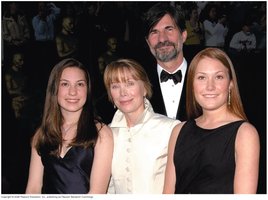
Variation: Differences among individuals, demonstrated by differences in appearance between siblings and parents.
Genes and Chromosomes
Structure and Function
Genes are the fundamental units of heredity, located on chromosomes.
Genes: Segments of DNA that code for traits; each gene has a specific locus on a chromosome.
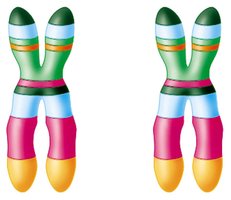
Chromosome: DNA molecule with associated proteins, carrying genetic information.
Centromere: The region where sister chromatids are joined.
Sister chromatids: Identical copies of a chromosome connected at the centromere.
Homologous Chromosomes and Karyotype
Chromosome Sets and Display
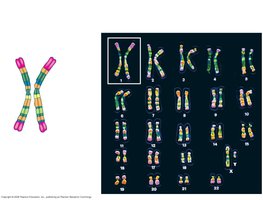
Somatic cells contain pairs of homologous chromosomes, one from each parent.
Karyotype: An ordered display of chromosome pairs from a cell, used to identify chromosomal abnormalities.
Somatic cells: Diploid cells with two sets of chromosomes (2n).
Gametes: Haploid cells with one set of chromosomes (n).
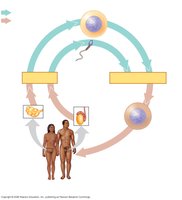
Sexual Life Cycles
Animal, Plant, Fungi, and Protist Life Cycles
Sexual life cycles involve alternation between haploid and diploid stages, with variation in timing across taxa.
Animal life cycle: Meiosis produces gametes; fertilization forms a diploid zygote; mitosis produces somatic cells.
Plant life cycle (Alternation of Generations): Meiosis produces spores; spores grow into gametophytes; gametophytes produce gametes; fertilization forms a sporophyte.
Fungi and protist life cycle: Zygote undergoes meiosis to produce haploid cells; haploid cells grow by mitosis; gametes produced by mitosis.
Summary Table: Sexual Life Cycles
Group | Meiosis Produces | Fertilization Produces | Multicellular Stage |
|---|---|---|---|
Animals | Gametes | Zygote | Diploid |
Plants/Algae | Spores | Zygote | Both Diploid & Haploid |
Fungi/Protists | Haploid cells | Zygote | Haploid |
Meiosis: Process and Phases
Overview and Comparison to Mitosis
Meiosis consists of two consecutive divisions: Meiosis I (reductional) and Meiosis II (equational), resulting in four genetically distinct haploid cells.
Meiosis I: Homologous chromosomes separate, reducing chromosome number by half (reductional division).
Meiosis II: Sister chromatids separate, similar to mitosis (equational division).
Mitosis vs. Meiosis: Mitosis produces two diploid somatic cells; meiosis produces four haploid gametes.
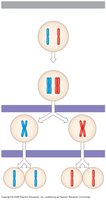
Phases of Meiosis
Meiosis I
Prophase I: Chromatin condenses, spindle forms, homologous chromosomes pair (synapsis) to form tetrads, crossing over occurs between non-sister chromatids.
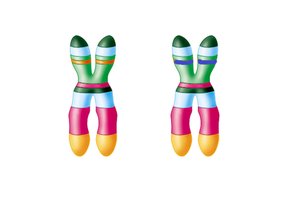
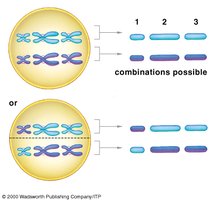
Metaphase I: Tetrads align at the metaphase plate; random alignment allows for genetic variation.
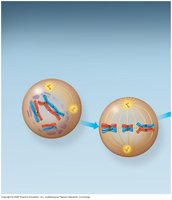
Anaphase I: Homologous chromosomes are separated and pulled to opposite poles; sister chromatids remain attached.
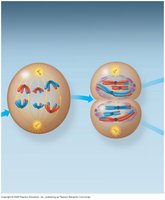
Telophase I & Cytokinesis: Each cell is haploid with two sister chromatids; cytokinesis forms two haploid daughter cells.
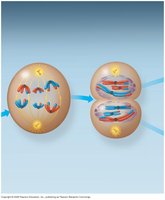
Meiosis II
Prophase II: Spindle apparatus forms; sister chromatids migrate toward the center.
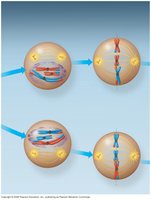
Metaphase II: Sister chromatids align at the metaphase plate; microtubules attach to kinetochores.
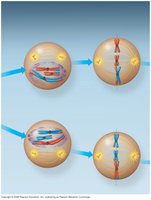
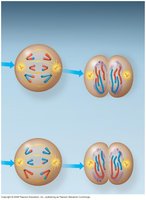
Anaphase II: Sister chromatids are separated and pulled to opposite poles.
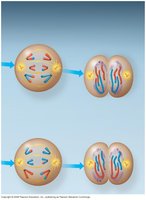
Telophase II & Cytokinesis: Chromosomes arrive at poles, nuclei reform, chromosomes uncoil, cytokinesis produces four haploid daughter cells, each genetically distinct.
Genetic Variation in Meiosis
Mechanisms of Variation
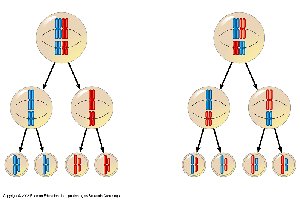
Meiosis increases genetic diversity through crossing over and independent assortment.
Crossing Over: Exchange of DNA segments between homologous chromosomes during Prophase I, producing recombinant chromosomes.
Independent Assortment: Random alignment of tetrads at Metaphase I allows for numerous combinations of maternal and paternal chromosomes. For n chromosome pairs, the number of possible combinations is .
Summary Table: Mitosis vs. Meiosis
Feature | Mitosis | Meiosis |
|---|---|---|
Number of Divisions | 1 | 2 |
Number of Daughter Cells | 2 | 4 |
Chromosome Number | Diploid (2n) | Haploid (n) |
Genetic Identity | Identical | Unique |
Role | Growth, repair | Gamete production |
Conclusion
Meiosis is essential for sexual reproduction, ensuring genetic diversity through reductional and equational divisions, crossing over, and independent assortment. Understanding these processes is fundamental to genetics, heredity, and the study of life cycles in biology.
