 Back
Meiosis and Sexual Life Cycles: Study Notes for General Biology
Study Guide - Smart Notes
 Tailored notes based on your materials, expanded with key definitions, examples, and context.
Chapter 10: Meiosis and Sexual Life Cycles
Concept 10.1: Offspring Acquire Genes from Parents by Inheriting Chromosomes
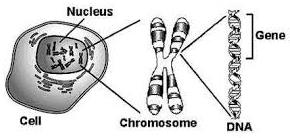
Inheritance is the process by which offspring receive genetic information from their parents. This information is encoded in genes, which are located on chromosomes within the cell nucleus. The specific location of a gene on a chromosome is called its locus. The production of sex cells (gametes) occurs through meiosis, a specialized cell division process that generates genetic variation.
Somatic cells: All body cells except gametes; diploid (2n).
Gametes: Sex cells (sperm and egg); haploid (n).
Genetic variation: Arises from chromosomal behavior during meiosis.
Molecular basis of inheritance: Transmission of DNA from parents to offspring.
Comparison of Asexual and Sexual Reproduction
Asexual reproduction produces genetically identical offspring through mitosis, while sexual reproduction involves the fusion of gametes, resulting in offspring with genetic variation.
Asexual reproduction: Common in unicellular organisms; offspring are clones.
Sexual reproduction: Requires gametes; offspring inherit a mix of parental traits.
Budding and self-fertilization: Forms of asexual reproduction in multicellular organisms.
Cell Cycle and Chromosome Behavior in Mitosis and Meiosis
Understanding the cell cycle is essential for distinguishing between mitosis and meiosis. Both processes involve chromosome replication and division, but meiosis includes two rounds of division and results in haploid cells.
Interphase: Cell grows and DNA replicates (S phase).
Mitosis: Separation of sister chromatids.
Meiosis: Separation of homologous chromosomes (Meiosis I) and sister chromatids (Meiosis II).
Ploidy: Number of chromosome sets; diploid (2n) vs. haploid (n).
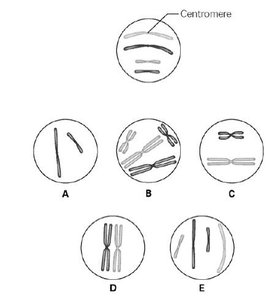
Concept 10.2: Fertilization and Meiosis Alternate in Sexual Life Cycles
Sets of Chromosomes in Human Cells
Human somatic cells contain 46 chromosomes (23 pairs), including autosomes and sex chromosomes. Gametes are haploid, containing 23 chromosomes. Chromosome duplication occurs during the S phase before cell division.
Autosomes: Non-sex chromosomes (22 pairs).
Sex chromosomes: X and Y; determine biological sex.
Diploid (2n): Two sets of chromosomes; somatic cells.
Haploid (n): One set of chromosomes; gametes.
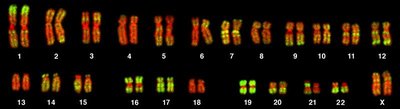
Chromosome Pairing and Karyotypes
Karyotypes are visual representations of chromosomes arranged by size, centromere position, and banding patterns. Homologous chromosomes are paired based on these features.
Homologous chromosomes: Chromosomes with similar size and centromere location, but not identical genetic information.
Karyotype analysis: Used to determine chromosome number, sex, and detect abnormalities.
Chromosome Sets in Model Organisms
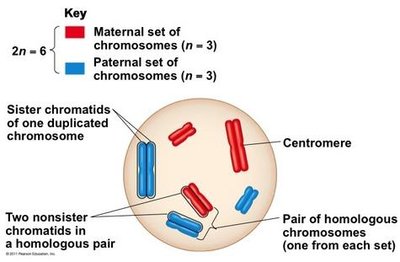
In organisms with a diploid number of 6, chromosomes are color-coded to indicate maternal and paternal origin. Homologous pairs are formed based on length, centromere position, and banding pattern.
Maternal chromosomes: Red color.
Paternal chromosomes: Blue color.
Ova and gametes: Contain half the diploid number (n).
Behavior of Chromosome Sets in the Human Life Cycle
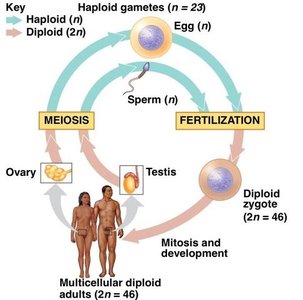
The human life cycle alternates between diploid and haploid stages. Meiosis produces haploid gametes, which fuse during fertilization to restore the diploid state.
Meiosis: Reduces chromosome number from diploid to haploid.
Fertilization: Combines haploid gametes to form a diploid zygote.
Mitosis: Enables growth and development of the organism.
Concept 10.3: Meiosis Reduces the Number of Chromosome Sets from Diploid to Haploid
Mechanism of Meiosis
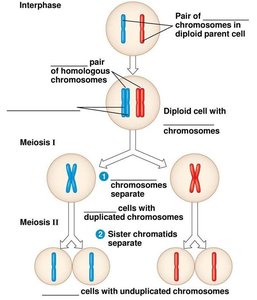
Meiosis consists of two sequential divisions: Meiosis I separates homologous chromosomes, and Meiosis II separates sister chromatids. This process results in four haploid cells from one diploid cell.
Meiosis I: Homologous chromosomes are separated.
Meiosis II: Sister chromatids are separated.
Haploid cells: First appear after Meiosis I.
Metaphase I: Chromosomes align in homologous pairs.
Metaphase (mitosis): Chromosomes align single file.
Crossing Over and Synapsis During Prophase I
During prophase I of meiosis, homologous chromosomes undergo synapsis and crossing over. This exchange of genetic material between nonsister chromatids increases genetic variation.
Crossing over: Exchange of chromosome segments between nonsister chromatids.
Synapsis: Pairing of homologous chromosomes.
Genetic variation: First opportunity arises during crossing over.
Comparison of Mitosis and Meiosis
Mitosis and meiosis share some similarities but differ in key aspects. Three events are unique to meiosis:
Synapsis and crossing over during prophase I
Alignment of homologous pairs at metaphase I
Separation of homologous chromosomes at anaphase I
Concept 10.4: Genetic Variation Produced in Sexual Life Cycles Contributes to Evolution
Origin of Genetic Variation Among Offspring
Genetic variation is essential for evolution and arises from several sources: mutation, chromosomal behavior during meiosis, and random fertilization.
Mutation: Produces new alleles (different versions of a gene).
Chromosomal behavior: Includes crossing over and independent assortment.
Random fertilization: Many possible combinations of gametes.
Independent Assortment of Chromosomes
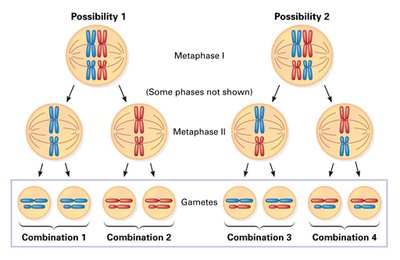
During meiosis I, homologous chromosomes align randomly at metaphase I, resulting in numerous possible combinations in gametes.
Independent assortment: Each pair of chromosomes segregates independently.
Number of possibilities: In humans, the possibilities are nearly infinite.
Crossing Over
Crossing over during prophase I produces recombinant chromosomes, which carry new combinations of genes from both parents.
Recombinant chromosomes: Indicated by chromosomes carrying different colors (maternal and paternal segments).
Genetic diversity: Enhanced by crossing over.
Random Fertilization
Random matching of gametes further increases genetic variation in offspring.
Random fertilization: Many possible combinations of sperm and egg.
Genetic variation: Maximized in sexually reproducing populations.
Summary Table: Comparison of Mitosis and Meiosis
Feature | Mitosis | Meiosis |
|---|---|---|
Number of divisions | 1 | 2 |
Number of daughter cells | 2 | 4 |
Ploidy of daughter cells | Diploid (2n) | Haploid (n) |
Genetic similarity | Identical | Varied |
Unique events | None | Crossing over, independent assortment, random fertilization |
Key Equations
Number of possible gamete combinations due to independent assortment: (where n = number of chromosome pairs)
Additional info: The notes above expand on brief points and fill in academic context to ensure completeness and clarity for exam preparation.
