 Back
Meiosis and Sexual Life Cycles: Study Notes for General Biology
Study Guide - Smart Notes
 Tailored notes based on your materials, expanded with key definitions, examples, and context.
Meiosis and Sexual Life Cycles
Inheritance and Variation
Meiosis and sexual reproduction are fundamental processes that generate genetic diversity in populations. Offspring inherit genes from their parents, but variation arises due to the mechanisms of meiosis and fertilization.
Genes: Units of heredity made up of DNA segments. They are passed to the next generation via gametes (egg and sperm cells).
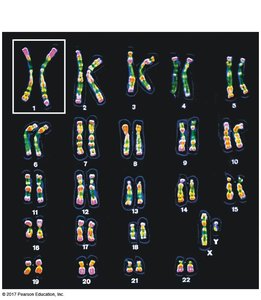
Chromosomes: Most DNA is packaged into chromosomes. Humans have 46 chromosomes in somatic cells, arranged in 23 pairs.
Variation: Differences in appearance and traits among offspring, parents, and siblings.
Gametes: Reproductive cells that carry half the genetic material (haploid, n).
Human Chromosomes and Karyotypes
Chromosomes are classified as autosomes and sex chromosomes. A karyotype is an ordered display of chromosomes from a cell.
Autosomes: Non-sex chromosomes (22 pairs in humans).
Sex Chromosomes: X and Y chromosomes determine biological sex.
Diploid Cells (2n): Contain two sets of chromosomes, one from each parent.
Haploid Cells (n): Contain one set of chromosomes.
Overview of the Human Life Cycle
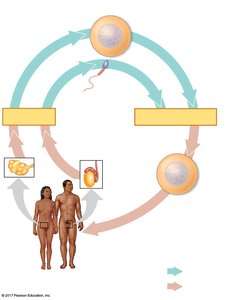
The human life cycle alternates between diploid and haploid stages. Fertilization restores the diploid state, while meiosis reduces chromosome number.
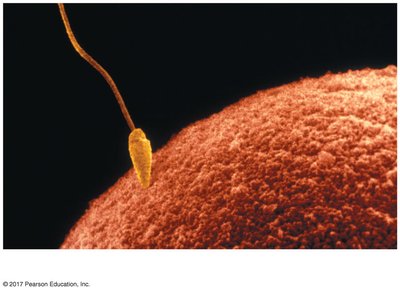
Fertilization: Union of sperm and egg, forming a diploid zygote.
Meiosis: Reduces chromosome number from diploid (2n) to haploid (n).
Development: Zygote undergoes mitosis to form multicellular diploid adults.
Homologous Chromosomes
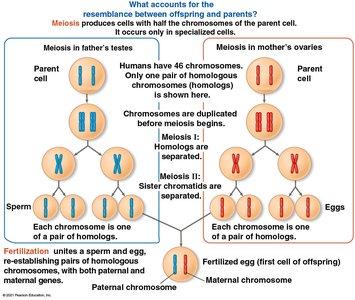
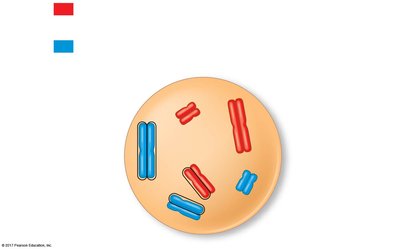
Homologous chromosomes are pairs that carry the same genes but may have different alleles. Each parent contributes one chromosome to each pair.
Homologs: Chromosomes of the same type, one from each parent.
Sister Chromatids: Identical copies formed by DNA replication.
Centromere: Region where sister chromatids are joined.
Meiosis: Process and Phases
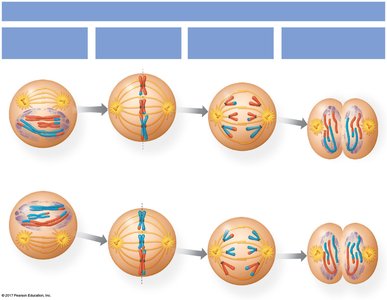
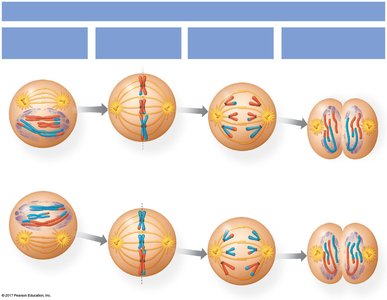
Meiosis consists of two consecutive divisions: meiosis I and meiosis II. It results in four haploid cells, each genetically distinct.
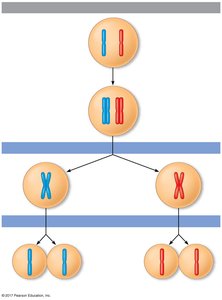
Meiosis I: Separates homologous chromosomes.
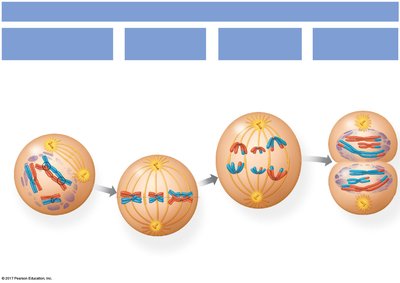
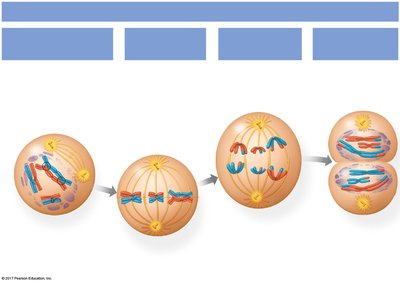
Meiosis II: Separates sister chromatids (similar to mitosis).
Phases: Prophase, Metaphase, Anaphase, Telophase, and Cytokinesis in each division.
Meiosis I: Separating Homologous Chromosomes
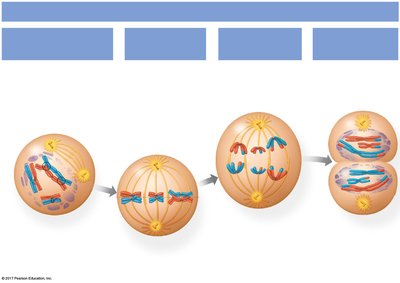
Prophase I: Homologs pair and crossing over occurs at chiasmata.
Metaphase I: Homologous pairs align at the metaphase plate.
Anaphase I: Homologs separate, sister chromatids remain attached.
Telophase I & Cytokinesis: Two haploid cells form, chromosomes still consist of sister chromatids.
Meiosis II: Separating Sister Chromatids
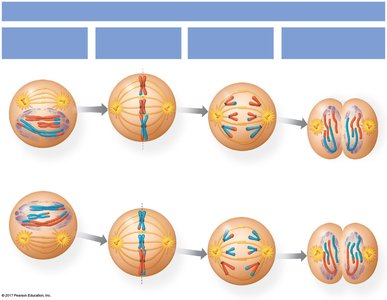
Prophase II: Spindle apparatus forms, chromosomes move toward metaphase plate.
Metaphase II: Chromatids align at metaphase plate.
Anaphase II: Sister chromatids separate, move to opposite poles.
Telophase II & Cytokinesis: Four haploid cells form, each genetically unique.
Crossing Over and Synapsis
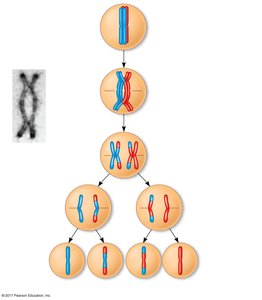
During prophase I, homologous chromosomes pair and exchange genetic material, increasing genetic diversity.
Synaptonemal Complex: Protein structure that holds homologs together.
Chiasmata: Sites of crossing over.
Recombinant Chromosomes: Chromosomes with DNA from both parents.
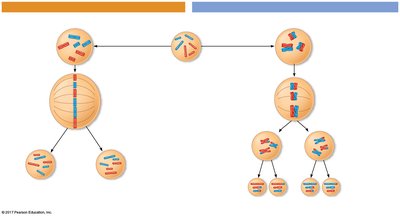
Comparison of Mitosis and Meiosis
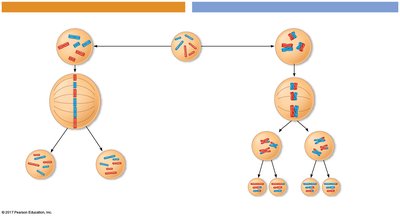
Mitosis and meiosis are both forms of cell division, but they have distinct outcomes and purposes.
Mitosis: Produces two genetically identical diploid cells; conserves chromosome number.
Meiosis: Produces four genetically unique haploid cells; reduces chromosome number.
Unique Events in Meiosis: Synapsis and crossing over, homologous pairs at metaphase plate, separation of homologs.
Genetic Variation in Sexual Life Cycles
Genetic variation is essential for evolution and is produced by several mechanisms during meiosis and fertilization.
Mutations: Original source of genetic diversity; create alleles.
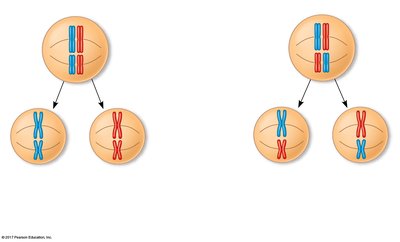
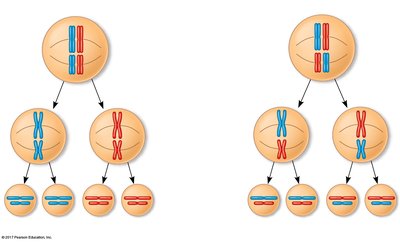
Independent Assortment: Homologous chromosomes orient randomly during metaphase I, leading to different combinations in gametes.
Crossing Over: Produces recombinant chromosomes, combining parental DNA.
Random Fertilization: Any sperm can fuse with any egg, resulting in numerous possible zygote combinations.
Independent Assortment
Each pair of chromosomes sorts independently, creating diverse gametes.
For humans, with 23 pairs, there are possible combinations.
Crossing Over
Occurs during prophase I, producing chromosomes with new combinations of alleles.
In humans, 1-3 crossover events per chromosome are typical.
Random Fertilization
Fusion of gametes results in a zygote with a unique genetic identity.
With independent assortment and crossing over, the number of possible combinations is immense (about 70 trillion).
Evolutionary Significance of Genetic Variation
Genetic variation within populations is crucial for evolution. Natural selection acts on this variation, favoring traits that enhance survival and reproduction.
Sexual Reproduction: Contributes to genetic diversity, which is the raw material for evolution.
Mutations: Provide new alleles for selection.
Summary Table: Comparison of Mitosis and Meiosis
Feature | Mitosis | Meiosis |
|---|---|---|
Number of Divisions | 1 | 2 |
Number of Daughter Cells | 2 | 4 |
Chromosome Number | Diploid (2n) | Haploid (n) |
Genetic Identity | Identical | Unique |
Role | Growth, repair | Gamete production |
Key Equations
Number of possible gamete combinations due to independent assortment: , where n = number of chromosome pairs.
Example
In humans, n = 23, so possible gamete combinations from independent assortment alone.
Additional info: These notes expand on the original slides by providing definitions, context, and examples for each concept, ensuring a comprehensive and self-contained study guide for exam preparation.
