 Back
Meiosis and Sexual Life Cycles: Study Notes for General Biology
Study Guide - Smart Notes
 Tailored notes based on your materials, expanded with key definitions, examples, and context.
Meiosis & Sexual Life Cycles
Genes & Inheriting Chromosomes
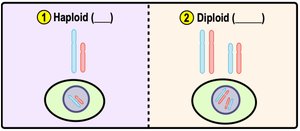
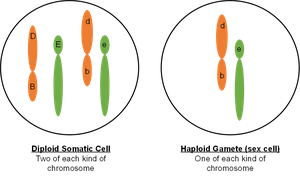
Genes are the fundamental units of heredity, consisting of specific DNA segments that code for traits. These genes are passed from one generation to the next via gametes, which are reproductive cells (sperm and eggs). Gametes are haploid, meaning they contain one copy of each chromosome, while somatic cells are diploid, containing two copies of each chromosome.
Gene: Segment of DNA coding for a trait
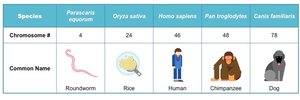
Gametes: Haploid reproductive cells (n = 23 in humans)
Diploid: Somatic cells with two sets of chromosomes (2n = 46 in humans)
Gene Locus
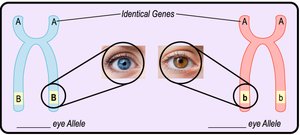
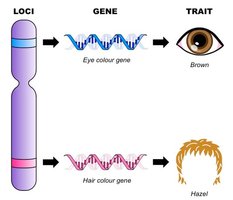
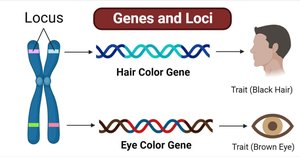
The locus is the specific location of a gene on a chromosome, acting as a precise address for genetic information. Diploid organisms inherit one allele at each locus from each parent, which may be identical or different.
Locus: Chromosomal position of a gene
Allele: Variant form of a gene at a locus
Comparison of Asexual & Sexual Reproduction
Asexual Reproduction
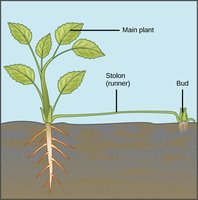
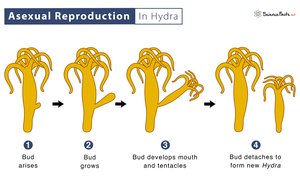
Asexual reproduction involves a single parent passing genes to offspring without gamete fusion, resulting in genetically identical clones. Examples include budding in hydra and vegetative propagation in plants.
Clone: Genetically identical offspring from one parent
Examples: Budding in hydra, runners in plants
Sexual Reproduction
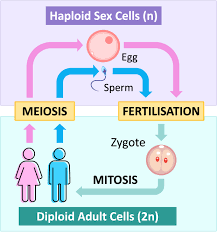
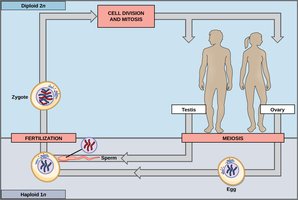
Sexual reproduction combines genetic material from two parents, producing genetically unique offspring and enhancing diversity. The life cycle alternates between meiosis (producing haploid gametes) and fertilization (forming diploid zygotes).
Genetic diversity: Offspring are genetically unique
Life cycle: Alternation of meiosis and fertilization
Family Resemblances, Heredity, and Variation
Heredity and Variation
Offspring inherit a combination of parental genes, resulting in resemblance to parents but also variation. Variation is essential for natural selection, disease resistance, and population viability. Genetics is the scientific study of heredity and variation.
Heredity: Transmission of traits from one generation to the next
Variation: Differences among offspring
Benefits: Enables natural selection, protects against environmental changes
Human Life Cycle
Fertilization and Development
Fertilization is the union of haploid gametes (sperm and egg), forming a diploid zygote. The zygote undergoes mitosis to produce somatic cells and develop into an adult. At sexual maturity, gametes are produced by meiosis.
Zygote: Fertilized egg with chromosomes from both parents
Somatic cells: Produced by mitosis
Gametes: Produced by meiosis
Chromosome Terms
Sister Chromatids and Homologous Pairs
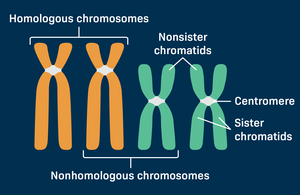
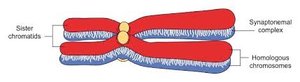
Sister chromatids are identical copies attached together. Homologous pairs are chromosomes of similar size and shape, carrying the same genetic information but possibly different alleles. Somatic cells have 23 pairs of homologous chromosomes.
Sister chromatids: Identical copies attached at the centromere
Homologous pairs: Chromosomes inherited from each parent
Somatic cells: Non-reproductive cells with 23 pairs of chromosomes
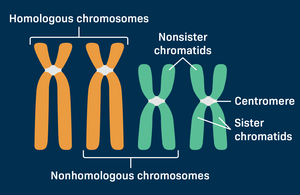
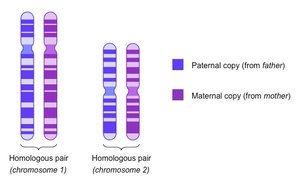
Human Cell Chromosomes
Sex Chromosomes and Autosomes
Humans have 23 pairs of chromosomes: 22 pairs of autosomes and 1 pair of sex chromosomes (XX in females, XY in males). Sex chromosomes determine the individual's sex, while autosomes carry other genetic information.
Sex chromosomes: X and Y, 23rd pair
Autosomes: Remaining 22 pairs
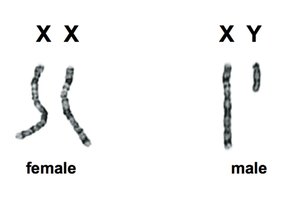
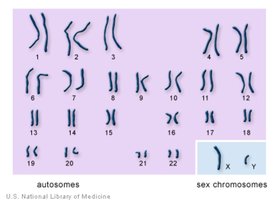
Chromosomes in Human Gametes
Haploid Gametes
Gametes contain a single set of chromosomes (haploid). In eggs, the sex chromosome is always X; in sperm, it can be X or Y.
Egg: X chromosome
Sperm: X or Y chromosome
Meiosis
Overview and Process
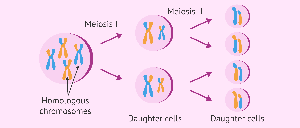
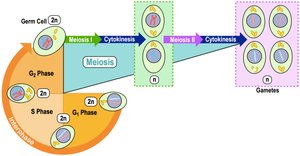
Meiosis is a cell division process that reduces chromosome number from diploid (2n) to haploid (n), producing four genetically distinct daughter cells. It consists of two divisions: Meiosis I and Meiosis II.
Meiosis I: Homologous chromosomes pair and separate
Meiosis II: Sister chromatids separate
Result: Four haploid cells
Stages of Meiosis
Interphase
Chromosomes replicate during S phase, forming pairs of duplicated homologous chromosomes.
Prophase I
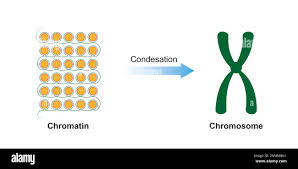
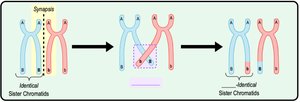
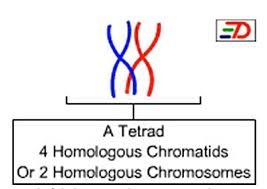
Chromosomes condense, homologous chromosomes pair up, and crossing over occurs, exchanging DNA segments between non-sister chromatids at chiasmata.
Synapsis: Homologous chromosomes connect to form tetrads
Chiasmata: Sites of crossing over
Homologous pairs align at the metaphase plate, with microtubules attaching to kinetochores.
Metaphase I
Anaphase I
Homologous chromosomes separate and move toward opposite poles; sister chromatids remain attached.
Telophase I & Cytokinesis
Each cell has a haploid set of duplicated chromosomes; cytokinesis forms two haploid daughter cells. Interkinesis is a brief resting period before meiosis II.
Prophase II
No chromosome duplication occurs; spindle apparatus forms and chromosomes move toward the metaphase plate.
Metaphase II
Sister chromatids align at the metaphase plate; kinetochores attach to microtubules from opposite poles.
Anaphase II
Sister chromatids separate and move toward opposite poles.
Telophase II & Cytokinesis
Nuclei form, chromosomes decondense, and four genetically distinct haploid cells are produced.
Comparison of Mitosis & Meiosis
Key Differences
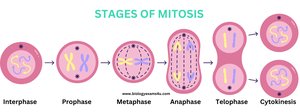
Mitosis produces genetically identical cells and conserves chromosome number, while meiosis reduces chromosome number and produces genetically diverse cells. Meiosis includes two divisions after one replication.
Mitosis: One division, identical cells
Meiosis: Two divisions, genetically unique cells
Unique Events in Meiosis
Synapsis & crossing over: Homologous chromosomes connect and exchange genetic information (Prophase I)
Alignment of homologous pairs: Random orientation at metaphase plate (Metaphase I)
Independent assortment: Random separation of homologs (Anaphase I)
Origins of Variation Among Offspring
Mechanisms of Genetic Variation
Three mechanisms contribute to genetic variation in offspring:
Crossing over: Produces recombinant chromosomes with new combinations of alleles
Independent assortment: Homologous pairs orient randomly, leading to diverse combinations
Random fertilization: Any sperm can fuse with any egg, increasing diversity
Evolutionary Significance
Genetic variation is essential for natural selection, allowing populations to adapt to changing environments. Sexual reproduction and mutations are primary sources of variation.
Summary Table: Comparison of Mitosis & Meiosis
Feature | Mitosis | Meiosis |
|---|---|---|
Number of divisions | 1 | 2 |
Number of daughter cells | 2 | 4 |
Chromosome number | Same as parent (2n) | Half of parent (n) |
Genetic identity | Identical | Unique |
Function | Growth, repair | Gamete production |
