 Back
Meiosis and Sexual Life Cycles: Study Notes for General Biology
Study Guide - Smart Notes
 Tailored notes based on your materials, expanded with key definitions, examples, and context.
Meiosis and Sexual Life Cycles
Variations on a Theme: Heredity and Genetics
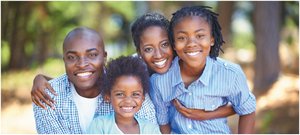
Heredity and variation are fundamental concepts in biology, explaining why offspring resemble their parents yet are not identical to them. Genetics is the scientific study of heredity and variation, focusing on how traits are transmitted and how differences arise among individuals.
Heredity: The transmission of traits from one generation to the next.
Variation: Differences in appearance and traits among offspring, parents, and siblings.
Genetics: The study of heredity and variation.
Example: Family members share similarities but also display unique features due to genetic variation.
Genes, Chromosomes, and Inheritance
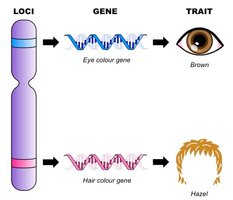
Genes are the basic units of heredity, composed of DNA segments located at specific positions (loci) on chromosomes. Chromosomes are passed to offspring via gametes, ensuring the transmission of genetic information.
Gene: Segment of DNA that codes for a specific trait.
Locus: The specific location of a gene on a chromosome.
Gametes: Reproductive cells (sperm and eggs) carrying 23 chromosomes in humans.
Example: Eye color and hair color genes are located at distinct loci and determine observable traits.
Chromosome Sets in Human Cells
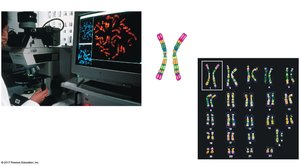
Human somatic cells contain 46 chromosomes, organized into 23 pairs. Each pair consists of homologous chromosomes, one inherited from each parent, carrying genes for the same traits.
Somatic cells: All body cells except gametes, with 46 chromosomes (diploid).
Homologous chromosomes: Chromosomes of the same length and shape, carrying genes for the same traits.
Diploid (2n): Two sets of chromosomes; for humans, 2n = 46.
Comparison of Asexual and Sexual Reproduction
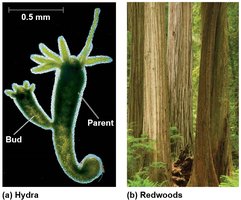
Organisms reproduce either asexually or sexually. Asexual reproduction produces genetically identical offspring (clones), while sexual reproduction generates genetic diversity through the combination of genes from two parents.
Asexual reproduction: Offspring arise from a single parent without gamete fusion.
Clone: Genetically identical individuals from one parent.
Sexual reproduction: Offspring inherit unique gene combinations from two parents.
Example: Hydra reproduces asexually by budding; redwoods can reproduce both ways.
Fertilization and Meiosis in Sexual Life Cycles
Sexual life cycles involve the alternation of meiosis and fertilization. Meiosis produces haploid gametes, and fertilization restores the diploid state, forming a zygote.
Life cycle: Sequence of stages in an organism's reproductive history.
Meiosis: Cell division reducing chromosome number by half, producing haploid gametes.
Fertilization: Fusion of sperm and egg, forming a diploid zygote.
Example: Human life cycle alternates between haploid gametes and diploid adults.
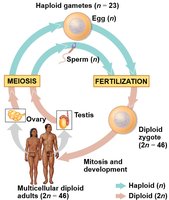
Types of Sexual Life Cycles
Organisms exhibit three main types of sexual life cycles, differing in the timing of meiosis and fertilization: animal, plant/algae, and fungi/protist cycles.
Animal life cycle: Diploid adults produce haploid gametes via meiosis.
Plant/algae life cycle: Alternation of generations between diploid sporophyte and haploid gametophyte.
Fungi/protist life cycle: Haploid adults produce gametes; zygote is the only diploid stage.
Meiosis: Reducing Chromosome Sets
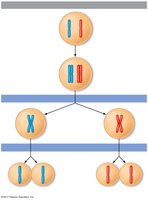
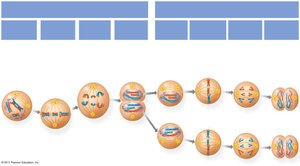
Meiosis consists of two consecutive divisions (meiosis I and II), resulting in four haploid daughter cells. Each cell has half the chromosome number of the parent cell, ensuring genetic diversity.
Meiosis I: Homologous chromosomes separate.
Meiosis II: Sister chromatids separate, similar to mitosis.
Result: Four genetically distinct haploid cells.
Stages of Meiosis
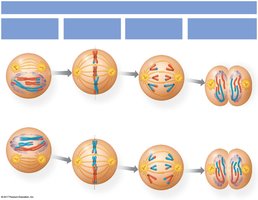
Meiosis I and II each have four phases: prophase, metaphase, anaphase, and telophase/cytokinesis. Unique events in meiosis I include synapsis, crossing over, and separation of homologs.
Meiosis I: Prophase I (synapsis and crossing over), Metaphase I, Anaphase I, Telophase I and cytokinesis.
Meiosis II: Prophase II, Metaphase II, Anaphase II, Telophase II and cytokinesis.
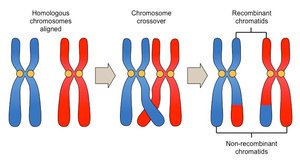
Unique events: Synapsis, crossing over, homologous pairs at metaphase plate, separation of homologs.
Comparison of Mitosis and Meiosis
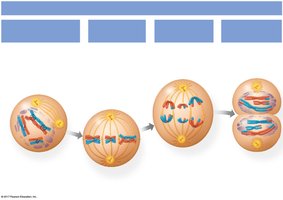
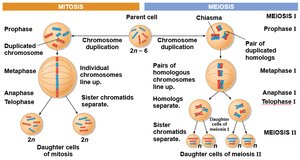
Mitosis and meiosis are distinct processes. Mitosis produces genetically identical cells, while meiosis generates genetically diverse gametes by reducing chromosome number and introducing variation.
Mitosis: Conserves chromosome sets; produces identical cells.
Meiosis: Reduces chromosome sets; produces genetically distinct cells.
Genetic Variation and Evolution
Genetic variation is essential for evolution. Mutations, crossing over, independent assortment, and random fertilization contribute to the diversity among offspring.
Mutation: Original source of genetic diversity; creates alleles.
Crossing over: Exchange of genetic material between homologous chromosomes during prophase I.
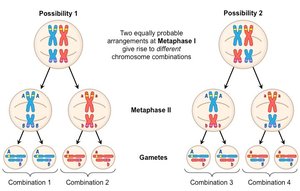
Independent assortment: Random orientation of homologous pairs at metaphase I.
Random fertilization: Any sperm can fuse with any egg, increasing possible combinations.
Equation: Number of possible gamete combinations: (n = haploid number).
Example: For humans, possible gamete combinations; random fertilization yields possible zygote combinations.
Summary Table: Comparison of Mitosis and Meiosis
This table summarizes the key differences between mitosis and meiosis, including chromosome number, genetic identity, and stages.
Process | Chromosome Number | Genetic Identity | Stages |
|---|---|---|---|
Mitosis | Conserved (2n) | Identical to parent | Prophase, Metaphase, Anaphase, Telophase |
Meiosis | Reduced (n) | Genetically distinct | Meiosis I & II (with unique events in I) |
----------------------------------------
