 Back
Meiosis and Sexual Reproduction: A Comprehensive Study Guide
Study Guide - Smart Notes
 Tailored notes based on your materials, expanded with key definitions, examples, and context.
Meiosis and Sexual Reproduction
Overview of Meiosis
Meiosis is a specialized type of cell division essential for sexual reproduction. It reduces the chromosome number by half, producing haploid gametes from diploid parent cells. This process ensures genetic diversity and stability of chromosome number across generations.
Diploid (2n) cells contain two sets of chromosomes, one from each parent.
Haploid (n) gametes contain a single set of chromosomes.
Meiosis consists of two consecutive nuclear divisions: Meiosis I and Meiosis II.
Fertilization restores the diploid state by fusing two haploid gametes to form a zygote.
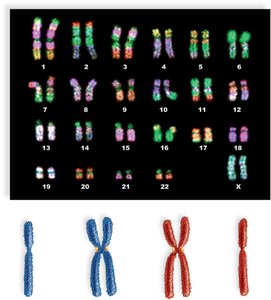
Homologous chromosomes are pairs of chromosomes with the same genes at the same loci, but possibly different alleles. Each homologous pair consists of one chromosome from the mother and one from the father.
Genetic Variation in Meiosis
Genetic variation is crucial for evolution and adaptation. Meiosis introduces variation through two main mechanisms:
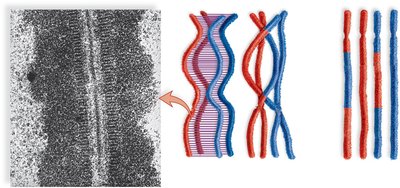
Crossing Over: During Prophase I, homologous chromosomes exchange genetic material at points called chiasmata, resulting in new allele combinations.
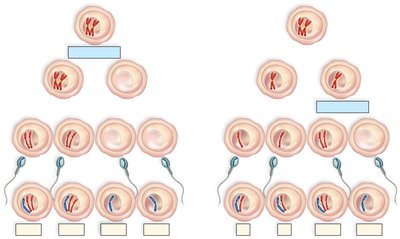
Independent Assortment: During Metaphase I, homologous pairs align randomly at the metaphase plate, leading to a mix of maternal and paternal chromosomes in gametes.
Fertilization: The random union of gametes further increases genetic diversity.
Example: In humans, with 23 pairs of chromosomes, independent assortment alone can produce 8,388,608 (223) possible combinations, not including the additional variation from crossing over.
The Phases of Meiosis
Meiosis occurs in two sequential stages, each with its own phases:
Meiosis I
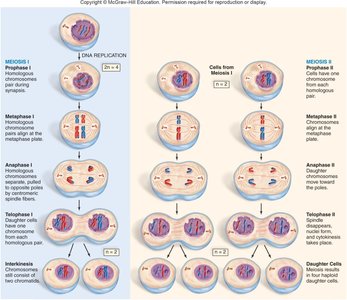
Prophase I: Chromosomes condense, homologous chromosomes pair (synapsis), and crossing over occurs.
Metaphase I: Homologous pairs align at the metaphase plate.
Anaphase I: Homologous chromosomes separate to opposite poles; sister chromatids remain together.
Telophase I: Two haploid cells form, each with duplicated chromosomes.
Meiosis II
Prophase II: Chromosomes condense in each haploid cell.
Metaphase II: Chromosomes align at the metaphase plate.
Anaphase II: Sister chromatids separate and move to opposite poles.
Telophase II and Cytokinesis: Four genetically unique haploid cells are produced.
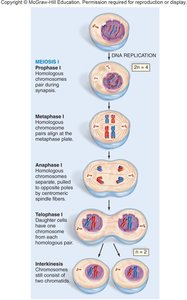
Additional info: Interkinesis is a brief interphase-like period between Meiosis I and II, but DNA replication does not occur.
Comparison of Meiosis and Mitosis
Meiosis and mitosis are both processes of cell division, but they serve different purposes and have distinct outcomes.
Meiosis: Two divisions, produces four genetically unique haploid cells, involves crossing over and independent assortment, used for sexual reproduction.
Mitosis: One division, produces two genetically identical diploid cells, no crossing over, used for growth and asexual reproduction.
Feature | Meiosis | Mitosis |
|---|---|---|
Number of Divisions | Two | One |
Number of Daughter Cells | Four | Two |
Genetic Identity | Unique | Identical |
Chromosome Number | Halved (n) | Preserved (2n) |
Function | Sexual reproduction | Growth, repair, asexual reproduction |
The Cycle of Life
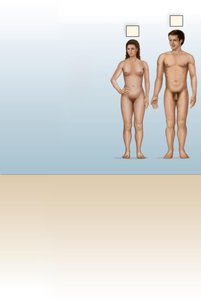
Life cycles describe the sequence of reproductive events from one generation to the next. In animals, the diploid individual produces haploid gametes via meiosis. Fertilization restores diploidy, and mitosis drives growth and development.
Spermatogenesis: Formation of sperm in males; all four products of meiosis become sperm.
Oogenesis: Formation of eggs in females; only one product becomes the egg, the others become polar bodies.
Changes in Chromosome Number and Structure
Meiosis usually produces gametes with the correct chromosome number (euploidy), but errors can occur, leading to aneuploidy (abnormal number of chromosomes).
Nondisjunction: Failure of chromosomes to separate properly during meiosis, resulting in gametes with extra or missing chromosomes.
Monosomy: Only one copy of a chromosome (2n-1).
Trisomy: Three copies of a chromosome (2n+1), e.g., Trisomy 21 (Down syndrome).
Changes in chromosome structure include:
Deletion: Loss of a chromosome segment.
Duplication: Repetition of a chromosome segment.
Translocation: Segment moves to a non-homologous chromosome.
Inversion: Segment is reversed within the chromosome.
Example: Williams syndrome is caused by a deletion on chromosome 7; chronic myelogenous leukemia is caused by a translocation between chromosomes 9 and 22.
Key Terms and Definitions
Allele: Alternative forms of a gene found at the same locus on homologous chromosomes.
Synapsis: Pairing of homologous chromosomes during Prophase I of meiosis.
Chiasma (plural: chiasmata): Site of crossing over between non-sister chromatids.
Karyotype: Visual display of chromosomes arranged by size, shape, and banding pattern.
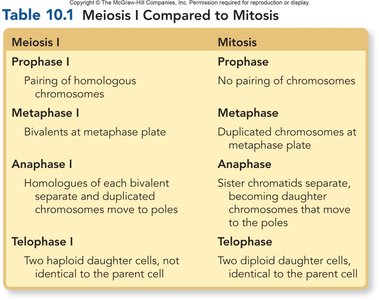
Summary Table: Differences Between Meiosis and Mitosis
Stage | Meiosis I | Mitosis |
|---|---|---|
Prophase | Pairing of homologous chromosomes | No pairing |
Metaphase | Bivalents at metaphase plate | Duplicated chromosomes at metaphase plate |
Anaphase | Homologues separate | Sister chromatids separate |
Telophase | Two haploid cells, not identical | Two diploid cells, identical |
Stage | Meiosis II | Mitosis |
|---|---|---|
Prophase | No pairing of chromosomes | No pairing |
Metaphase | Haploid number at metaphase plate | Diploid number at metaphase plate |
Anaphase | Sister chromatids separate | Sister chromatids separate |
Telophase | Four haploid cells, not identical | Two diploid cells, identical |
