 Back
BackMeiosis and Sexual Reproduction: Mechanisms, Consequences, and Chromosomal Variation
Study Guide - Smart Notes
 Tailored notes based on your materials, expanded with key definitions, examples, and context.
Meiosis and Sexual Reproduction
Introduction to Sexual Reproduction
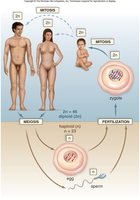
Sexual reproduction is a biological process in which two parents contribute genetic material to produce offspring. This process involves the formation of gametes (sperm and egg) through meiosis, resulting in offspring that are genetically distinct from their parents due to the combination of genetic material.
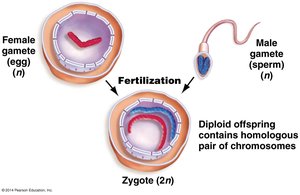
Fertilization: The fusion of haploid gametes to form a diploid zygote.
Genetic Variation: Offspring inherit a unique combination of parental genes.
Variations in Sexual Life Cycles
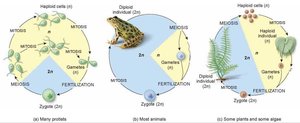
Sexual life cycles vary among organisms, but all involve the alternation of haploid and diploid stages. Fertilization always restores the diploid state by combining two haploid gametes.
Haploid-dominant: Many protists spend most of their life cycle as haploid cells.
Diploid-dominant: Most animals, including humans, spend most of their life cycle as diploid individuals.
Alternation of generations: Some plants and algae alternate between multicellular haploid and diploid stages.
Genetic Material and Chromosome Terminology
Chromosome Structure and Karyotypes
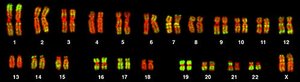
The genome is the complete set of genetic information in an organism. In humans, the genome consists of 46 chromosomes arranged in 23 pairs: 22 pairs of autosomes and 1 pair of sex chromosomes. These pairs are called homologous chromosomes.
Homologous chromosomes: Chromosomes of the same type, similar in size, shape, and gene content, but may carry different alleles.
One homolog is inherited from each parent.
Key Chromosome Terminology
Term | Definition | Example/Comment |
|---|---|---|
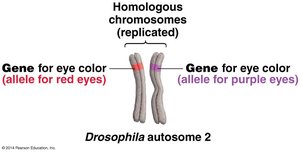
Gene | Unit of DNA encoding a trait | Gene for eye color |
Allele | Variant form of a gene | Allele for red or purple eyes |
Homologous chromosomes | Pair of chromosomes with same genes | One from each parent |
Diploid (2n) | Two sets of chromosomes | Somatic cells |
Haploid (n) | One set of chromosomes | Gametes |
Meiosis: Mechanism and Phases
Overview of Meiosis
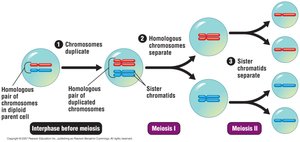
Meiosis is a specialized form of cell division that reduces the chromosome number by half, producing four genetically unique haploid gametes from a diploid germ cell. It consists of two sequential divisions: meiosis I and meiosis II.
Occurs in germ cells to generate gametes (sperm or eggs).
Produces four haploid cells that are genetically distinct.
Phases of Meiosis
Meiosis is divided into two main stages, each with its own subphases:
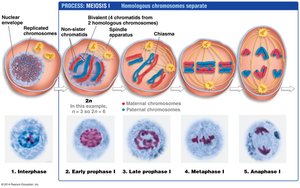
Meiosis I: Separation of homologous chromosomes
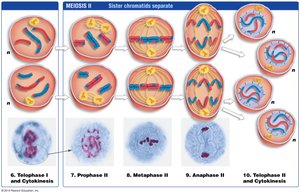
Meiosis II: Separation of sister chromatids
Meiosis I
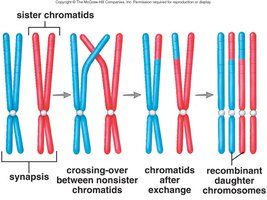
Prophase I: Homologous chromosomes pair up (synapsis) and exchange genetic material (crossing-over).
Metaphase I: Homologous pairs align at the metaphase plate; independent assortment occurs.
Anaphase I: Homologous chromosomes separate to opposite poles.
Telophase I: Two haploid cells form, each with duplicated chromosomes.
Meiosis II
Prophase II: Chromosomes condense in each haploid cell.
Metaphase II: Chromosomes align at the metaphase plate.
Anaphase II: Sister chromatids separate.
Telophase II: Four haploid cells are produced.
Key Features of Meiosis
Reduction division: Chromosome number is halved from diploid (2n) to haploid (n).
Genetic diversity: Crossing-over and independent assortment generate new allele combinations.
Mechanisms Generating Genetic Variation
Crossing-Over
During prophase I, non-sister chromatids of homologous chromosomes exchange genetic material in a process called crossing-over. This results in genetic recombination, producing chromosomes with new combinations of alleles.
Occurs 2-3 times per human chromosome.
Increases genetic diversity among gametes.
Independent Assortment
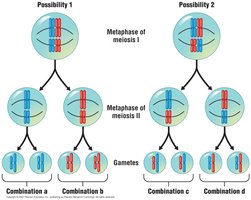
During metaphase I, homologous chromosome pairs align randomly at the metaphase plate. This random orientation leads to independent assortment, where each gamete receives a random mix of maternal and paternal chromosomes.
In humans, with 23 pairs of chromosomes, there are about 8 million possible combinations.
Fertilization
Fertilization restores the diploid chromosome number by combining two haploid gametes. The random combination of gametes further increases genetic variation in offspring.
Gamete Formation in Animals
Spermatogenesis
In males, gametes are produced by spermatogenesis. A diploid germ cell (spermatogonium) undergoes meiosis to produce four haploid sperm cells.
Occurs in the testes.
Oogenesis
In females, gametes are produced by oogenesis. A diploid germ cell (oogonium) undergoes meiosis to produce one ovum (egg) and two or three polar bodies due to unequal division of the cytoplasm.
Occurs in the ovaries.
Unequal cytoplasmic division ensures the ovum has sufficient resources for early development.
Consequences of Meiosis: Chromosome Number and Variation
Changes in Chromosome Number
Euploidy: Correct number of chromosomes (46 in humans).
Polyploidy: More than two sets of chromosomes (e.g., 3n, 4n); common in plants, lethal in humans.
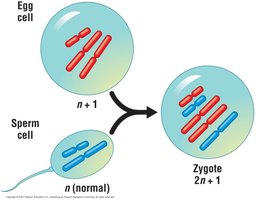
Aneuploidy: Abnormal number of chromosomes (e.g., trisomy 2n+1, monosomy 2n-1); often results from nondisjunction.
Nondisjunction
Nondisjunction is the failure of chromosomes to separate properly during meiosis, leading to gametes with abnormal chromosome numbers.
Primary nondisjunction: Occurs during meiosis I (homologous chromosomes fail to separate).
Secondary nondisjunction: Occurs during meiosis II (sister chromatids fail to separate).
Down Syndrome (Trisomy 21)
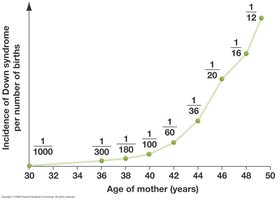
Down syndrome is a genetic disorder caused by the presence of an extra copy of chromosome 21 (trisomy 21). The frequency of Down syndrome increases with maternal age.
Key Differences: Meiosis vs. Mitosis
Mitosis: Produces two genetically identical diploid cells for growth and repair.
Meiosis: Produces four genetically unique haploid gametes for sexual reproduction.
Feature | Mitosis | Meiosis |
|---|---|---|
Number of divisions | 1 | 2 |
Number of daughter cells | 2 | 4 |
Genetic identity | Identical | Unique |
Chromosome number | Diploid (2n) | Haploid (n) |
Summary
Meiosis is essential for sexual reproduction, ensuring genetic diversity and the maintenance of chromosome number across generations. Errors in meiosis can lead to chromosomal abnormalities, with significant biological consequences.
