 Back
Meiosis and Sexual Reproduction: Structured Study Notes
Study Guide - Smart Notes
 Tailored notes based on your materials, expanded with key definitions, examples, and context.
Meiosis and Sexual Reproduction
Reproduction: Asexual vs. Sexual
Reproduction is the biological process by which organisms generate new individuals. It can occur via asexual or sexual mechanisms, each with distinct genetic outcomes.
Asexual Reproduction: Involves a single parent and does not require gamete fusion. Offspring are genetically identical to the parent, known as clones. Common in many eukaryotes (via mitosis) and prokaryotes (via binary fission).
Sexual Reproduction: Requires the fusion of haploid gametes (egg and sperm) from two parents. This process restores the diploid chromosome number and produces genetically diverse offspring.
Genetic Variation: Asexual reproduction yields limited variation (mainly through mutation), while sexual reproduction creates new allele combinations, enhancing adaptability.
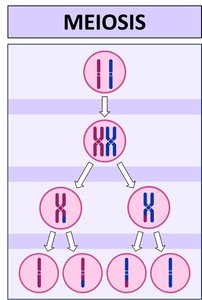
Asexual Reproduction in Eukaryotes and Prokaryotes
Asexual reproduction allows rapid population growth without the need for a mate. It is common in both unicellular and multicellular organisms.
Mitosis: Eukaryotic cells divide to produce identical daughter cells.
Binary Fission: Prokaryotes (such as bacteria) reproduce by splitting into two identical cells.
Cloning: Offspring are genetically identical to the parent.
Vulnerability: Limited genetic variation can make populations susceptible to environmental changes.
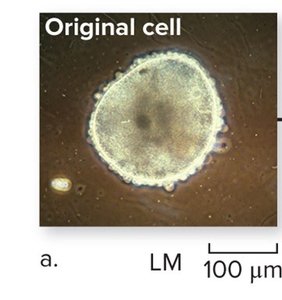
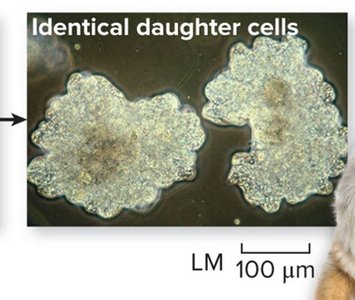
Asexual Reproduction in Plants
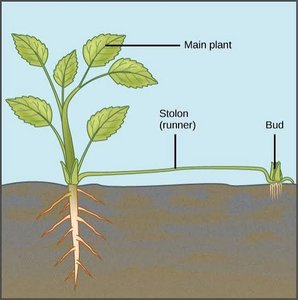
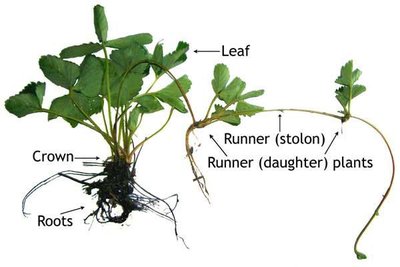
Many plants reproduce asexually through structures such as stolons (runners), which allow new individuals to grow from the parent plant.
Stolon (Runner): Horizontal stem that gives rise to new buds and roots, forming daughter plants.
Example: Strawberries propagate via runners.
Sexual Reproduction and Genetic Diversity
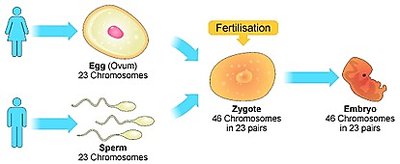
Sexual reproduction involves the fusion of two haploid gametes, resulting in offspring with unique genetic combinations.
Gametes: Sperm and egg, each with half the chromosome number (haploid).
Fertilization: Restores the diploid chromosome number in the zygote.
Genetic Variation: Offspring inherit new combinations of alleles, contributing to diversity.
Organisms with Both Reproductive Modes
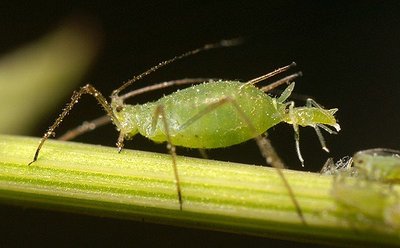
Some species can alternate between asexual and sexual reproduction, depending on environmental conditions. This flexibility enhances survival and genetic diversity.
Examples: Aphids, starfish, zebra sharks, boa constrictors (animals); strawberries, garlic, banyan trees (plants); slime molds (protists/fungi).
Meiosis and Fertilization in Humans
Human Life Cycle: Chromosome Number
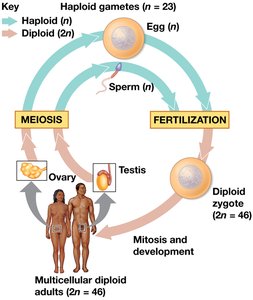
Humans are diploid organisms, with most body cells containing two sets of chromosomes (2n = 46). Meiosis and fertilization are key events in maintaining chromosome number across generations.
Meiosis: Occurs in ovaries and testes, producing haploid gametes (n = 23).
Fertilization: Sperm and egg unite to form a diploid zygote (2n = 46).
Mitosis: Zygote undergoes mitotic divisions to develop into a multicellular organism.
Meiosis: Process and Phases
Overview of Meiosis
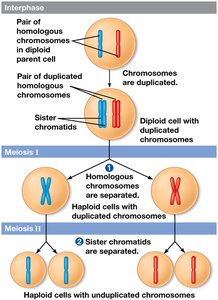
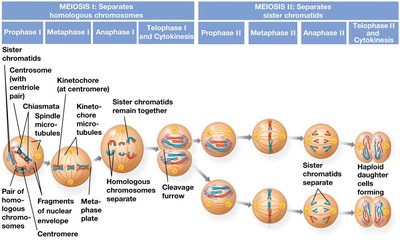
Meiosis is a specialized cell division that reduces chromosome number by half and generates genetic diversity. It consists of two consecutive divisions: Meiosis I and Meiosis II.
Meiosis I: Separates homologous chromosomes.
Meiosis II: Separates sister chromatids.
Result: Four haploid daughter cells, each genetically unique.
Genetic Variation: Achieved through crossing over and independent assortment.
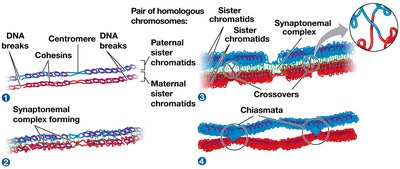
Prophase I: Chromosome Tetrad and Synapsis
Prophase I is a critical stage where homologous chromosomes pair up and exchange genetic material.
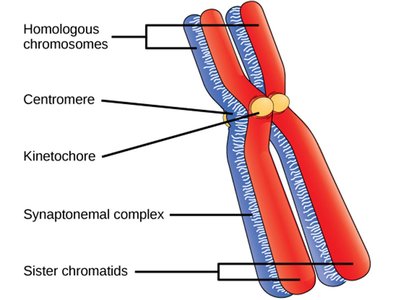
Synapsis: Homologous chromosomes align gene-by-gene, forming a tetrad (four chromatids).
Synaptonemal Complex: Protein structure holding homologs together.
Prophase I: Crossing Over
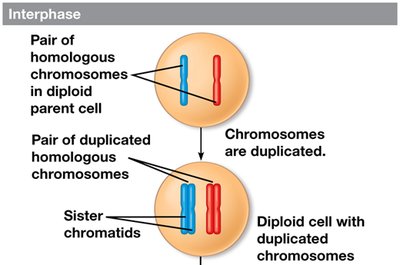
Crossing over is the exchange of DNA segments between non-sister chromatids within a tetrad, increasing genetic variation.
Chiasmata: Visible sites of crossover.
Recombinant Chromatids: Chromatids with new allele combinations.
Multiple Crossovers: Can occur within a tetrad.
Prophase I: All Events
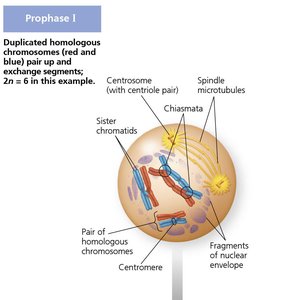
Prophase I involves chromosome condensation, synapsis, crossing over, and preparation for chromosome separation.
Chromosome Condensation: Chromosomes become visible.
Synapsis: Homologs pair up.
Crossing Over: Occurs at chiasmata.
Nuclear Envelope Breakdown: Spindle fibers attach to kinetochores.
Metaphase I: Alignment and Independent Assortment
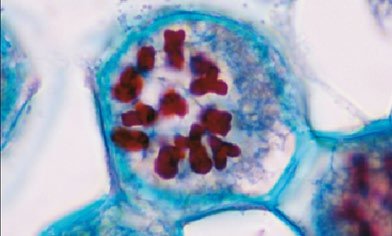
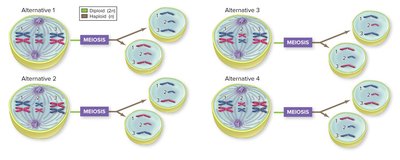
Homologous chromosome pairs (tetrads) align along the metaphase plate, and their orientation is random, leading to independent assortment.
Independent Assortment: Each pair aligns independently, mixing maternal and paternal chromosomes.
Genetic Variation: Number of possible combinations is , where n is the haploid number.
Anaphase I: Separation of Homologs
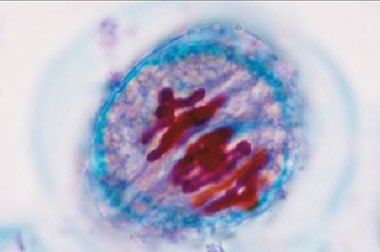
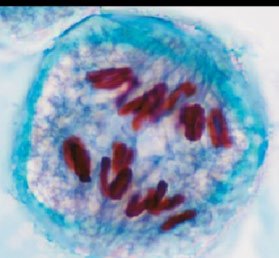
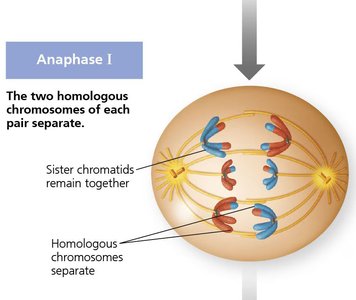
Homologous chromosomes are separated and pulled to opposite poles, reducing chromosome number by half.
Cohesin Cleavage: Allows homologs to separate, while sister chromatids remain together.
Reduction: Prepares for the haploid stage.
Telophase I and Cytokinesis
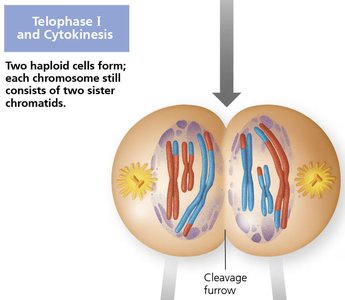
Homologous chromosomes reach opposite poles, and the cell divides to produce two haploid daughter cells.
Nuclear Envelope: May reform around chromosomes.
Cytokinesis: Animal cells form a cleavage furrow; plant cells form a cell plate.
End of Meiosis I
Meiosis I results in two haploid cells, each with one chromosome from every homologous pair. Genetic variation is introduced, and no DNA replication occurs before Meiosis II.
Overview of Meiosis II
Meiosis II separates sister chromatids, producing four genetically unique haploid cells.
No DNA Replication: Occurs before Meiosis II.
Gamete Formation: Haploid cells mature into sperm or egg.
Prophase II
Chromosomes condense in each haploid cell, and spindle apparatus forms. Nuclear envelope breaks down if re-formed.
Metaphase II
Chromosomes align individually along the metaphase plate. Due to crossing over, sister chromatids are no longer identical.
Anaphase II
Sister chromatids are separated and move toward opposite poles, ensuring equal chromosome distribution.
Telophase II and Cytokinesis
Chromosomes decondense, nuclear envelopes reform, and cytokinesis produces four haploid daughter cells, each genetically distinct.
Mitosis vs. Meiosis
Comparison Table
Mitosis and meiosis are distinct processes with different outcomes for chromosome number and genetic variation.
Feature | Mitosis | Meiosis |
|---|---|---|
Number of Divisions | 1 | 2 |
Chromosome Number | Maintained (2n) | Halved (n) |
Genetic Variation | None (identical cells) | High (unique gametes) |
Function | Growth, repair | Gamete production |
Sources of Genetic Variation
Mechanisms of Variation
Sexually reproducing organisms gain genetic diversity through three main processes:
Independent Assortment: Random alignment of homologous chromosomes during Metaphase I.
Crossing Over: Exchange of DNA segments between homologous chromosomes during Prophase I.
Random Fertilization: Any sperm can fertilize any egg, creating virtually limitless combinations.
Quantitative Example
In humans, each gamete has about 8.4 million possible chromosome combinations. The fusion of two gametes can yield over 70 trillion unique diploid combinations, not including variation from crossing over.
Errors in Meiosis
Aneuploidy and Nondisjunction
Errors during meiosis can result in abnormal chromosome numbers, known as aneuploidy. Nondisjunction occurs when chromosomes fail to separate properly.
Meiosis I: Homologous chromosomes fail to separate.
Meiosis II: Sister chromatids fail to separate.
Result: Gametes with extra or missing chromosomes.
Genetic Disorders
Fertilization involving abnormal gametes can cause genetic disorders:
Down Syndrome (Trisomy 21): Extra copy of chromosome 21.
Turner Syndrome (XO): Missing one X chromosome.
Additional info: These disorders illustrate the importance of accurate chromosome segregation during meiosis for healthy development. ----------------------------------------
