 Back
Meiosis and Sexual Reproduction: Study Notes for General Biology
Study Guide - Smart Notes
 Tailored notes based on your materials, expanded with key definitions, examples, and context.
Meiosis and Sexual Reproduction
Overview of Mitosis vs. Meiosis
Cell division is fundamental to growth, development, and reproduction. Mitosis and meiosis are two distinct processes that produce different types of cells and serve different biological purposes.
Mitosis: Produces two identical diploid cells from one diploid cell; occurs in somatic (body) cells.
Meiosis: Produces four genetically distinct haploid cells from one diploid cell; occurs in gametic (sex) cells.
Diploid (2n): Cells with two sets of chromosomes, one from each parent.
Haploid (n): Cells with one set of chromosomes; gametes (sperm and egg).
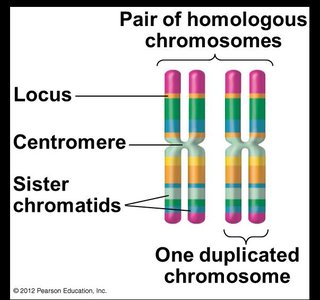
Ploidy refers to the number of sets of chromosomes in a cell. Homologous pairs contain the same genes at the same loci (locations).
Why Are Gametes Haploid?
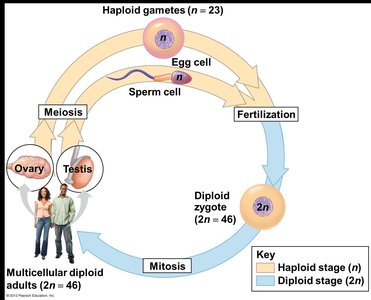
Gametes are haploid to ensure that when fertilization occurs, the resulting zygote is diploid, maintaining the species' chromosome number across generations.
Stages of Meiosis
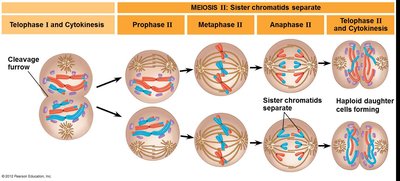
Meiosis consists of two consecutive divisions: Meiosis I and Meiosis II. Each division has distinct phases that contribute to genetic diversity and reduction of chromosome number.
Meiosis I: Separation of homologous chromosomes.
Meiosis II: Separation of sister chromatids.
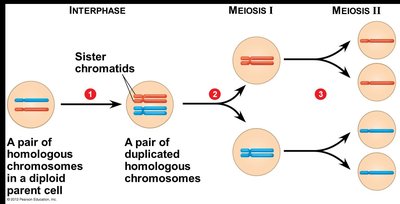
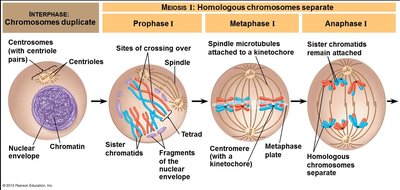
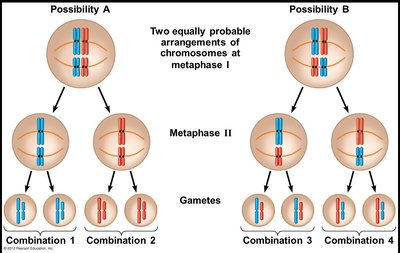
Meiosis produces four haploid cells, each genetically unique due to crossing over and independent assortment.
Spermatogenesis
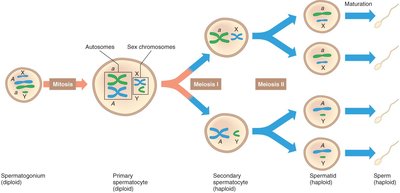
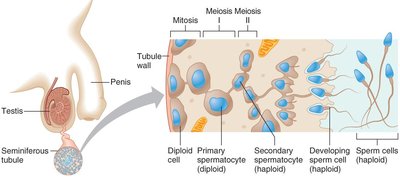
Spermatogenesis is the process by which sperm cells are produced in males. Each primary spermatocyte undergoes meiosis to form four mature sperm cells. This process is continuous in reproductive-aged men.
Primary spermatocyte: Diploid cell that enters meiosis.
Spermatids: Haploid cells formed after meiosis II.
Mature sperm: Sheds most cytoplasm; specialized for delivering DNA to the egg.
Oogenesis
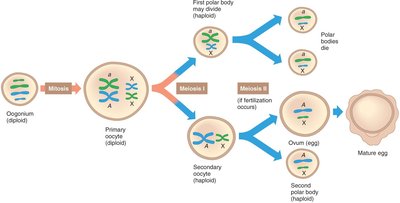
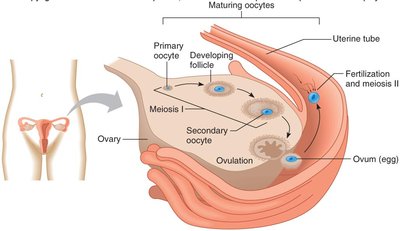
Oogenesis is the process by which egg cells (ova) are produced in females. Unlike spermatogenesis, oogenesis results in only one mature egg from each primary oocyte, with most cytoplasm retained in the egg.
Primary oocyte: Diploid cell arrested at Prophase I by birth.
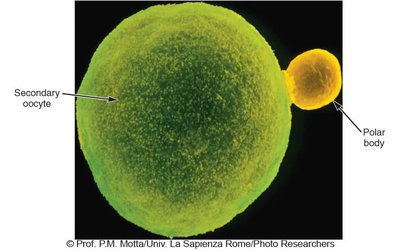
Meiosis I: Continues after puberty; produces a secondary oocyte and a polar body.
Meiosis II: Only completed if fertilization occurs.
Polar bodies: Small cells that die; most cytoplasm is retained in the ovum.
Mitochondria: Only inherited from the mother via the egg.
Genetic Diversity in Sexual Reproduction
Sexual reproduction increases genetic diversity through several mechanisms:
Meiosis: Chromosome separation produces genetically distinct haploid cells.
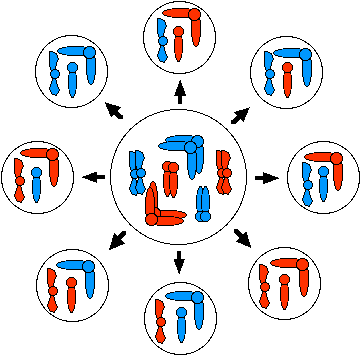
Independent assortment: Random distribution of homologous chromosomes during meiosis I.
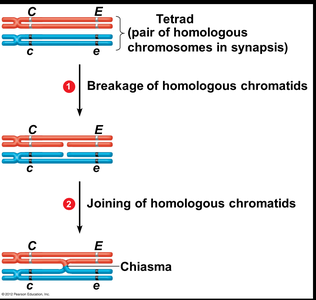
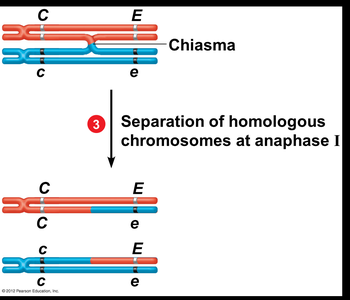
Crossing over: Exchange of genetic material between homologous chromosomes during Prophase I.
Fertilization: Combines two haploid gametes to form a diploid zygote.
Crossing Over and Recombination
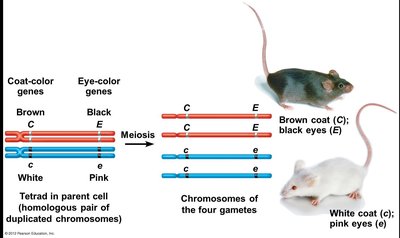
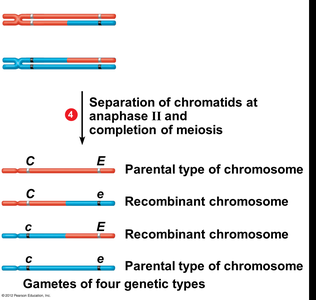
Homologous chromosomes carry different versions of genes (alleles). During meiosis, crossing over occurs in Prophase I, resulting in recombination and increased genetic variation.
Alleles: Different versions of a gene.
Crossing over: Exchange of genetic material between homologous chromosomes.
Recombination: New combinations of alleles in gametes.
Cohesin and Chromosome Separation
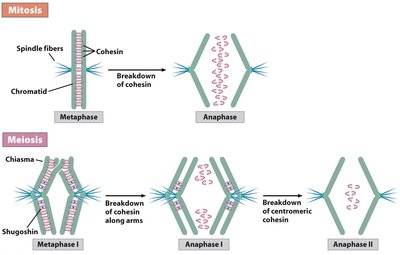
Cohesin is a protein complex that holds sister chromatids together. Its breakdown differs between mitosis and meiosis, affecting chromosome separation.
Mitosis: Cohesin breaks down at centromeres during anaphase.
Meiosis: Cohesin breaks down along chromosome arms in anaphase I and at centromeres in anaphase II.
Abnormal Chromosome Number: Nondisjunction
Nondisjunction is the failure of chromosomes to separate properly during meiosis, leading to abnormal chromosome numbers in gametes and offspring.
Down syndrome (Trisomy 21): Caused by an extra copy of chromosome 21.
Other aneuploidies: Can result in various genetic disorders.
Type of Error | Result |
|---|---|
Nondisjunction in Meiosis I | All gametes abnormal |
Nondisjunction in Meiosis II | Half gametes abnormal |
Normal Meiosis | All gametes normal |
Example: Down syndrome is a result of nondisjunction leading to trisomy 21.
Questions and Applications
Mule Chromosome Number: A mule is a cross between a male donkey (2N = 62) and a female horse (2N = 64). Mules have 63 chromosomes.
Impact on Mitosis: Mules can undergo mitosis normally, but the odd chromosome number may cause issues in cell division.
Impact on Meiosis: Mules are generally sterile because the odd chromosome number prevents proper pairing and separation during meiosis.
Chromosome Combinations: For a diploid cell with 3 pairs of chromosomes, meiosis can produce combinations.
Fertilization Combinations: If both gametes have 8 combinations, fertilization can produce possible combinations.
Additional info: These calculations illustrate the vast genetic diversity possible through meiosis and fertilization.
