 Back
Meiosis and the Molecular Basis of Heredity: Study Guide
Study Guide - Smart Notes
 Tailored notes based on your materials, expanded with key definitions, examples, and context.
Heredity and Variation
Definitions and Concepts
Heredity is the transmission of traits from one generation to the next, while variation refers to the differences observed among individuals of the same species. Genetics is the scientific study of heredity and inherited variation.
Locus: The specific location of a gene on a chromosome.
Clone: An individual or group of individuals genetically identical to the parent, produced by asexual reproduction.
Sexual Reproduction: Involves two parents and results in offspring with unique combinations of genes inherited from both parents.
Life Cycle: The sequence of stages in the reproductive history of an organism from conception to production of its own offspring.
Chromosomes and Ploidy
Karyotype and Chromosome Types
A karyotype is a display of the chromosome pairs of a cell arranged by size and shape. Homologous chromosomes are pairs that carry genes controlling the same inherited characters. Autosomes are chromosomes that are not sex chromosomes.
Diploid (2n): Cells with two sets of chromosomes (e.g., somatic cells in humans have 46 chromosomes).
Haploid (n): Cells with a single set of chromosomes (e.g., gametes in humans have 23 chromosomes).
Fertilization: The union of gametes, resulting in a diploid zygote.
Meiosis: Process and Phases
Overview
Meiosis is a type of cell division that reduces the chromosome number by half, producing four haploid cells from one diploid cell. It consists of two sequential divisions: Meiosis I and Meiosis II.
Phases of Meiosis I
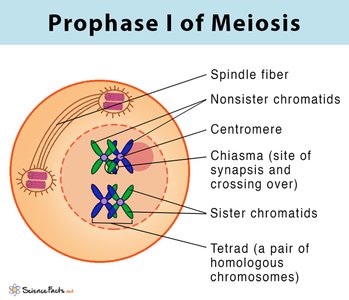
Prophase I: Homologous chromosomes pair up and crossing over occurs at chiasmata. Spindle fibers form and attach to kinetochores.
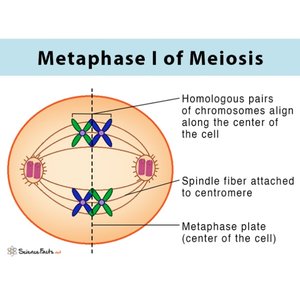
Metaphase I: Homologous pairs align at the metaphase plate. Each pair lines up independently (independent assortment).
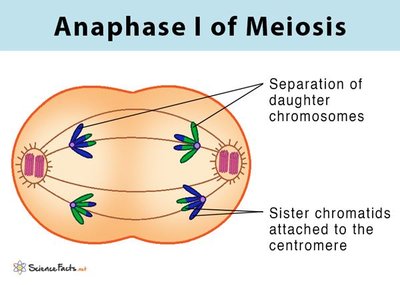
Anaphase I: Homologous chromosomes separate and move toward opposite poles. Sister chromatids remain attached.
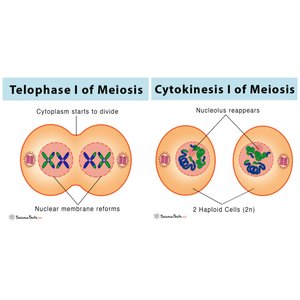
Telophase I and Cytokinesis: Each half of the cell has a haploid set of duplicated chromosomes. Cytoplasm divides, forming two haploid cells.
Phases of Meiosis II
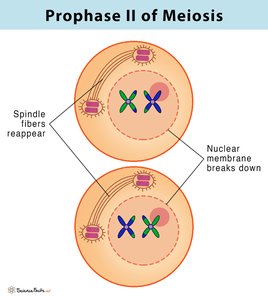
Prophase II: Spindle apparatus forms in each haploid cell; chromosomes move toward the metaphase II plate.
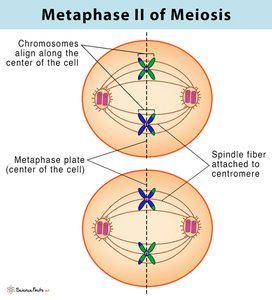
Metaphase II: Chromosomes align at the metaphase plate; sister chromatids are not identical due to crossing over.
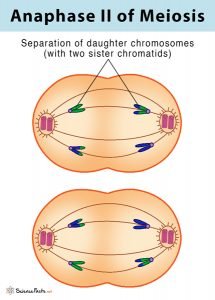
Anaphase II: Sister chromatids separate and move to opposite poles.
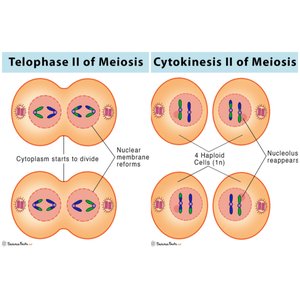
Telophase II and Cytokinesis: Nuclei form, chromosomes decondense, and four genetically distinct haploid cells are produced.
Key Structures and Events
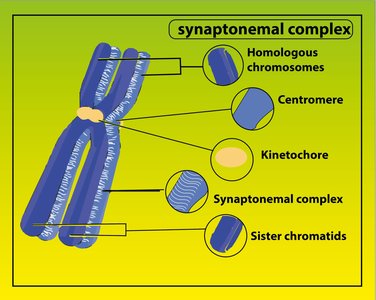
Synaptonemal Complex: A protein structure that connects homologous chromosomes during prophase I, facilitating crossing over.
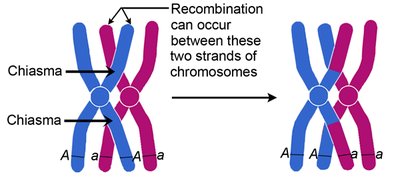
Chiasma (plural: chiasmata): The X-shaped region where crossing over occurs between non-sister chromatids.
Genetic Variation
Sources of Variation
Independent Assortment: Each homologous pair aligns independently at metaphase I, resulting in different combinations of maternal and paternal chromosomes in gametes.
Crossing Over: Exchange of genetic material between non-sister chromatids during prophase I, producing recombinant chromosomes.
Random Fertilization: Any sperm can fuse with any egg, greatly increasing genetic diversity.
Comparing Mitosis and Meiosis
Key Differences
Feature | Mitosis | Meiosis |
|---|---|---|
Number of Divisions | 1 | 2 |
Number of Daughter Cells | 2 | 4 |
Chromosome Number | Same as parent (diploid) | Half of parent (haploid) |
Genetic Identity | Identical | Genetically unique |
Homologous Chromosome Pairing | No | Yes (in Meiosis I) |
Crossing Over | No | Yes (in Prophase I) |
Chromosome Errors
Nondisjunction and Aneuploidy
Nondisjunction is the failure of chromosomes to separate properly during meiosis, leading to gametes with abnormal numbers of chromosomes. This can result in:
Monosomy: Missing a chromosome (2n - 1).
Trisomy: Extra chromosome (2n + 1).
Key Terms and Concepts
Gene: A region of DNA that includes coding information and regulatory elements.
Allele: Alternative versions of a gene found at the same locus on homologous chromosomes.
Homologous Chromosomes: Chromosome pairs with the same genes but possibly different alleles.
Sister Chromatids: Identical copies of a chromosome joined at the centromere after DNA replication.
Somatic Cells: Non-reproductive, diploid cells.
Gametes: Reproductive, haploid cells (sperm and egg).
Ploidy: The number of sets of chromosomes in a cell.
Life Cycle Variations
Animals: Gametes are the only haploid cells; meiosis occurs in germ cells.
Plants and Some Algae: Alternation of generations with both multicellular diploid (sporophyte) and haploid (gametophyte) stages.
Fungi and Some Protists: The only diploid stage is the zygote; meiosis produces haploid cells that divide by mitosis.
Summary Table: Phases of Meiosis
Phase | Main Events |
|---|---|
Prophase I | Homologous chromosomes pair, crossing over occurs, spindle forms |
Metaphase I | Homologous pairs align at metaphase plate |
Anaphase I | Homologous chromosomes separate |
Telophase I & Cytokinesis | Two haploid cells form |
Prophase II | Spindle forms in each haploid cell |
Metaphase II | Chromosomes align at metaphase plate |
Anaphase II | Sister chromatids separate |
Telophase II & Cytokinesis | Four haploid cells form |
Equations and Formulas
Number of possible chromosome combinations due to independent assortment: where n is the haploid number of chromosomes.
Number of possible zygote combinations (random fertilization):
Additional info:
Some explanations have been expanded for clarity and completeness, including the summary tables and equations for genetic variation.
