 Back
Meiosis, Heredity, and Genetic Variation: Study Guide for General Biology
Study Guide - Smart Notes
 Tailored notes based on your materials, expanded with key definitions, examples, and context.
Heredity and Variation
Key Concepts in Genetics
Heredity is the transmission of traits from one generation to the next, while variation refers to the differences observed among individuals of the same species. Genetics is the scientific study of heredity and inherited variation.
Gene: A segment of DNA that contains coding information and regulatory regions, determining specific traits.
Allele: Alternative versions of a gene found at the same locus on homologous chromosomes; alleles can differ in DNA sequence and affect the gene product.
Locus: The specific location of a gene on a chromosome.
Types of Reproduction
Asexual vs. Sexual Reproduction
Organisms can reproduce either asexually or sexually, leading to different patterns of genetic inheritance and variation.
Asexual reproduction: Offspring arise from a single parent without gamete fusion; offspring are usually genetically identical to the parent (clones).
Sexual reproduction: Two parents contribute genetic material, resulting in offspring with unique combinations of genes.
Chromosomes and Ploidy
Karyotypes, Homologous Chromosomes, and Ploidy Levels
Chromosomes are organized structures of DNA and protein. The number and arrangement of chromosomes are crucial for inheritance.
Karyotype: A display of the chromosome pairs of a cell, arranged by size and shape.
Homologous chromosomes: Chromosome pairs (one from each parent) carrying genes for the same traits, but possibly different alleles.
Autosomes: Non-sex chromosomes; in humans, chromosomes 1–22.
Sex chromosomes: Chromosomes that determine sex (X and Y in humans).
Diploid (2n): Cells with two sets of chromosomes (e.g., somatic cells).
Haploid (n): Cells with one set of chromosomes (e.g., gametes).
Life Cycles and Meiosis
Overview of Life Cycles
Organisms exhibit different life cycles, but all involve the alternation of haploid and diploid stages.
Animals: Gametes are the only haploid cells; fertilization produces a diploid zygote.
Plants and some algae: Alternation of generations with multicellular diploid (sporophyte) and haploid (gametophyte) stages.
Fungi and some protists: The only diploid stage is the zygote; meiosis produces haploid cells that divide by mitosis.
Phases of Meiosis
Major Events and Chromosome Movements
Meiosis consists of two sequential divisions (Meiosis I and II) that reduce chromosome number and generate genetic diversity.
Interphase/S phase: DNA replicates; chromosomes become duplicated (two sister chromatids joined at the centromere).
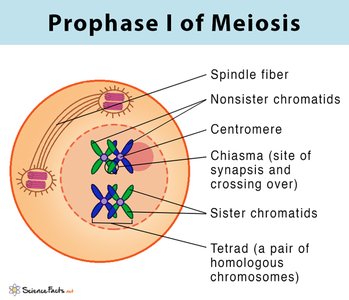
Prophase I: Homologous chromosomes pair (synapsis), crossing over occurs at chiasmata, chromosomes condense, spindle forms.
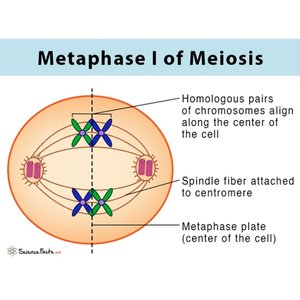
Metaphase I: Homologous pairs (tetrads) align at the metaphase plate; independent assortment occurs.
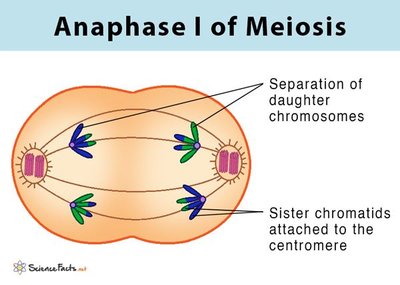
Anaphase I: Homologous chromosomes separate to opposite poles; sister chromatids remain together.
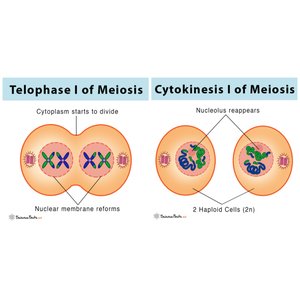
Telophase I and Cytokinesis: Each cell has a haploid set of duplicated chromosomes; cytoplasm divides.
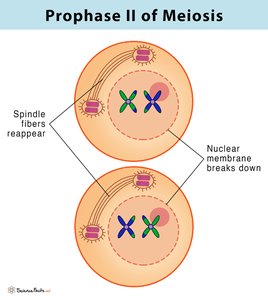
Prophase II: Spindle apparatus forms in each haploid cell; chromosomes move toward metaphase II plate.
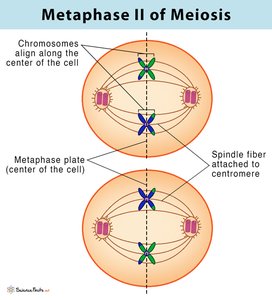
Metaphase II: Chromosomes align at the metaphase plate; sister chromatids are not identical due to crossing over.
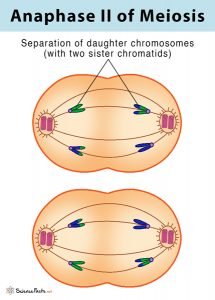
Anaphase II: Sister chromatids separate and move to opposite poles.
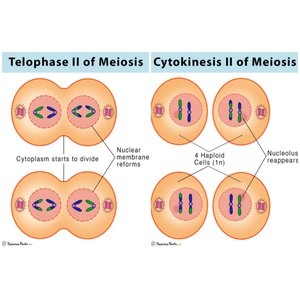
Telophase II and Cytokinesis: Nuclei form, chromosomes decondense, and four genetically distinct haploid cells are produced.
Key Structures and Processes in Meiosis
Synaptonemal Complex and Crossing Over
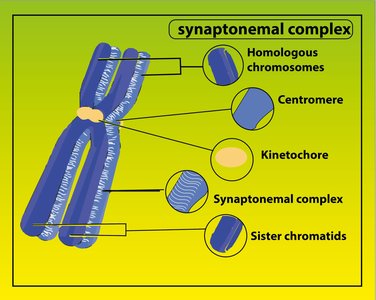
The synaptonemal complex is a protein structure that forms between homologous chromosomes during Prophase I, facilitating synapsis and crossing over.
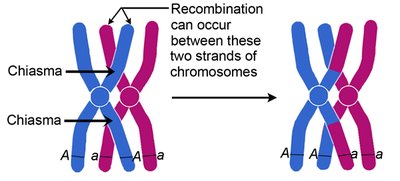
Chiasma (plural: chiasmata): X-shaped regions where crossing over occurs, holding homologs together.
Crossing over: Exchange of genetic material between non-sister chromatids, producing recombinant chromosomes.
Comparing Mitosis and Meiosis
Similarities and Differences
Mitosis: Produces two genetically identical diploid cells; no homologous pairing or crossing over; ploidy remains the same.
Meiosis: Produces four genetically distinct haploid cells; involves homologous pairing, crossing over, and reduction of ploidy.
Feature | Mitosis | Meiosis |
|---|---|---|
Number of divisions | 1 | 2 |
Number of daughter cells | 2 | 4 |
Genetic identity | Identical | Unique |
Ploidy change | None | Reduced by half |
Homologous pairing | No | Yes (Meiosis I) |
Crossing over | No | Yes |
Genetic Variation
Sources of Genetic Diversity
Independent assortment: Random orientation of homologous pairs during Metaphase I leads to different combinations of maternal and paternal chromosomes in gametes.
Crossing over: Exchange of genetic material between non-sister chromatids during Prophase I creates recombinant chromosomes.
Random fertilization: Any sperm can fuse with any egg, producing a vast number of possible genetic combinations (over 70 trillion in humans).
Errors in Meiosis
Nondisjunction and Chromosomal Disorders
Nondisjunction is the failure of chromosomes to separate properly during meiosis, leading to gametes with abnormal chromosome numbers.
Monosomy: A gamete missing a chromosome (2n - 1).
Trisomy: A gamete with an extra chromosome (2n + 1).
Summary Table: Chromosome Terms
Term | Definition |
|---|---|
Homologous chromosomes | Pair of chromosomes (one from each parent) with the same genes but possibly different alleles |
Duplicated chromosome | A chromosome that has been copied; consists of two sister chromatids |
Chromatid | One of the two identical DNA molecules in a duplicated chromosome |
Sister chromatids | Two identical chromatids joined at the centromere |
Application: Influence of Genetics and Environment
Phenotype results from the interaction between genotype (genetic makeup) and environmental factors. Different alleles can alter protein structure or expression, while environmental conditions can affect gene activity and trait manifestation.
