 Back
Meiosis: Mechanisms, Genetic Variation, and Errors
Study Guide - Smart Notes
 Tailored notes based on your materials, expanded with key definitions, examples, and context.
Meiosis: The Basis of Sexual Reproduction and Genetic Diversity
Overview of Meiosis
Meiosis is a specialized type of cell division that reduces the chromosome number by half, producing four haploid cells from one diploid cell. This process is essential for sexual reproduction and ensures genetic diversity among offspring.
Somatic cells: All body cells except reproductive cells; diploid (2n).
Gametes: Reproductive cells (sperm and eggs); haploid (n).
Sex chromosomes: X and Y chromosomes differ in size and genetic composition.
Autosomes: The other 22 pairs of chromosomes, homologous in size and composition.
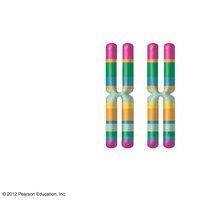
Chromosome Structure and Homologous Pairs
Chromosomes are organized into homologous pairs, each containing the same genes at the same loci, but possibly different alleles. Homologous chromosomes are matched in length, centromere position, and gene locations.
Gene: Section of DNA influencing hereditary traits.
Allele: Different versions of a gene found at the same locus.
Locus: The specific position of a gene on a chromosome.
Sister Chromatids vs. Homologous Chromosomes
Sister chromatids are identical copies of a chromosome, joined at the centromere, formed during DNA replication. Homologous chromosomes are similar but not identical, each inherited from a different parent.
Sister chromatids: Identical, joined copies of a chromosome.
Homologous chromosomes: Similar chromosomes from each parent, carrying the same genes but possibly different alleles.
Life Cycle and Ploidy
The life cycle of sexually reproducing organisms alternates between diploid and haploid stages. Diploid cells contain two sets of chromosomes, while haploid cells contain one set.
Karyotype: The number and types of chromosomes present in a species.
Ploidy: The number of complete chromosome sets (n, 2n, 3n, etc.).
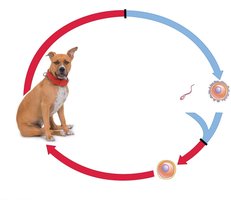
Meiosis: Process and Stages
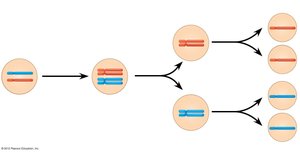
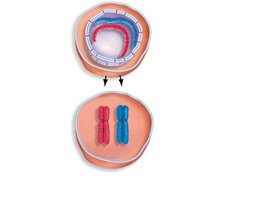
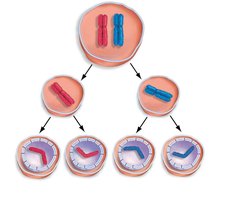
Meiosis consists of two consecutive cell divisions: Meiosis I and Meiosis II. Each division has distinct phases, resulting in four genetically unique haploid cells.
Meiosis I: Homologous chromosomes separate, reducing chromosome number by half.
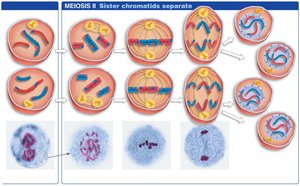
Meiosis II: Sister chromatids separate, producing four haploid cells.
Phases of Meiosis I
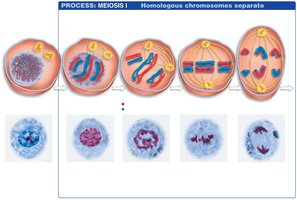
Meiosis I is a continuous process with five distinct phases:
Early prophase I: Chromosomes condense and pair up.
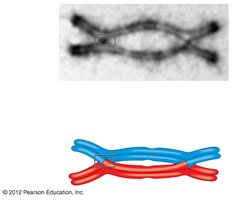
Late prophase I: Homologs attach to spindle, begin to separate, remain attached at chiasmata, and crossing over occurs.
Metaphase I: Paired homologs align at the metaphase plate; alignment is random.
Anaphase I: Homologs separate and migrate to opposite poles.
Telophase I: Homologs finish migrating; cell divides (cytokinesis).
Crossing Over and Genetic Recombination
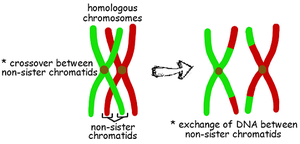
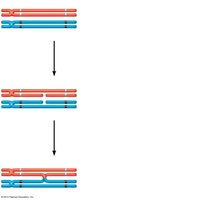
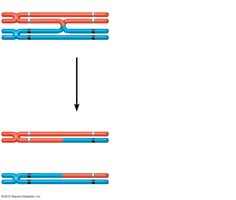
Crossing over occurs during late prophase I, where non-sister chromatids exchange genetic material at chiasmata. This produces chromosomes with new combinations of maternal and paternal alleles, increasing genetic diversity.
Chiasma: The site of crossing over between homologous chromosomes.
Recombinant chromosomes: Chromosomes with mixed genetic material from both parents.
Meiosis II: Separation of Sister Chromatids
Meiosis II follows Meiosis I without further chromosome replication. It consists of four phases: Prophase II, Metaphase II, Anaphase II, and Telophase II. The result is four haploid cells, each with one chromosome of each type.
Comparison: Mitosis vs. Meiosis
Mitosis and meiosis are both preceded by chromosome duplication, but differ in their outcomes:
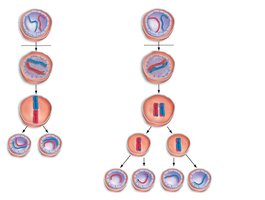
Mitosis: One division, produces two diploid, genetically identical cells.
Meiosis: Two divisions, produces four haploid, genetically unique cells.
Genetic Variation in Meiosis
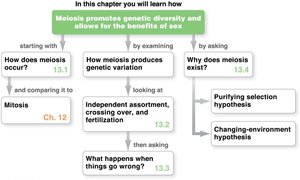
Meiosis promotes genetic diversity through independent assortment, crossing over, and random fertilization.
Independent assortment: Each pair of chromosomes aligns independently at metaphase I, leading to many possible combinations.
Crossing over: Exchange of genetic material between homologous chromosomes.
Random fertilization: Each unique sperm can combine with each unique egg, increasing variability.
The number of possible chromosome combinations in gametes is , where n is the haploid number.
Errors in Meiosis: Nondisjunction and Aneuploidy
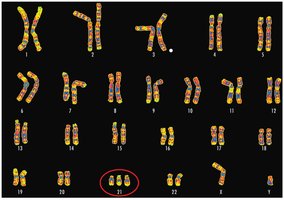
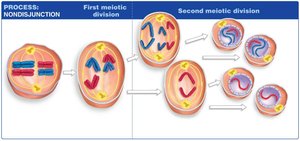
Errors during meiosis, such as nondisjunction, can lead to gametes with abnormal chromosome numbers. This results in conditions like trisomy (extra chromosome) or monosomy (missing chromosome).
Nondisjunction: Failure of homologs or sister chromatids to separate properly.
Aneuploidy: Cells with too many or too few chromosomes.
Trisomy 21 (Down syndrome): Caused by an extra copy of chromosome 21.
Factors Influencing Meiotic Errors
Meiotic errors are often random, but maternal age is a significant factor in the frequency of trisomy. Egg development involves a prolonged arrest in prophase I, which may contribute to errors.
Summary Table: Mitosis vs. Meiosis
Feature | Mitosis | Meiosis |
|---|---|---|
Number of Divisions | 1 | 2 |
Number of Daughter Cells | 2 | 4 |
Chromosome Number | Diploid (2n) | Haploid (n) |
Genetic Identity | Identical | Unique |
Function | Growth, repair | Sexual reproduction |
Additional info: These notes expand on the original content by providing definitions, examples, and a comparison table for clarity and completeness.
