 Back
Meiosis: Mechanisms, Genetic Variation, and Errors
Study Guide - Smart Notes
 Tailored notes based on your materials, expanded with key definitions, examples, and context.
Meiosis: Introduction and Overview
What is Meiosis?
Meiosis is a specialized type of nuclear division that reduces the chromosome number by half, producing gametes (sperm and egg) for sexual reproduction. This process ensures genetic diversity among offspring and maintains a stable chromosome number across generations.
Heredity: Transmission of traits from one generation to the next.
Variation: Differences in appearance and traits among offspring, parents, and siblings.
Genetics: Scientific study of heredity and variation.
Sexual Reproduction and Fertilization
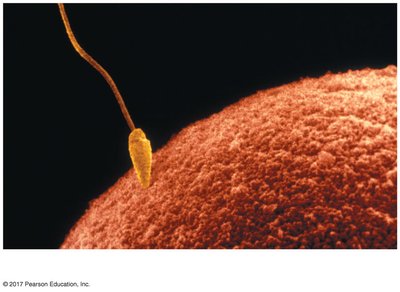
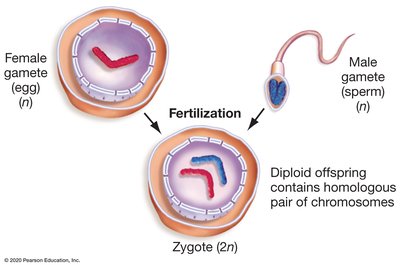
During sexual reproduction, gametes unite in a process called fertilization, restoring the diploid chromosome number in the offspring.
Gametes: Reproductive cells (sperm and egg) containing half the chromosome number of the parent.
Fertilization: Union of sperm and egg to form a zygote.
Chromosome Structure and Types
Sex Chromosomes and Autosomes
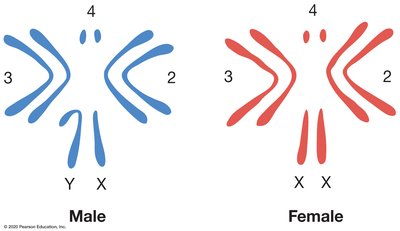
Chromosomes come in distinct sizes and shapes. Sex chromosomes determine the sex of an individual, while autosomes are all other chromosomes.
Sex Chromosomes: X and Y in humans; females are XX, males are XY.
Autosomes: Non-sex chromosomes (chromosomes 1–22 in humans).
Homologous Chromosomes and Alleles
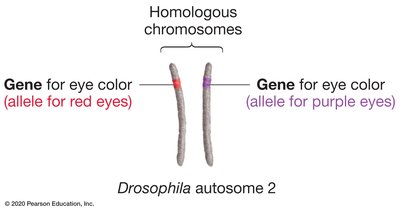
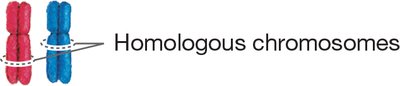
Homologous chromosomes (homologs) are pairs that contain the same genes in the same positions but may have different alleles (versions of a gene).
Gene: Section of DNA influencing a trait.
Allele: Different versions of a gene.
Concept of Ploidy
Karyotype and Chromosome Sets
A karyotype identifies the number and types of chromosomes present in a species. Organisms can be diploid (two sets) or haploid (one set).
Diploid (2n): Two homologs of each chromosome; two alleles of each gene.
Haploid (n): One of each type of chromosome; one allele of each gene.
Polyploid: More than two sets of chromosomes (e.g., 3n, 4n).
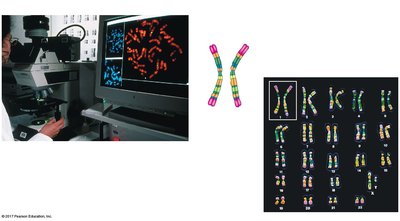
Chromosome Terminology
Understanding chromosome structure is essential for studying meiosis.
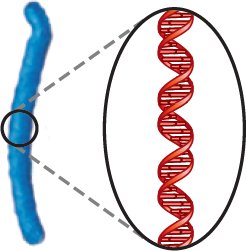
Unreplicated Chromosome: One double-helical DNA molecule.
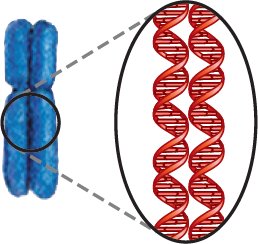
Replicated Chromosome: Two identical sister chromatids.
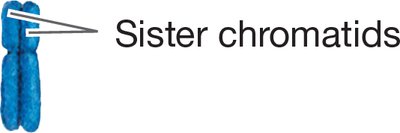
Sister Chromatids: Identical chromatids in a replicated chromosome.
Homologous Chromosomes: Same genes, same position, not identical.
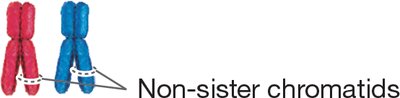
Non-sister Chromatids: Chromatids from different homologs.
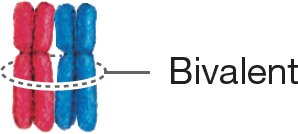
Bivalent: Paired, replicated homologous chromosomes during prophase I and metaphase I.
Meiosis: Process and Phases
Overview of Meiosis
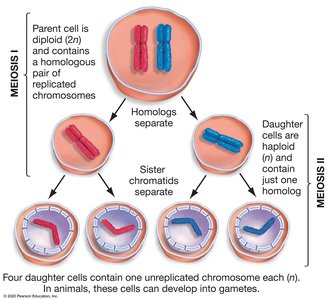
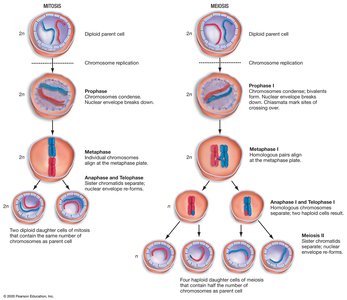
Meiosis consists of two consecutive cell divisions: meiosis I and meiosis II. It results in four haploid daughter cells, each genetically distinct.
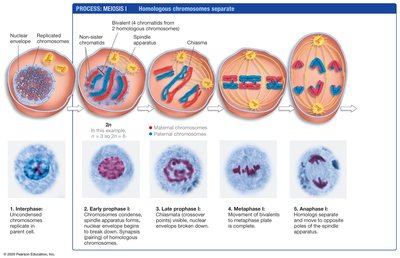
Meiosis I: Homologs separate, chromosome number reduced.
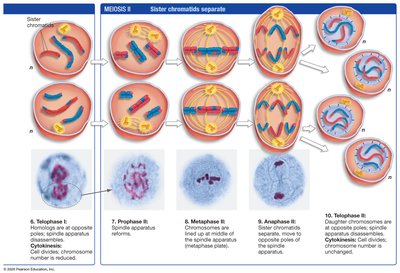
Meiosis II: Sister chromatids separate, similar to mitosis in a haploid cell.
Fertilization and Life Cycle
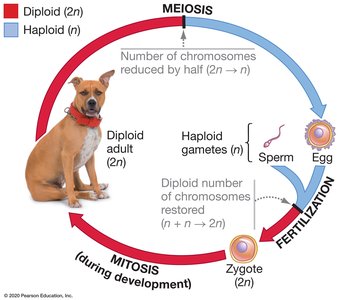
Meiosis produces haploid gametes that combine during fertilization to form a diploid zygote, which develops into an adult through mitosis.
Zygote: Diploid cell formed by fertilization.
Life Cycle: Alternation between haploid and diploid stages.
Phases of Meiosis I
Meiosis I is a continuous process with five distinct phases:
Early Prophase I: Nuclear envelope breaks down, chromosomes condense, homologs pair (synapsis), forming bivalents.
Late Prophase I: Homologs attach to spindle fibers, separate but remain joined at chiasmata (sites of crossing over).
Metaphase I: Paired homologs align at the metaphase plate.
Anaphase I: Homologs move to opposite poles.
Telophase I: Homologs finish migrating, cell divides (cytokinesis).
Phases of Meiosis II
Meiosis II is similar to mitosis and includes four phases:
Prophase II: Spindle apparatus forms, microtubules attach to kinetochores.
Metaphase II: Chromosomes align at the metaphase plate.
Anaphase II: Sister chromatids separate and move to opposite poles.
Telophase II: Chromosomes arrive at poles, nuclear envelope forms, cytokinesis occurs.
Mitosis Versus Meiosis
Key Differences
Mitosis and meiosis are distinct processes with different outcomes for the organism.
Mitosis: One division, produces two diploid, genetically identical daughter cells.
Meiosis: Two divisions, produces four haploid, genetically unique daughter cells.
Homolog Pairing: Occurs in meiosis, not in mitosis.
Genetic Variation: Meiosis introduces variation through crossing over and independent assortment.
Feature | Mitosis | Meiosis |
|---|---|---|
Number of cell divisions | One | Two |
Chromosome number in daughter cells | Same as parent | Half of parent |
DNA content in daughter cells | Reduced to 1/2 | Reduced to 1/4 |
Synapsis of homologs | No | Yes |
Spindle fiber attachment | Individual chromatids | Both chromatids attach to same pole |
Number of chiasmata | None | One or more per pair |
Chromosome makeup in daughter cells | Identical | Different |
Role in life cycle | Growth, repair | Gamete production |
Meiosis and Genetic Variation
Mechanisms Promoting Variation
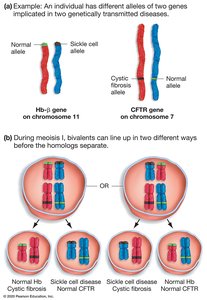
Meiosis and fertilization promote genetic diversity through independent assortment, crossing over, and random joining of gametes.
Independent Assortment: Homologous chromosomes are randomly distributed to daughter cells.
Crossing Over: Exchange of genetic material between non-sister chromatids during prophase I.
Fertilization: Random combination of unique gametes increases variation.
Errors in Meiosis
Nondisjunction and Chromosomal Disorders
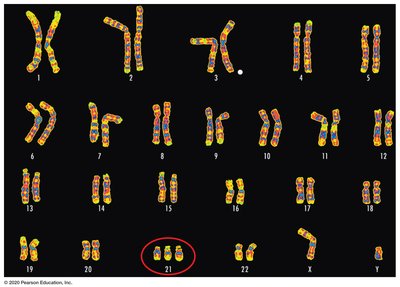
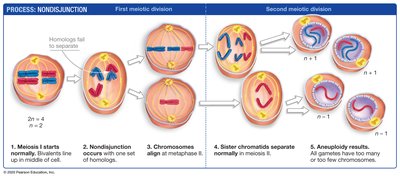
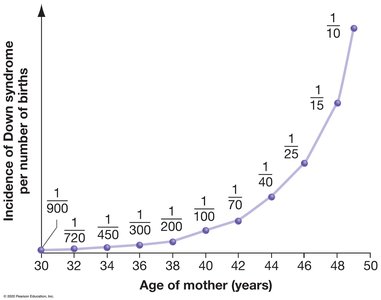
Errors during meiosis, such as nondisjunction, can lead to gametes with abnormal chromosome numbers. This is a common cause of genetic disorders like Down syndrome (trisomy 21).
Nondisjunction: Failure of homologs or sister chromatids to separate properly.
Aneuploidy: Presence of an abnormal number of chromosomes in a cell.
Down Syndrome: Caused by an extra copy of chromosome 21.
Incidence and Risk Factors
The frequency of Down syndrome increases with maternal age, highlighting the importance of proper chromosome segregation during meiosis.
Summary Table: Chromosome Terminology
Term | Definition | Example or Comment |
|---|---|---|
Chromosome | Structure made up of DNA and proteins; carries hereditary information | Eukaryotes have linear chromosomes; most bacteria and archaea have circular chromosomes |
Sex chromosome | Chromosome associated with sex | X and Y in humans; Z and W in birds |
Autosome | Any chromosome other than a sex chromosome | Chromosomes 1–22 in humans |
Unreplicated chromosome | One double-helical DNA molecule | Single thick line, DNA double helix |
Replicated chromosome | Two identical chromatids | Two thick lines, two DNA helices |
Sister chromatids | Identical chromatids in a replicated chromosome | Physically joined, blue lines |
Homologous chromosomes | Same genes, same position, not identical | Replicated pair, red and blue lines |
Non-sister chromatids | Chromatids from different homologs | One from maternal, one from paternal |
Bivalent | Paired, replicated homologs during prophase I and metaphase I | Maternal and paternal joined |
Haploid number (n) | Number of different types of chromosomes | Humans n = 23 |
Diploid number (2n) | Number of chromosomes in diploid cell | Humans 2n = 46 |
Ploidy | Number of each type of chromosome | 2n, 3n, etc. |
Haploid | One of each type of chromosome | Gametes, bacteria |
Diploid | Two of each type of chromosome | Most plants and animals |
Polyploid | More than two of each type | Bananas (3n), wheat (6n) |
Key Equations
Chromosome Number: for diploid, for haploid
Independent Assortment: Number of possible combinations = (where n is the haploid number)
Additional info: The notes have been expanded with academic context to clarify terminology, mechanisms, and consequences of meiosis, including genetic variation and errors.
